Youth urged to seize green economy opportunities under Dira 2050

The Minister of State in the Vice President’s Office (Union and Environment), Hamad Masauni, plants a tree at the University of Dar es Salaam upon his arrival at the university grounds, where the Youth Environmental Forum is being held in Dar es Salaam on June 2, 2026. PHOTO | COURTESY

Dar es Salaam. The youth have been urged to position themselves within a global green economy valued at more than $12 trillion, as government officials outline rising employment opportunities linked to climate action, renewable energy and sustainable development.

Speaking at a youth climate conference here in the city yesterday, the minister of State in the Vice President’s Office (Union and Environment), Hamad Masauni, said the global transition away from carbon-intensive economies is already reshaping labour markets, with youth expected to be among the biggest beneficiaries.

Citing international projections, Mr Masauni said the green transition could generate about 8.4 million jobs for young people globally by 2030, while the broader sustainable economy is forecast to support more than 380 million jobs worldwide.

For Africa, he said, the green economy is expected to create at least 3.3 million jobs by 2030, driven largely by renewable energy, climate-smart agriculture, clean transport systems, green construction and environmental technologies.

More than 70 percent of these jobs are projected to come from renewable energy, particularly solar power.

“Environmental challenges are increasingly becoming economic opportunities,” Mr Masauni said, noting that Tanzania’s youth must shift from passive observers to active participants in emerging climate-linked value chains.

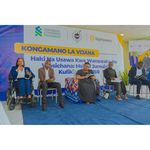
The conference, organised by the Africa Carbon Agency and the Jakaya Mrisho Kikwete Foundation, brought together policymakers, climate experts and youth innovators under the theme Youth Action for DIRA 2050: Advancing Environmental Sustainability and Climate Resilience.

The event aligns with preparations for World Environment Day, marked globally on June 5, and comes as Tanzania accelerates its long-term development framework under Vision 2050.

Permanent Secretary in the Vice President’s Office (Union and Environment), Dr Richard Muyungi, said Tanzania is also positioning itself as a regional hub for climate innovation following its selection to host the African Youth Climate Change Centre.

The centre is expected to function as a continental training and research hub focused on climate technology, diplomacy, innovation and green entrepreneurship among young Africans.

Dr Muyungi said the facility would strengthen youth participation in climate policy and unlock new income streams through carbon markets, circular economy models and environmental startups.

Tanzania is increasingly betting on carbon trading, renewable energy expansion and climate-smart agriculture as alternative growth drivers amid rising climate risks and fiscal pressure on traditional sectors.

The government says it will scale up youth-focused climate training programmes once the African Youth Climate Change Centre becomes operational, positioning Tanzania within a growing continental race for green investment and climate finance.