Those who were chatting are now staring at the screen. Those with hats are adjusting them to be sure they’ll see clearly. This is an indication that the time has come – digital auction time!
As a first-time witness to digital auctions in Songwe and Lindi regions, I quickly realised that this was more than a field visit or trading exercise; I was witnessing the transformation of Tanzania’s agricultural markets in real time. What a moment!
A moment of reckoning for farmers who have spent months tending their fields.
A time to discover whether their sweat paid off, whether the season was favourable, and what value the market places on their investment in every acre cultivated.
Digital auctions are transforming Tanzania’s agricultural markets by increasing transparency, driving market fairness, improving farmer incomes, and accelerating the formalisation and commercialisation.
The digital market system takes sesame producers to the market – traders meeting producers digitally.
The transformation is vivid. Not long ago, traders submitted sealed bids in boxes, and farmers only heard the final price the following day, often with little visibility into the process. Today, bidding happens in real time, bringing unprecedented transparency to the market.
This transformation did not happen by chance. It is the result of deliberate government reforms and collaboration among regulators and market institutions working to modernize agricultural trade and build trust in commodity markets.
Now, farmers are better connected to markets and are increasingly capturing a greater share of international prices, while gaining improved access to quality inputs, agronomic services and market information.
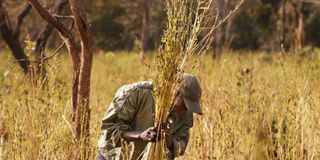
It’s not only farmers in Lindi, the largest sesame producing region, who are reaping the benefits, but also growers in Songwe, Rukwa, Dodoma, Morogoro, Coast and Manyara regions.
On the other hand, traders benefit from volume and quality certainty of the produces. Cleaned and sorted produce is raising standards, benefiting both farmers and traders by improving confidence in the market. Quality now determines market access and success.
The situation is also beneficial to the government. The impact extends beyond farmers and traders. According to Bank of Tanzania data, sesame export earnings grew by approximately 19 percent from about $225.6 million in 2023 to $268.2 million in 2024, highlighting the crop’s growing contribution to foreign exchange earnings and the national economy.
If Tanzania’s journey towards formalised agricultural markets were a vehicle, it may currently be travelling at 55 kilometres per hour, moving in the right direction, but still far from full speed. Greater awareness and participation among farmers, traders and policymakers remain essential to realising the ambitions of Dira 2050.
Witnessing the digital trading system in action and hearing stories of changing livelihoods affirmed that agricultural transformation is not an abstract policy concept; it is unfolding across Tanzania’s farming communities through stronger institutions and more transparent markets.
As the country advances towards a more formalised and commercialised food system, digital trading is showing that when markets work for farmers, prosperity follows.
Theresia Christian is a communication for development expert currently serving as Head of Public Relations and Communication at the Cereals and Other Produce Regulatory Authority (COPRA)