A CHAT FROM LONDON : London’s Spitalfields Market and opportunities for Tanzanian farmers
What you need to know:
“Tanzania can supply organic fruits and vegetables,” the man continues to promise. Prime Minister Mizengo Pinda (pictured) is our man.
Picture this. A huge table. Around eleven in the morning. People of all nationalities are seated listening and watching one of the speakers holding a small thin mango. If you are a child it might look as though the man is fondling a beautiful toy. Tantalizing and mouth watering, the mango is quite ripe. Usually it would cost you the equivalent of about Sh3,000 here in London. The price in Tanzania is much, much less than that. High season embe sindano? A mere Sh100. Probably just Sh500 for low season.
“I can get you better mangoes than this,” the medium built man says, deadpan. By the tone of his voice, the contours of his calloused hands and his relaxed demeanour we can say (and conclude) he knows what he is talking about. Photographers in the room and journalists are taking in everything he is saying. Looks like an historical occasion.
The man who we have been told has a farming background picks up a bunch of sweet bananas (kichani cha ndizi kisukari in Swahili) and with that similar mix of positive arrogance, experienced and relaxed composure declares:
“Thicker, bigger and sweeter.” If you hail from Tanzania, especially the fertile regions of Mbeya, Bukoba, Tukuyu, Arusha, Lushoto and Kilimanjaro, you would definitely agree with the honourable speaker. You would concur that the smaller quite expensive goods referred here can surely be surpassed. London’s class of expensive tropical fruits begin with the papaya (cost: minimum Sh10,000), sweet bananas (a bunch of five: approx 6 thou’ shillings) followed by avocado and mangoes (five to six thou’). Cheaper fruits are apples, pears, pineapples (depending where you buy); while the cheapest are oranges and green bananas (five oranges for Sh2,000 for example) from the Caribbean. Want matoke? These would be in the same league as sweet bananas. Very expensive. And we are just speaking of certain parts of London where South East Asian, Mediterranean and African shops are located.
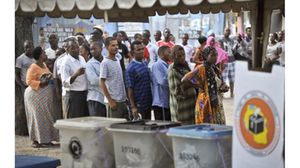
“Tanzania can supply organic fruits and vegetables,” the man continues to promise. Prime Minister Mizengo Pinda (pictured) is our man. He was a guest at one of the most important areas of the UK food chain seven days ago. Although his visit was officially related to the G8 conference, whereby the theme was hunger and nutrition related to children ( you might have seen anti capitalist protesters in the news in London on Tuesday), the PM had a chance to pop in a place known as New Spitalfields Market in the East area of London. The ground breaking occasion was organized and coordinated by the Tanzanian High Commission for ages. New Spitalfields was hatched in 1991 as a continuation of the legendary Spitalfields market a few metres from Brick Lane, a place filled with Asian shops and residences. Started by King Charles in 1682, Spitalfields has a rich history of multiple nationalities. During the 19th century it was dominated by Irish people fleeing the Potato famine that killed around a million between 1845 and 1852. From 1880s to 1970s Jews fleeing persecution equally found it lucrative; today South East Asians (especially from Bangladesh) surround the vicinity. The Prime Minister accompanied by High Commissioner Peter Kallaghe and Tanzania Trade Centre Director Yusuf Kashangwa and other officials were welcomed by Sacoma. Now what is Sacoma?
Think Kenya. Think neighbours. Think Swahili. Think East Africa. But Sacoma is more than those nouns. It was created in 1998 and is a short for Sahara Communities Abroad. Their website says it aims at bettering the lives of struggling small farmers in Kenya, employ and give equal opportunities and training to young people and much more. Perez Ochieng, Director of commerce, told me to date Sacoma has 30,000 employees in East Africa and Europe. But the community company ( most significantly) imports fruits and vegetables and through their New Spitalfields office and personnel then distributes them to large supermarkets, retailers, schools , government institutions etc.
Sacoma promised support to Tanzania. I watched Mheshimiwa Pinda being shown various types of yams from Ghana and Kenya, admiring avocados and innumerous greens. To qualify Tanzania will have to fulfill European Union requirements: how to grow and plant crops so they can last, storage, packaging, refrigeration and so on...
It was heartening to see PM’s confidence who said it needed effort but “we shall manage.”
Something rarely spoken during these matters was youth participation. Normally young people are not interested in agriculture since it is unappealing and regarded as only hoe work. Perez Ochieng said that Sacoma has managed to make it attractive. “We train and make young people realize how agriculture can contribute to change their lives.”
And how is that going to be done?
The PM cited Gongo Seke in Mwanza whereby a group of young people are involved in horticulture and green houses. “It is important to assure such young people that they can have a market for their efforts.”