ANALYSIS: Democracy, discipline and decorum in Parliament
What you need to know:
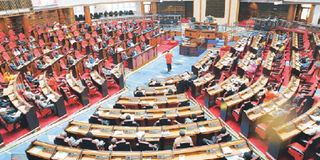
The character and quality of parliamentary democracy depend very much on the elected parliamentarians. Their behaviour should be such as to enhance the dignity of Parliament and its members in general. The degree of esteem in which the people of a country hold its Parliament is a sure sign of the success and maturity of its democratic process.
Some few years back a lecturer colleague at the Muhimbili University of Health and Allied Sciences (Muhas) became an elected MP. During one of our casual talks he told me that I had to address him as Mheshimiwa as per the law. To date, I still do not understand this concept because I feel to be addressed as Mheshimiwa one has to earn the respect and not be dictated by the law.
The character and quality of parliamentary democracy depend very much on the elected parliamentarians. Their behaviour should be such as to enhance the dignity of Parliament and its members in general. The degree of esteem in which the people of a country hold its Parliament is a sure sign of the success and maturity of its democratic process.
In recent times I have noted and also observed in YouTube the despicable behaviour of some members during the sessions. What ever is happening in other democracies where fist fights and abusive words are common this trend should not be copied nor tolerated.
Despite our cultural heterogeneity, the common fabric of the African culture provides us with ethos we must honor in both thought and practice. By ethos, I mean one’s self-understanding and self-presentation in the world in thought and practice. For example our culture teaches us to have unwavering respect for our parents, the aged, teachers and leaders. It’s not about taking sides, about who is right or wrong but such unruly behaviour is not acceptable and not expected from a MP.
Invariably the opposition members will become frustrated because from their perceptive there is injustice and their point of view is not respected. The Opposition’s main role is to question the government and hold them accountable to the public. The Opposition represents an alternative government, and is responsible for challenging the policies of the government with in-depth analysis and generating better and more effective alternative policies where appropriate.
Ideally, a constructive opposition, would emphasize more on discussion, ask more questions, resolution of problems being faced, help in amendments and passage of important bills. Also unite with ruling government in issues of national interests. At the same time, opposition must warn or bring in focus issues that government is not addressing effectively at its level. A disruptive opposition party opposes everything for the sake of opposing and is not good for democracy (and tax-payers). It simply avoids discussion.
There will be occasions when the ruling party will be authoritarian and use bullying techniques but this still does not justify any unruly behaviour in the Parliament. Such behaviour does not bring any changes and does more damage. It is better to be persistent and dignified and accept the fact that numbers do matter and the goal should be to become a ruling party.
Issues raised in Parliament should have a wider significance to the society and the nation at large. Members must make full use of all the available opportunities and participate actively in the legislative, financial and other business of the House, bringing to bear their special knowledge, experience and insights in the shaping of public policy and contributing their share in the oversight and scrutiny of performance of the government and redress of public grievances.
The proceedings, at times, become noisy leading to pandemonium and turmoil. In the heat of the moment when passions run high, members sometimes tend to use unparliamentary language or become personal and precious time of the House is wasted. This projects Parliament in a poor light, especially in view of the fact that the proceedings are now a days shown live on the television or available in YouTube. Democracy does not mean simply shouting loudly and persistently, freedom and democracy require responsibility and certain standards of behaviour and self-discipline.
There is little doubt, therefore, that the time has come when all the political parties should find ways to improve the quality of member’s participation in parliamentary proceedings and to ensure that members conduct themselves in a dignified and decorous manner. It is said that any institution is as good as its members choose to make it.
I strongly believe that unruly behavior is registered in people’s memory and at election time people cast their votes based on some of these memories. MPs should live up to the people’s expectations in heralding a new era in our parliamentary polity. The word Mheshimiwa comes with responsibilities.