What would Nyerere do?

Mwalimu Julius Kambarage Nyerere

Dar es Salaam. As Tanzania marks the Independence Day of Tanganyika, a country that later united with Zanzibar to form the United Republic of Tanzania, the country finds itself reflecting not only on its political journey but also on urgent questions about unity, nationhood and the path forward after the turbulence that followed the October 29 general election.

With tensions, mistrust and political polarisation still visible in sections of society, many Tanzanians are asking a profound question: “What would Mwalimu Julius Kambarage Nyerere, the man who led Tanganyika to independence, do if he were alive today? Similarly, one would ask what would Sheikh Abeid Amani Karume, the first President of Zanzibar, do if they were alive today?”
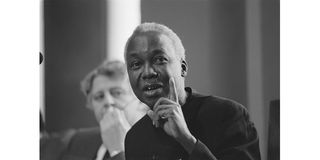
The question is not rhetorical. It is anchored in the founding philosophy of Tanzania, a nation built on dialogue, unity, justice and collective responsibility.

Analysts, speaking with The Citizen ahead of this anniversary, said that at a moment when national cohesion feels fragile, there is immense value in returning to the political ethics and moral clarity that guided the two architects of the United Republic of Tanzania.

Nyerere and Karume governed at a complex moment in the early years of independence, a time marked by uncertainty, ideological contestation and the enormous task of building a united national identity out of more than 120 ethnic groups.

Their styles differed; Nyerere’s intellectual socialism contrasting with Karume’s pragmatic, community-centred leadership, but both were firmly anchored in the belief that the young country could only survive through unity.

Nyerere, famously known as ‘Mwalimu’, repeatedly emphasised that freedom was meaningless without peace and solidarity. “Without unity, there is no future for a nation,” he once said, a line that continues to echo as the country navigates its current post-election environment.

Karume, equally steadfast, believed in dialogue, discipline and the central role of ordinary citizens in protecting the stability of the Union. In the years following the 1964 Revolution, his stance was clear: development and justice must be felt by everyone, or the nation would fracture.

Independent Tanzania at a crossroads

This year’s Independence Day arrives at a tense moment. The October 29 election aftermath left a trail of political suspicion, social media confrontation and fresh wounds in the national psyche.

Authorities have warned against coordinated attempts to mobilise young people for unrest, and political actors continue to debate the way forward. The public mood is mixed-some feel hopeful, others anxious.

Against this backdrop, experts say the country urgently needs a return to the principles that anchored the early republic.

A political historian and former don at Mzumbe University, Dr Lillian Mgaya, said Nyerere’s response would have been straightforward: confront the issue through national dialogue.

“Mwalimu never shied away from difficult conversations,” she notes. “He believed in the power of sitting together, speaking honestly and, most importantly, listening to each other. At this moment, he would urge Tanzanians to lower the political temperature, to agree on the facts, and to search for a collective way forward.”

Dr Mgaya adds that Nyerere’s style of political leadership was defined by moral persuasion rather than coercion. “He was deeply aware that unity could not be legislated-it had to be nurtured,” she said.

Sheikh Abeid Karume, analysts say, would emphasise stability, but always with a community-first approach.

A researcher on Zanzibar’s political history, Mr Idrissa Hamad, explained: “Karume saw unity as a responsibility shared by the people themselves. He believed leaders must protect peace, but citizens also had a duty to safeguard harmony.”

According to Mr Hamad, Karume would advise leaders today to strengthen community dialogue structures, engage youth groups directly, and dismantle the mistrust that fuels political divisions.

“In Karume’s era, unity was both a political and a cultural project,” he said.

Both founding fathers repeatedly emphasised that freedom came with obligations. Nyerere said: “Our independence is not a licence for conflict; it is a commitment to build a society that cares for all.” In moments of tension, he urged calm and collective reasoning.

Today, many experts believe the same ethos is urgently needed.

An education and governance analyst, Dr Joram Mwakipesile, noted in a WhatsAPP conversation that the country must reclaim civic education as a tool for nation-building—an approach Nyerere strongly championed.

“Our young people are politically energetic but often misinformed,” he noted. “Nyerere invested heavily in political education because he believed a nation of informed citizens was harder to divide. Bringing back structured civic education would help restore unity.”

For his part, constitutional law expert Advocate Mariam Mlewa argued that the founders would advocate for institutional trust and transparency.

“Nyerere and Karume believed in strong institutions built on public confidence,” she said. “Today, rebuilding national unity requires leaders to engage citizens openly, explain decisions clearly, and commit to fairness.”

With this Independence Day, analysts say this is a moment for the country to turn away from polarisation and reclaim the spirit of togetherness.

Dr Mgaya reflected: “The founders built a nation on the belief that every Tanzanian, regardless of background, deserved dignity and a voice. The best way to honour their legacy today is to choose unity over division.”

In the words of Mwalimu Nyerere: “Differences will always exist. But we must never allow them to tear apart our humanity or our country.”

If Nyerere and Karume were alive today, analysts agree they would call for a renewed national conversation, one rooted in honesty, patience and the shared responsibility of citizens and leaders to protect the country’s unity.

They would likely insist on the power of dialogue as a tool for healing, encouraging Tanzanians to speak openly about their fears and expectations while refusing to let political differences override the collective good.

Experts also believe the founding fathers would underscore the importance of civic education, reminding the nation that unity grows stronger when citizens understand their rights, responsibilities and the value of peace.

“A society grounded in political awareness,” they argued, “was more resilient against manipulation and division.”

At the same time, Nyerere and Karume would urge institutions to act with fairness and transparency, emphasising that trust between the public and the State is essential for national harmony.

This would go hand in hand with a call for deliberate youth engagement—ensuring that the country’s young people, whose voices shape Tanzania’s future, are guided towards constructive and responsible participation in national affairs.

As Tanzania marks 64 years of independence, the country stands at a moral crossroads. The legacy of Nyerere and Karume offers a clear compass: unity is a choice, nationhood is a duty, and peace is a responsibility shared by all.