Lowassa: The titan who saved Mnazi Mmoja and sent city water packing
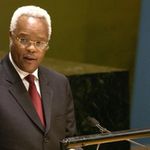
It was the late Edward Lowassa who saved the Mnazi Mmoja grounds from being auctioned to the highest bidder when he was minister for Lands in the early 1990s. PHOTO | COURTESY
As Prime Minister from 2005 to 2008, Lowassa wanted to see orderly development and efficiency in urban areas. He was a hands-on person. In order to address the question of traffic congestion during peak hours, in Dar es Salaam, he ordered that where you had four lane roads, three should be used in the morning rush hours to accommodate traffic going into the city centre.
With a larger than life personality, Edward Lowassa has attracted the attention of many commentators and analysts. Mine is to look at some of his actions that had relevance to the area of property and urban development.
Lowassa was minister for Lands and Human Settlements Development between 1993 and 1995. During the mid-1980s chaos was ruling high in the Lands sector, characterized by land conflicts and disputes, land grabbing, environmental degradation, land maladministration (such as double or trebble allocation), and, in urban areas, the privatization of public open spaces. In the early 1990s President Mwinyi had appointed Prof Issa Shivji to head a Commission to look into land matters and advise.
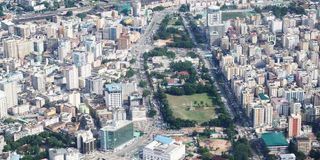
In the city of Dar es Salaam, many public open spaces had been converted to private uses. The famous Mnazi Mmoja grounds, planned as a public open space during the German period, held its ground as an open space since the 1930s, but in from the 1950s onwards, buildings such as the Arnatoglu Hall, the Health Centre, the Court and a Primary School and a Secondary School were built on parts of the once expansive open space.
The remaining part of Mnazi Mmoja nearly disappeared in 1993 when the Dar es Salaam City Council (DCC) decided to allocate the space to a businessman for the construction of shops. The day was saved by the then minister for Lands, Edward Lowassa who found that the allocation was illegal since it had not followed the procedures to change the land use. The people too were unhappy with the decision of their Council since on November 19, 1993, they descended on the temporary fencing that had been put up in preparation for construction and demolished it. Mnazi Mmoja was saved.
The DCC’s mayor, who was behind the allocation, was furious, but Lowassa stood his grounds. Later, the Dar es Salaam City Commission (which had taken over from the Dar es Salaam City Council) built a fence around the grounds, and that is where we are today. The grounds are there for important national and international functions. Had it not been for Lowassa’s intervention, Mnazi Mmoja would have been relegated to the books of history.
It is also during Lowassa’s tenure as minister for Lands, that the National Land Policy 1995 was developed. The Policy was the outcome of the recommendations of the Shivji Commission. Minister Lowassa chaired the decisive National consultative workshop on the National Land Policy in Arusha between January 16 and 18, 1994. At the Workshop, public comments and suggestions were solicited and incorporated in the final Draft of the Policy.
A Cabinet Paper ushering in the National Land Policy was written in December 1994 and the following year we had the Land Policy. Therefore the National Land Policy 1995 was nurtured by Hon Lowassa.
As Prime Minister from 2005 to 2008, Lowassa wanted to see orderly development and efficiency in urban areas. He was a hands-on person. In order to address the question of traffic congestion during peak hours, in Dar es Salaam, he ordered that where you had four lane roads, three should be used in the morning rush hours to accommodate traffic going into the city centre.
In the afternoon rush hours, the opposite should be the case. Three lanes dedicated to outgoing traffic. The arrangement had its problems but it somewhat eased traffic movement during peak hours.
In March 2006, PM Lowassa, embarked on a city cleaning exercise involving the removal of street traders and their structures from key points of Dar es Salaam and other major urban areas. These included city centre streets, pavements, car parks and open spaces.
This early action was stopped in its tracks because it was argued that the traders had not been given adequate notice and there were no preparations for alternative areas to which they could be moved. Street traders, locally known as Machingas were given six months to move. The exercise resumed in September 2006, and, all of a sudden, streets like Congo in Kariakoo became passable, as pedestrians reclaimed the pavements.
Although this achievement was short-lived, it showed that it was possible to bring order, in the otherwise chaotic, operations of street traders.
Lowassa, as minister for Water and Livestock Development between 2000 and 2005, had to make a hard decision, in 2005, to terminate the operations of City Water Services, a private company that had been awarded a 10-year contract, in July 2003, to manage water supply for the city of Dar es Salaam. The termination led to an international uproar, but Hon Lowassa stood his ground that the contractor operated short of expectations.
Lowassa was a man of decisions, a man of action. May he rest in peace.