Tanzania’s ascent and the reimagining of Africa’s natural wealth

In an era where resource-rich nations often struggle to translate abundance into prosperity, Tanzania is steadily crafting a different narrative. One anchored not merely in what lies beneath its soil, but in the leadership, policies and people shaping its destiny.

From the philosophical foundations laid by Julius Kambarage Nyerere to the brave industrial nationalism of John Pombe Magufuli and now the pragmatic, reform-oriented, intrepid stewardship of Dr Samia Suluhu Hassan, copiously supported in Zanzibar by Dr Ali Hussein Mwinyi, Tanzania’s new development story is one of continuity, correction and convergence.

At its core lies a powerful lesson that nations are not made rich by resources alone, but by the wisdom with which they are governed.

Tanzania is, by any geological and ecological measure, one of Africa’s most endowed nations.

It boasts:

• Over 45 million ounces of proven gold reserves

• The world’s only known deposits of tanzanite

• Significant helium reserves that are among the largest globally

• Vast tracts of arable land, with agriculture employing nearly 65 percent of the population

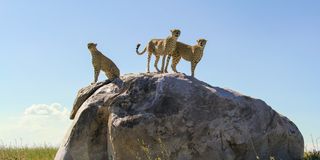
• Rich biodiversity, including world-renowned ecosystems like the Serengeti

• Major freshwater bodies: Lake Victoria, Tanganyika and Nyasa

• Extensive forests and timber resources

• A globally unique culture (karafuu, Swahili, arts and crafts, etc)

By natural endowment alone, Tanzania could rank among the wealthiest nations on the continent. History across Africa and indeed the whole wide world, has shown that natural wealth without sound governance can deepen inequality rather than alleviate it.

At independence in 1961, Mwalimu Nyerere advanced a radical idea of people centred development. An idea that puts human dignity, unity and self-reliance first, as the true engines of national wealth. This is a narrative that has stayed with the United Republic of Tanzania to date.

Through the renowned Arusha Declaration of 1967, Mwalimu Nyerere nationalised key sectors, promoted ujamaa (African socialism) villages, invested heavily in education and literacy and emphasised national unity over ethnic division.

While economic outcomes were mixed, the social dividends were profound:

• Literacy rates rose from below 20 percent to over 80 percent within decades

• Tanzania avoided the ethnic conflicts that plagued many post-colonial states

• A strong national identity was forged

Mwalimu Nyerere’s enduring legacy is philosophical: development must serve people, not the reverse.

Decades later, Dr John Pombe Magufuli reasserted state authority over natural resources with unprecedented force. His administration (2015–2021) introduced sweeping reforms like the Mining Act amendments (2017) increasing government stakes in mining projects to at least 16 percent, renegotiation of contracts with multinational mining companies, crackdowns on tax evasion and illicit mineral exports and establishment of mineral trading hubs to formalise artisanal mining.

As realised today, these changes have brought about drastic results that are measurable. For example, government revenue from mining has increased significantly (gold exports alone have risen to over $3.62 billion annually, greater transparency in the sector, renewed public and continental confidence in resource governance.

Critics pointed to investor uncertainty, but supporters argued that Magufuli restored sovereignty over Tanzania’s wealth.

Since assuming office in 2021, Dr Samia Suluhu Hassan has pursued a nifty balancing act of maintaining national interests while re-engaging global investors. Her remarkable leadership has renewed dialogue with international mining firms (bringing hope to the world of global investors). She has single-handedly championed policy stability and regulatory clarity, promoted game-changing public-private partnerships and most importantly strengthened environmental governance and responsible mining frameworks.

Key developments include:

• Expansion of liquefied natural gas (LNG) negotiations

• Increased foreign direct investment inflows

• Support for youth participation in economic sectors, including mining and environmental management

Under her administration, Tanzania is repositioning itself as a trusted, stable investment destination without relinquishing its sovereignty.

A defining feature of Tanzania’s current trajectory is the growing ecosystem of institutions working toward responsible resource management.

These include the Vice President’s Office (VPO-TZ), championing environmental stewardship, civil society and professional bodies such as Umoja Conservation Trust (UCT), Tanzania Environmental Experts Association (TEEA), National Environment Management Authority (NEMA Uganda), Africa Women in Spices (AWIS) and Tanzania Women Media Owners Association (TAMWA).

This network reflects a broader continental shift of mining form being just an economic activity, to mining being an environmental, social and governance (ESG) imperative.

Africa’s moment: The case for responsible mining unity

As the world accelerates toward green energy, Africa’s mineral wealth of cobalt, lithium, gold, helium, rare earths elements, etc, has become strategically indispensable. But the continent faces a critical choice of either continuing to exporting raw materials with minimal value addition or build integrated, responsible and value-driven mining ecosystems.

Tanzania is emerging as a potential model and convening force in this movement. The experiences of countries such as Singapore, Switzerland, Japan, Taiwan and Hong Kong underscore a central truth: prosperity is built on human capital, not natural capital alone. As Mwalimu Nyerere famously emphasised, “Man is the purpose of development.”

A continuum of leadership

From the early days of independence to today’s leadership, Tanzania’s journey reflects a rare continuity of purpose:

• Unity and dignity (Nyerere)

• Sovereignty and accountability (Magufuli)

• Reform and partnership (Samia)

Together, these phases are shaping a uniquely Tanzanian development model—one that blends ideology, pragmatism and global engagement.

For Africa, the message is clear: This is Tanzania’s story and it is a continental blueprint!

If harnessed collectively, responsibly and intelligently, Africa’s greatest resource (its people) will transform its natural wealth into lasting prosperity.

And in doing so, it may yet prove Mwalimu Nyerere right.