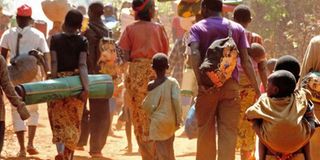
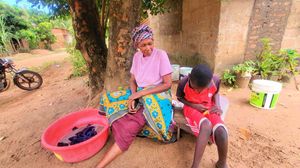
A handout picture taken on October 7, 2015 and released a week later by Oxford Committee for Famine Relief shows Burundian refugees walking to Nduta refugee camp in Kigoma, northwest Tanzania. PHOTO | OXFAM | AFP
Dar es Salaam. Tanzania’s ongoing repatriation of Burundian refugees is rooted in a long-standing regional process shaped by decades of displacement, shifting political conditions in Burundi, and evolving international refugee frameworks.
Analysts say these factors place the current exercise firmly within a legitimate legal and policy context.
The latest phase of returns, accelerated in late 2025 and early 2026, is being conducted under a tripartite agreement involving Tanzania, Burundi and the United Nations High Commissioner for Refugees (UNHCR).
The agreement sets clear standards for voluntary repatriation. It emphasises safety, dignity and strict adherence to international protection norms.
Officials say the current process continues efforts that began decades ago. Between 2002 and 2009, Tanzania facilitated the voluntary return of hundreds of thousands of Burundian refugees following the end of the country’s civil war.
However, renewed political unrest in 2015 triggered another wave of displacement. Tens of thousands of Burundians fled back into Tanzania.
Since 2017, over 180,000 refugees have returned. The pace increased significantly in the first months of 2026 following renewed commitments by the three parties.
By the end of 2025, more than 140,000 Burundian refugees were hosted in Tanzania, primarily in camps in the Kigoma Region. In 2017, assessments by UNHCR and regional authorities deemed conditions in Burundi sufficiently stable to allow voluntary returns.
At a November 2025 meeting of the Tripartite Commission, the governments agreed to scale up repatriation to as many as 3,000 people per week.
By then, Tanzania’s Minister for Home Affairs, George Simbachawene, explained: “We have already moved beyond the stage of discussing whether refugees from Burundi should return. What is required now is to focus on the modalities and procedures, given that the situation in Burundi has improved.”
Burundian authorities have also emphasised the safety of returnees. Minister of the Interior, Community Development and Public Security of Burundi, Martin Niteretse, stated that peace and security had been restored, creating conditions for citizens abroad to return and contribute to national development.
Camp officials report progress in line with targets. At Nyarugusu Refugee Camp, camp commander Siasa Manjenje said: “When we began this exercise in January, we had approximately 47,000 Burundian refugees. To date, about 22,590 have been repatriated.”
At Nduta Refugee Camp, which is scheduled for closure at the end of March, Commander Samweli Kuyi noted: “More than 30,000 refugees have returned within two months, with roughly 19,000 remaining by the end of March.”
Government officials have dismissed allegations of coercion. Novatus Mpanda clarified: “Reports that refugees are being denied food or essential services are not accurate. Assistance continues to be provided through the World Food Programme.”
The legitimacy of the repatriation is also anchored in international law. National Coordinator of the Tanzania Human Rights Defenders Coalition (THRDC), Onesmo Olengurumwa, said: “There are international principles guiding how refugees should be returned. Conditions that caused displacement must have ceased, and relevant institutions must confirm it is safe for refugees to return. UNHCR plays a crucial role in verifying these conditions and coordinating with both the host and origin countries.”
He emphasised that reintegration planning is crucial, particularly for refugees who have spent many years in exile and may have lost access to land, housing and livelihoods.
UNHCR continues to oversee and support the voluntary return programme. In the first two months of 2026, more than 28,000 refugees returned to Burundi, a notable increase over previous years.
However, the agency reports that approximately 17,000 individuals remain hesitant, citing concerns over safety and potential political persecution.
“There are increasing concerns from refugees on forced returns and coercive measures. We continue to advocate that returns must be based on free and informed choice,” said an external relations officer with UNHCR in Tanzania, Bahia Egeh.
Though funding constraints have also affected conditions in camps, reducing the availability of services over time, UNHCR maintains that voluntary repatriation remains one of the most sustainable long-term solutions to protracted refugee situations, provided it adheres to agreed international standards.
UNHCR Representative in Tanzania, Barbara Bentum-Williams Dotse, noted: “Durable solutions are the cornerstone of refugee protection. Supporting reintegration in Burundi ensures returnees can rebuild their lives sustainably. International support is crucial to strengthen services and economic opportunities in areas of return.”
Humanitarian organisations continue to urge caution. Save the Children warned that accelerated returns could disrupt access to education and essential services for children. Other rights groups have highlighted ongoing political concerns in Burundi.