When ‘I’m selling my island’ isn’t quite true

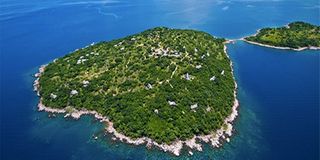
Tim Draper, the venture capitalist behind early bets on Tesla and SpaceX, announced on social media that he was selling “my island in Lake Tanganyika, Tanzania” for $7.9 million or best offer, inviting buyers to reach him directly by email.

No broker, no formal listing, no data room, just a price and an inbox. Within days, Tanzania's Ministry of Lands, Housing and Human Settlements Development issued its own quiet correction: the island is not his to sell.

That gap, between what an investor believes he holds and what the law grants him, is where this story earns its place in a column about capital and Tanzania, rather than one about billionaires and their eccentricities.

The legal position is straightforward once stated. Under the Land Act, all land in Tanzania is public land, vested in the President and held in trust for citizens. Foreign nationals and foreign owned entities cannot hold land directly.

What they can hold is a right of occupancy, typically granted for up to ninety-nine years, and even that route runs almost exclusively through TISEZA facilitated derivative rights, extended to a locally registered investment vehicle.

Draper's asset, developed since 2004 into the ten-cottage Lupita Island resort, sits inside Firelight Safaris Ltd, and it is that company, not the island's soil, that carries the transferable interest.

The ministry's clarification made the distinction explicit: Firelight may transfer its investment to another investor, but only in accordance with the country's laws and procedures. Draper can sell an interest in a company. He cannot sell Tanzania.

For an audience that structures cross border deals daily, none of this should be unfamiliar in principle. It is, however, a useful reminder that Tanzania's regulatory scaffolding around foreign land tenure is not a gap investors can work around. It is fully built, and it rewards the capital that respects it.

In two decades of structuring land linked investment vehicles across East Africa, I have watched the same instinct trip up otherwise sophisticated investors: treating a right of occupancy as functionally equivalent to freehold, then discovering at exit that transferring it requires the same government sign off that granting it did in the first place.

There is an irony worth noting in Draper's own words. He explained the sale by saying the family did not use the island enough, gorgeous but underused.

Under Tanzania's investment framework, underuse is not merely a lifestyle inconvenience.

Rights of occupancy facilitated through the TISEZA typically carry conditions tied to development and ongoing utilisation, the same use it or lose it logic that governs mining and agricultural concessions elsewhere in the country.

An idle trophy asset is not simply an inefficient allocation of capital. Left unattended long enough, it can become a compliance question.

There is a second cost buried in how Draper chose to sell, separate from the ownership question entirely. A single social media post, an unlisted asking price and a personal inbox is not a sale process. It is an opening bid.

A comparable East African trophy resort taken through a properly brokered process, with independent valuation, a data room covering the TIC certificate, land use compliance, staff contracts and tourism licensing, and a structured, competitive bidding round, would very plausibly clear double that $7.9 million figure.

Buyers pay a premium for certainty. What Draper's approach saves in commission it likely costs many times over in undiscovered value, because serious institutional buyers, the kind able to pay top price for a 110-acre lake resort with an existing operating history, do not transact off a viral post. They transact off diligence. Informality here is not only a legal risk for the seller. It is money left on the table.

The broader lesson for global capital eyeing East Africa is not that Tanzania is a difficult place to hold land. It is that Tanzania's land and investment framework rewards exactly the kind of structured, TISEZA anchored, professionally advised entry and exit that institutional investors already practise everywhere else.

The investors who get burned here are rarely the ones who follow the process. They are the ones who assume informal arrangements, personal relationships or social media momentum can substitute for it.

Draper will most likely find a buyer for his stake in Firelight Safaris Ltd. The island itself will still belong to Tanzania regardless of what changes hands.

What this episode should leave with anyone watching East African markets is a sharper sense of where the real premium sits. Not in the asking price on X, but in the diligence nobody thought to skip.

Amne Suedi is the Managing Director of Shikana Investment and Advisory, Honorary Consul of Switzerland in Zanzibar, and Chair of the Switzerland-Tanzania Chamber of Commerce. Views expressed are strictly Amne Suedi’s only.