Why responsible growth matters at Tanzania’s moment of progress

By Annette Nkini

Each year, Earth Day invites reflection. This year, the question feels closer to home. As Tanzania grows, builds, and expands, what does responsible growth look like in practice?

Across the country, progress is visible. Cities are expanding. Businesses are scaling. Opportunities are opening up across sectors. This growth carries energy and ambition. It also brings a shared responsibility to ensure that the way we grow today supports the future we want to see.

For a long time, growth was measured in output, expansion, and speed. That thinking has shifted. Today, there is a broader understanding that how growth happens matters just as much as how much is achieved. The way businesses use resources, engage communities, and plan for the long term now sits at the centre of that conversation.

In Tanzania, this shift is taking shape within a strong foundation. The country continues to place value on its natural resources, its communities, and its long term development path. This creates a clear opportunity to align economic progress with environmental care in a way that strengthens both.

At its core, sustainability is not a technical concept. It is a practical one. It is about how decisions are made every day. It is about how businesses manage what they use, how they operate within communities, and how they think about the future beyond immediate returns. When done well, it becomes part of how an organisation works, not an activity that sits on the side.

This approach also makes business sense. Organisations that manage resources responsibly tend to be more stable. They build stronger relationships with the communities they serve. They create trust. Over time, these factors support resilience and long term growth in a way that short term gains cannot sustain.

There is also a clear connection between business success and community well-being. Businesses do not operate in isolation. They grow within communities, depend on local environments, and rely on people. When communities are stronger and environments are healthier, businesses are better positioned to succeed. This is a shared journey.

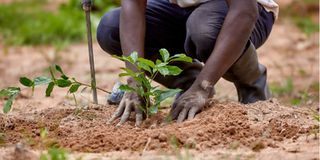
Environmental action often starts with practical steps. Tree planting is one of the most visible examples. It supports cleaner air, protects water sources, and improves the quality of shared spaces. It is also a reminder that small, consistent actions can contribute to long term change when they are sustained over time.

Beyond visible action, there is a growing need for knowledge and awareness. Many businesses are ready to take steps but are not always sure where to begin. Building understanding and providing access to practical tools is an important part of moving from intention to action.

At Stanbic Tanzania, this thinking has shaped how we approach growth over time, including initiatives such as Blue Roots, which focuses on planting one million trees across Africa, alongside efforts to support businesses with practical tools that help integrate sustainable practices into their operations.

Tanzania stands at an important point in its development journey. The pace of growth is strong. The opportunities are significant. This creates the right moment to embed approaches that ensure this progress is not only sustained, but strengthened over time.

This is not a responsibility for one organisation or one sector. It is a collective effort. Businesses, institutions, and communities all have a role to play in shaping a future that balances progress with care.

As we reflect on Earth Day, the focus is not only on what has been done, but on what comes next. The choices made today will shape the environment, the economy, and the communities of tomorrow.

Growth will continue. The opportunity now is to ensure it happens in a way that protects what matters and builds a future that works for everyone.

Annette Nkini is Specialist, Sustainability and ESG Performance, Stanbic Bank Tanzania