Dar es Salaam. The government has underscored the urgency of addressing long-standing barriers facing women in agriculture, warning that limited access to land, finance and technology continues to constrain productivity and exacerbate food insecurity across Eastern and Southern Africa.
The call was made during a conference that brought together government officials, development partners and representatives from across the region to accelerate the adoption of gender-responsive agricultural policies.
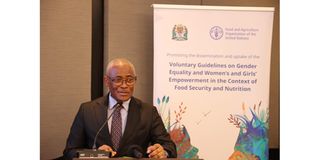
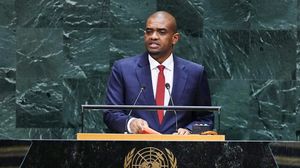
Speaking at the sub-regional launch of the Voluntary Guidelines on Gender Equality and Women’s and Girls’ Empowerment (VG-GEWGE) in Dar es Salaam, the Deputy Permanent Secretary in the ministry of Agriculture, Mr Peter Msoffe, said empowering women is both a matter of equity and a key driver of economic growth and food systems transformation.
The event brought together countries from Eastern and Southern Africa, marking an important step in regional collaboration.
“When women have equal access to productive resources and decision-making power, farm yields can increase by 20 to 30 percent, significantly improving livelihoods and reducing hunger,” he said.
Mr Msoffe noted that although women account for nearly 40 percent of the global agricultural labour force, they continue to face systemic challenges, including limited access to land, finance, technology and markets.
“These inequalities constrain productivity, reduce household incomes, and negatively affect food security and nutrition outcomes,” he said.
He also highlighted a persistent paradox in Tanzania’s food system, noting that despite producing sufficient food, many households still rely on nutritionally poor diets dominated by cereals.
“Monotonous diets with minimal intake of fruits, vegetables and protein sources fail to meet children’s micronutrient needs,” he said.
Mr Msoffe pointed to key frameworks such as the National Gender and Women Development Policy (2023), Tanzania Development Vision 2050 and the Agricultural Policy of 2013, alongside global and regional commitments including the Sustainable Development Goals and the African Union’s Agenda 2063.
“Despite strong policies, gaps persist due to limited resources, weak implementation mechanisms and socio-cultural norms,” he said, urging countries to integrate the VG-GEWGE into national strategies, strengthen data systems and invest in capacity building.
He emphasised that addressing gender inequality in agriculture requires strong partnerships and collective action. “This platform offers an opportunity to learn from each other and strengthen collaboration,” he added.
The Food and Agriculture Organisation (FAO) Representative in Tanzania, Dr Tupo Nyabenyi, underscored the importance of joint efforts in building inclusive agrifood systems.
The FAO Representative noted that the organization has been actively promoting global awareness and adoption of the guidelines, and that the launch in the East Africa region represents a significant milestone in advancing their implementation.
She noted that while most working women in Africa are engaged in agrifood systems, persistent inequalities continue to limit their potential.
“These challenges not only affect women but also slow broader progress in food security and economic development,” she said.
Dr Nyabenyi described the VG-GEWGE as a critical milestone, offering practical solutions to address structural inequalities, expand access to resources and strengthen women’s leadership.
“These guidelines go beyond identifying problems—they provide actionable recommendations,” she said, urging stakeholders to prioritise implementation.
FAO national coordinator for gender equality and women empowerment, Ms Jane Msagati, called for the adoption of the guidelines developed by the Committee on World Food Security to advance gender equality and empower girls in Tanzania.
She said the guidelines focus on nutrition, leadership, community engagement and the involvement of men in ensuring women have equal access to resources and decision-making.
“They also address safety and equitable food distribution within households and communities, which leads to positive outcomes,” she said.
Ms Msagati added that the guidelines emphasise improved nutrition outcomes, cautioning that interventions should not result in unintended negative effects such as malnutrition.