Why Tiseza, TRA must speak with one voice on tax reform and investment certainty

What you need to know:

  • The tension is not new. In June 2024, ten foreign embassies expressed concern about retrospective tax demands, prompting President Samia Suluhu Hassan to launch the Presidential Tax Reform Commission.

By Amne Kagasheki

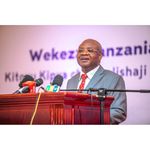
Last week, minister of State in the President’s Office (Planning and Investment), Prof Kitila Mkumbo, handed over investment certificates to six companies at the Bagamoyo Eco-Maritime City Special Economic Zone, marking a historic moment. The Sh8.5 trillion project represents the transformative investment Vision 2050 demands.

 Yet this milestone highlights an urgent challenge: Tanzania Investment ans Special Economic Zones Authority (Tiseza)'s promises must align seamlessly with Tanzania Revenue Authority (TRA)'s enforcement.

The tension is not new. In June 2024, ten foreign embassies expressed concern about retrospective tax demands, prompting President Samia Suluhu Hassan to launch the Presidential Tax Reform Commission.

As a former Tanzania Investment Centre (TIC) board member who advised on the Tiseza transition, participated in the Tanzania Private Sector Federation (TPSF) task force on tax reform, and contributed to drafting Vision 2050, I have witnessed the institutional discord between investment promotion and tax collection.

Tiseza's success with flagship Special Economic Zones (SEZs) like Bagamoyo depends on resolving this disconnect.

Tanzania's Vision 2050 requires predictable revenue streams. Our tax-to-GDP ratio has grown to 13.7 percent, approaching the 15 percent threshold recommended for developing countries—the fiscal foundation of our development agenda.

With 60 percent of Tanzania's economy operating informally, the Presidential Tax Reform Commission signals government commitment to structural reform.

Having participated in the TPSF task force, I witnessed the business community's eagerness to contribute constructively.

The Tiseza-TRA disconnect

The core problem is institutional. Tiseza operates under the Investment and Special Economic Zones Act with a mandate to attract investment through incentives. TRA operates under tax legislation with a mandate to maximize revenue. Both agencies fulfill their legal mandates—yet these mandates conflict.

When Tiseza issues a certificate promising specific tax treatments to secure investment, it acts under Parliamentary authority. When TRA subsequently assesses that same investor under different interpretations, it too acts under Parliamentary authority.

 The investor faces an impossible situation between two government agencies citing different laws. There have been a number of TRA reforms since 2024 including heavy investment in digital systems that promise to improve user experience.

However, the fundamental issue remains: which law prevails when Tiseza's Investment Act conflicts with TRA's tax statutes? Having served on TIC's board during the Tiseza transition and advised corporations representing over $300 million in investment, I have seen how this contradiction undermines confidence.

 The solution requires Tiseza and TRA to work in partnership with unified legal frameworks where investment incentives are recognized across all institutions. My experience facilitating Swiss-Tanzanian investment shows that mature economies achieve high tax compliance through clarity and consistency, not aggressive enforcement.

The Switzerland-Tanzania Chamber of Commerce, which I chair, could facilitate significantly increased investment with greater regulatory certainty. When government agencies speak with one voice, both revenue collection and investment flourish. Five reforms that could transform Tiseza-TRA relations from conflict to collaboration:

First, amend the Finance Act to recognize Tiseza certificates as binding across all agencies including TRA. Second, establish a joint Tiseza-TRA committee reviewing tax assessments on certified investments before enforcement. Third, create shared electronic systems where Tiseza certificates automatically populate TRA databases. Fourth, incorporate clear sunset clauses in incentive legislation.

Finally, strengthen Tiseza's dispute resolution with binding authority over tax matters. These reforms strengthen tax collection. When investors trust that government speaks with one voice, voluntary compliance increases. When the informal sector sees predictable treatment, formalization becomes attractive.

The Vision 2050 stakes

The numbers tell a compelling story. Tanzania attracted $1.72 billion in actual foreign direct investment (FDI) in 2024—the fastest growth rate in East Africa.

 Tiseza registered $2.54 billion in new investment projects during Q1 2025/26, representing 24 percent growth year-on-year. The Bagamoyo certificate handover demonstrates this momentum is real. However, momentum is fragile.

The six companies investing Sh57 billion in Bagamoyo—spanning food packaging, steel production, and agro-processing—chose Tanzania based on Tiseza's incentive promises.

If TRA later contests these arrangements, we risk not just losing these investments but poisoning the well for the hundreds more we need. As someone entrusted with contributing to Vision 2050, I believe our tax revenue and investment targets are not competing goals but complementary ones.

Our tax-to-GDP ratio has grown to 13.7 percent, approaching the 15 percent threshold recommended for developing countries. Reaching this target requires a thriving private sector that generates the tax base we need.

The Presidential Tax Reform Commission represents our best opportunity to align these institutions. Tiseza and TRA must become partners, not adversaries.

When these institutions speak with one voice—backed by clear legal frameworks and shared systems—both revenue collection and investment flourish.

The success of Bagamoyo and our Vision 2050 depend on achieving this institutional harmony.

Amne Suedi Kagasheki is Founder and Managing Director of Shikana Investment and Advisory, Honorary Consul of Switzerland in Zanzibar, Chairperson of the Switzerland-Tanzania Chamber of Commerce, and former Board Member of the Tanzania Investment Centre.