A decade of light and clean air: How EnDev transformed millions through clean energy
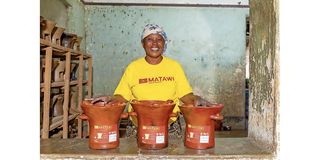
Champion stove producer from Misungwi, Mwanza, Elizaberth Mussa showcasing the Jiko Matawi. Through EnDev’s “5I’s” strategy (Identification, Initiation, Incubation, Investment, and Independence), over 120 artisans have been transformed into professional entrepreneurs, helping to sell nearly one million stoves nationwide.
For over a decade, a quiet but powerful revolution has been sweeping through rural and peri-urban Tanzania.
From the shores of Lake Victoria to the highlands of Mvomero, the way families cook their meals and light their homes has undergone a radical transformation.
At the heart of this change is the Energising Development (EnDev) programme, a multi-donor initiative that clean energy is not just a luxury for the urban elite, but a fundamental building block for national development.
Launched in 2013 and implemented by SNV Tanzania, with coordination from the German International Cooperation (GIZ) and the Netherlands Enterprise Agency (RVO), EnDev set out to tackle two of the country’s most pressing challenges: a dangerous reliance on inefficient traditional cooking methods and a lack of electricity in remote areas.
As the programme celebrates 13 years of impact in June 2026, its legacy is etched into the lives of nearly two million Tanzanians who now breathe cleaner air and enjoy the benefits of clean energy solutions.
Breaking the smoke cycle
For generations, the “three-stone fire” was the standard in Tanzanian kitchens. While culturally significant, it came at a high cost.
Millions of households relied on firewood and charcoal, exposing women and children to toxic indoor air pollution and creating a massive time burden as they spent hours daily gathering fuel.
EnDev’s solution was the Jiko Matawi an affordable, locally produced improved cookstove (ICS). Unlike traditional fires, this “branch stove” reduces fuel consumption by up to 40%.
Priced between Sh 5,000 and Sh 25,000, it was designed to be accessible to low-income families while remaining efficient enough to save them significant money on charcoal or wood.
One such success story is Fatma Ramadhani, a “champion” producer in her seventies from Mvomero. “For the past 10 years, I have worked with EnDev as a Jiko Matawi champion,” she shares. “The income and incentives enabled me to build a secure house that also serves as my production and storage space.”
A clean energy beneficiaries discusses an Electric Pressure Cooker (EPC). They acquired this stove through a loan system provided by the EnDev programme, which is implemented by SNV Tanzania in collaboration with local SACCOS.
Today, Fatma is one of over 120 active producers across 20 regions who have collectively sold nearly a million stoves. What made EnDev’s approach unique was its “5I’s” strategy: Identification, Initiation, Incubation, Investment, and Independence.
Instead of simply handing out stoves, the programme identified local artisans and turned them into professional entrepreneurs. They were trained not only in production but in business skills, receiving tools and incentives only after their sales were verified.
The rise of electrical cookstoves
As the market for improved cook stoves matured, EnDev looked toward the future: Electric Cooking (e-cooking). Since 2022, the programme has been pushing families further up the energy ladder. By partnering with SACCOS and using Revolving Loan Funds, EnDev has made electric pressure cookers and other appliances affordable for households.
This shift is more than just a matter of convenience. E-cooking virtually eliminates indoor air pollution and moves the country away from biomass entirely, a critical step in protecting Tanzania’s forests. To date, over 9,000 e-cooking units have been sold, signaling a new era for the Tanzanian kitchen.
Lighting up the “last mile”
When EnDev launched its solar component in 2014, rural electrification in Tanzania stood at a mere 21%. Most families relied on expensive and hazardous kerosene lamps. The off-grid solar market was small and risky, with few companies willing to venture into remote “last mile” villages.
EnDev introduced an innovative Results-Based Financing (RBF) model to de-risk the market. Under this system, private companies received incentives only after they independently verified that solar systems were installed and working in rural homes.
This encouraged healthy competition and forced companies to build robust retail and service networks in areas previously considered “uneconomical.”
Xavier Helgesen, CEO of Zola Electric, notes that this facility was critical. “This incentive accelerated our market without distorting it,” he says, noting that it helped his company reach over 150,000 customers in Tanzania alone.
Overall, the solar phases of the project have reached hundreds of thousands of community members and created over 780 jobs in sales and maintenance.
Empowering women, protecting the environment
The benefits of this clean energy transition are measured in more than just units sold; they are measured in human dignity and environmental health.
Gender inclusion has been a cornerstone of EnDev’s work. In the cooking sector, 54% of Jiko Matawi producers are women. In the solar sector, the programme’s Women’s Employment Stimulus created 271 permanent jobs for women, many in technical roles.
By reducing the time spent gathering firewood, the programme has also unlocked hours for women to pursue education or start small businesses.
Economically, the 40% saving in fuel costs provides immediate financial relief to families, allowing them to redirect funds toward food and schooling
On a larger scale, by reducing the demand for charcoal and wood, EnDev is helping to preserve Tanzania’s biodiversity, safeguard watersheds, and reduce soil erosion.
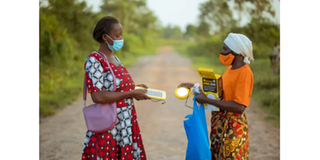
Women proudly displaying solar products received through the EnDev programme which is implemented by SNV Tanzania in collaboration with Solar companies during solar RBF programme.
Lessons for a sustainable future
As the programme celebrates 13 years of impact in June 2026, it leaves behind a blueprint for future development.
The project has proven that market-based approaches where the private sector and local entrepreneurs are empowered are far moresustainable than traditional aid.
However, the work is far from over. Millions of Tanzanians still lack access to clean energy, and the e-cooking market is still in its early stages.
Moving forward, the focus must shift toward scaling these proven models, exploring “productive uses” of energy like solar water pumps for farmers, and integrating digital records to prepare for the global carbon market.
The foundation laid by EnDev, supported by donors is strong. It is now up to the government, the private sector, and new partners to build upon this “decade of transformation” to ensure that no Tanzanian is left in the dark.
For women like Fatma Ramadhani and the nearly two million people impacted by EnDev, the future is no longer obscured by smoke it is bright, clean, and full of potential.
EnDev has been supported by a multi-donor partnership including Germany Cooperation, Ministry of Foreign Affairs of the Netherlands, Norad and Swiss Agencyfor Development and Cooperation (SDC), UKAid, Australian Aid and Sweden.