The clean cooking revolution: How innovative finance redefines Tanzania’s energy future

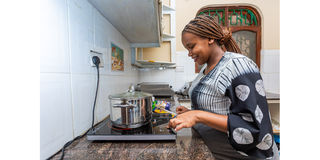
A clean energy stakeholder in Dar es Salaam enjoys the convenience of cooking with an Electric Pressure Cooker (EPC). The appliance was acquired through the innovative loan model of the EnDev programme implemented by SNV Tanzania in partnership with local SACCOS.

In the heart of many Tanzanian households, a silent crisis is simmering. For decades, the ritual of preparing a family meal has been inextricably linked to the pungent smell of charcoal smoke and the laborious task of tending to three-stone fires. While this may seem like a traditional norm, the data paints a far more perilous picture.

According to the Tanzania National Clean Cooking Strategy (2024–2034), the country is grappling with a public health emergency where approximately 33,000 people die annually due to respiratory illnesses directly linked to the inhalation of smoke from solid fuels.

This dependence on tradition-al biomass firewood and charcoal remains staggering, with over 80 per cent of households still relying on these inefficient energy sources. Beyond the health toll, the economic and social burdens are equally heavy. Women and children, who are primarily responsible for fuel collection and cooking, bear the brunt of this “time poverty”.

The hours spent gathering wood or supervising a charcoal stove are hours stolen from education, income-generating activities, and rest.

However, a transformative shift is underway, driven not just by technology, but by an innovative financial model that is putting modern appliances within reach of the common citizen.

The barrier

The solution to this crisis exists in the form of modern electric cooking appliances, specifically Electric Pressure Cookers (EPCs). These devices are capable of cutting preparation time by a staggering 70 per cent, eliminating smoke exposure, and drastically reducing energy bills.

Despite these clear advantages, the barrier to entry has remained stubbornly high. The primary culprit is the upfront cost. For a family earning a modest income, a price tag of Sh 150,000 to Sh 200,000 for an EPC is often a prohibitive investment. Without accessible financing, the “clean cooking dream” remains out of reach for the majority.

The finance-led breakthrough

Recognising that finance is the missing link, SNV Tanzania, through the Energising Development (EnDev) programme, has pioneered a Revolving Loan Fund (RLF) model.

Unlike traditional bank loans that may be intimidating or inaccessible to rural populations, this model leverages the existing and trusted net-work of Savings and Credit Cooperative Societies (SACCOS). The mechanics of the RLF are designed for sustainability and com-munity ownership.

SNV supplies participating SACCOS currently nine in total with an initial first stock grant to a maximum limit of 43 units.

SACCO’s members with a proven credit history can then acquire these appliances through short-term loans. The financial terms are intentionally user-friendly: a modest 7 per cent interest rate with repayments spread over three to four months in flexible instalments.

As members repay their loans, the funds flow back into the SACCOS, which then uses the capital to purchase more units independently. This creates a self-sustaining cycle that transforms the cooperative from a mere financial lender into a provider of clean energy solutions.

Economic empowerment in practice

The true measure of this initiative’s success is found in the stories of those whose lives have been altered by the switch. In Morogoro Municipal, Godfrey Lema, an accountant living with his university-student brother, found himself trapped in a cycle of rising charcoal costs and time-consuming meal preparation.

Before acquiring an EPC through Elimu SACCOS, the brothers spent between Sh 1,200 and Sh 2,000 per meal on charcoal. “The first time I cooked meat in 25 minutes, I couldn’t believe it,” Lema recalls.

By slashing his cooking time and reducing energy costs, Lema and his brother have reclaimed hours that are now dedicated to their professional and academic studies. For Happiness Shayo, a housewife and home-based tailor, the benefits were even more direct. Supporting a family of seven, Shayo previously spent Sh 45,000 monthly on char-coal.

The intense heat and smoke from her old stove drained her energy, leaving her too fatigued to focus on her tailoring business.

After acquiring an EPC on an instalment plan, her monthly energy bill plummeted to Sh 20,000 a saving of Sh 25,000 per month. “I finish cooking early now,” she says. “I finally have time to focus on sewing, and my business is earning more.” In this instance, access to finance acted as a catalyst for economic independence.

Food vendor Saida Kisinda from Iringa tracks her business earnings, which have dou-bled since switching to clean cooking. Thanks to an electric pressure cooker loan from the EnDev programme and SNV Tanzania. Saida has boosted her income and improved her health by eliminating charcoal smoke.

The entrepreneurial edge

The impact extends beyond the domestic kitchen to the bustling roadside food stalls of Tanzania. Catherine Msigwa, a vendor specializing in beans and makongoro, faced chronic health issues like coughing and eye irritation due to constant smoke exposure. Through a loan secured by her partner, Msigwa integrated an EPC into her business. The device allowed her to cook heavy dishes while simultaneously serving customers, effectively doubling her productivity.

“I can now attend to customers while the food cooks,” she notes, adding that her smoke-related health complaints have entirely disappeared.

Scaling for the future

These stories, from young professionals and women who are entrepreneurs to small vendors, highlight a shared truth: removing financial barriers unlocks compounding benefits. Households save 50 – 70% on cooking energy, gain 2 – 4 hours daily, avoid smoke-related illness, and turn saved time into income opportunities.

Together, these strengthen resilience, advance gender equity, and support economic growth. In 2024, the EnDev programme through Revolving Loan Fund partnered with nine SACCOS, facilitating a total of 3,158 units sold to date.

The success of the model relies on more than just the money; it requires a holistic approach including live cooking demonstrations to dispel myths about electricity costs.

These demonstrations prove to the community that cooking a meal with an EPC costs as little as Sh 150 to Sh 250, compared to the Sh 1,200 to Sh 2,000 required for charcoal By seeing the “kilowatts in action,” members are more confident in making the transition.

The RLF model proves that, targeted consumer finance can drive the clean cooking transition at scale. By embedding credit in com-munity institutions, it secures high repayment, ongoing operations, and multiplier effects; each repaid loan funds the next appliance.

Challenges with this model include weak management systems in some SACCOS, which could slow fund rotation and delayed decision-making, hesitancy of some members to take formal e-cooking loans, especially in zero-tariff areas where they feared future electricity tariff increases that contributed to lower uptake and few SACCOS viewed the administrative effort required to manage many small loans as burdensome.

The intervention emphasised that e-cooking transitions are not only technical or financial support but also social and behavioral change, user satisfaction through live cook-ing demo sessions, and visible economic benefits played a major role in sustaining demand. This suggests that future interventions should continue to combine financing, institutional strengthening, and behaviour change strategies.

A call to action

The EnDev programme, supported by a multiple donors has laid the groundwork for a scalable solution. For impact investors, financial institutions, and philanthropists, this model offers a high-leverage opportunity to advance multiple Sustainable Development Goals (SDGs), including Gender Equality (SDG 5), Clean Energy (SDG 7), and Decent Work (SDG 8).With additional capital, expanded seed funds, and technical sup-port, this community-owned model could reach thousands even millions more households. 

Access to finance is no longer just a banking term; it is the vital enabler that is releasing the health, time, and economic potential of the Tanzanian people.

As the nation moves forward, the transition from charcoal to kilo-watts stands as a testament to what is possible when innovative finance meets community trust.

EnDev has been supported by a multi-donor partnership including Germany Cooperation, Minis-try of Foreign Affairs of the Netherlands, Norad and Swiss Agency for Development and Cooperation (SDC), UKAid, Australian Aid and Sweden.