The power of partnership: Boosting local business and security through community-led mining initiatives

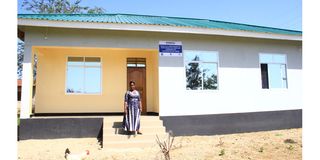
The Head teacher's house at Matongo Primary School in Tarime District, built by Barrick North Mara Mine. Photo by Beldina Nyakeke.

The relationship between the Barrick North Mara gold mine and the communities surrounding its operations in Tarime District, Mara Region, is undergoing a significant transformation.

This strengthening bond is viewed as a primary driver for the economic stimulation of individuals, the local community, and the district at large.

These positive developments are the result of deliberate initiatives and strategic projects undertaken by the mine to ensure that residents benefit both socially and economically from the presence of the mining resource.

These efforts fulfill both legal and social obligations, creating various income-generating opportunities and opening up direct and indirect employment for the local population.

Stakeholders and residents emphasize that this strong relationship is a cornerstone of the area's development.

The Deputy Head of Matongo Secondary School, Mr Joseph Mligo, notes that such a positive environment does not happen by chance; it is the result of practical efforts and the implementation of specific projects.

He stresses that once these relations are built, they must be protected to ensure long-term mutual benefits. At his school, the mine has played a crucial role in improving the educational environment and reducing the dropout rate.

The two-in-one teachers' house at Mjini Kati Secondary School in Tarime District, built by Barrick North Mara mine. Photo by Beldina Nyakeke.

Historically, students in the area faced significant challenges, including walking more than four kilometres to and from Nyamongo Secondary School.

This led to low completion rates, with only 12 to 20 students graduating Form Four annually.

However, with the establishment of Matongo Secondary School, the walking distance has been reduced to less than two kilometres, and the number of graduates has risen to over 80 students per year.

Mr Mligo explains that many of the past conflicts between the mine and the community involved intrusions by youth who lacked education and economic opportunities.

By investing in education, the mine is helping to build a more civilized society that understands the legal and social consequences of criminal acts like mine intrusion.

Consequently, residents have changed their attitudes toward investment, opting for cooperation to secure further economic empowerment.

The physical infrastructure of Matongo Secondary School has been heavily supported by the mine.

According to Project Supervisor Boniface Shagembe, the school now features eight classrooms with furniture, three fully equipped science laboratories, and four teachers' houses.

Some of the classrooms at Mjini Kati Secondary School in Tarime District that were built by Barrick North Mara Mine. Photo by Beldina Nyakeke.
The houses allow teachers to live on-site, which has facilitated the introduction of remedial classes beyond regular school hours.

Similarly, at Matongo Primary School, Head Teacher Suzana Mwita highlights the construction of a modern residence for the head teacher.

She notes that her previous home was a dilapidated and leaking structure that compromised her safety; the new house has improved her work efficiency and standing in the community.

In Kewanja Village, Chairman Joshua Masiaga attributes the improved relations to the mine's proactive approach to resolving community development challenges.

He notes that involving the community in social and economic matters based on available opportunities has directly impacted residents' lives.

A key initiative is community policing, where residents from surrounding villages are employed as security personnel within their own communities.

This programme provides a reliable source of income for the guards while successfully reducing mine intrusion incidents by more than 95%.

The governance of community benefits is managed through the Community Development Committee (CDC).

Chairperson Bogomba Rashid states that the visible implementation of large-scale projects has significantly improved the relationship between the mine and the residents.

Currently, Corporate Social Responsibility (CSR) funds are sent to the district council, but the committee is proposing a new system where 60% of CSR funds would go directly to the 11 villages surrounding the mine, with 40% remaining with the council.

Additionally, there is a call for the government to finalize licences for small-scale mining to allow local youth to engage in mining under government guidance.

Local business growth is another major pillar of this partnership.

Director of Kunyonyi General Supply Company Joseph Ntora reveals that the mine spends over Sh20 billion quarterly to pay local contractors. This investment has created a vital chain of employment for the citizens.

Some of the classrooms at Matongo Secondary School in Tarime District that were built by Barrick North Mara Mine. Photo by Beldina Nyakeke.

He observes that many residents who once thought they could only benefit by stealing from the mine now see the importance of protecting the mine because they are benefiting through legitimate business opportunities.

Approximately 80% of Nyamongo’s economy is now derived from the mine's presence. Chesco John, Project Manager at Stanley Engineering, points out that past complaints regarding discrimination against local companies have been resolved.

By working with local firms, the mine provides employment that directly impacts the lives of residents, fostering a positive image of the investor.

Local employees, such as machinery supervisor Fredy Nchagwa, explain that the benefits of the mine are multifaceted; for example, an employee may use their earnings to open a secondary business that provides further jobs for others in the community.

To maintain these gains, the mine’s management has enhanced its community engagement strategies.

This includes active participation in village meetings, providing clear communication on issues raised by residents, and ensuring the timely resolution of complaints through an external relations office.

Furthermore, a dedicated complaints clinic has been established in collaboration with regional and district government officials and non-governmental organizations to foster and maintain positive relations with the surrounding communities.

These multifaceted efforts in education, security, governance, and local business ensure a shared future for both the mine and the residents of Tarime.