Othman criticises Union structure over Zanzibar revenue losses

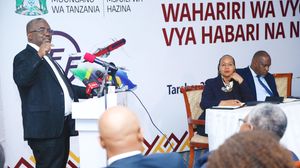
former Zanzibar’s First Vice President and  ACT Wazalendo Chairman, Othman Masoud Othman. PHOTO | COURTESY

Pemba. ACT Wazalendo Chairman, Othman Masoud Othman, has criticised the current Union structure between Tanganyika and Zanzibar, saying it deprives the Isles of significant revenue and weakens its economy.

Mr Othman, who is the former Zanzibar’s First Vice President, made the remarks during a youth forum held at Istiqama Hall in Wete District, North Pemba Region, as part of activities marking 62 years of the Union.

He argued that the existing arrangement forces Zanzibar to depend heavily on borrowing to finance its budget, noting that a fair distribution of Union revenues would reduce the need for such loans.

“The current system compels Zanzibar to borrow unnecessarily. If revenue-sharing mechanisms were properly implemented, the Isles would not face this level of financial strain,” he said.

Mr Othman told participants that several Union institutions operating in Zanzibar including banks and telecommunications firms generate substantial income but do not channel any returns to the Isles. He attributed this to what he described as structural flaws in the Union framework.

He maintained that equitable revenue sharing would enable Zanzibar to achieve stronger economic growth and compete with similar economies, but said the current system continues to constrain its development potential.

The ACT Wazalendo leader also questioned the effectiveness of past efforts to address Union challenges, including recommendations from the Shelukindo Commission, saying they have not been implemented.

He cited provisions in the 1984 Constitution that call for the establishment of a Joint Revenue Commission and a shared Union account, arguing that failure to operationalise these mechanisms has denied Zanzibar its rightful income.

Mr Othman blamed the ruling Chama Cha Mapinduzi (CCM) for what he termed a lack of political will to implement the provisions, adding that his party would pursue the matter, including through legal channels, if given the mandate to lead.

He further claimed that Zanzibar holds equity in the Bank of Tanzania (BoT) but has not received corresponding dividends, pledging to seek the funds through the courts if necessary.

According to him, the current Union setup limits Zanzibar’s ability to achieve sustainable development, as reliance on loans continues to dominate its fiscal planning.

ACT Wazalendo’s legal officer, Mr Omar Said Shaaban, echoed the concerns, saying Zanzibaris have yet to benefit fully from Union resources and opportunities.

He cited industrial licensing arrangements as an example, noting that while licences are issued at the Union level, products manufactured in mainland Tanzania are not treated as Union goods, an arrangement he said disadvantages Zanzibar.

Mr Shaaban also raised concerns over efforts to expand clove production on the mainland, warning that such initiatives could undermine Zanzibar’s long-standing identity in the global clove market.

On trade, he said the current regulatory framework places some non-Union matters under external affairs, limiting Zanzibar’s participation in both domestic and international markets.

He added that proposals to designate Zanzibar as a free economic zone have been rejected by the Union government over taxation concerns.

Mr Othman concluded that while the Union was intended to expand economic opportunities, it has instead constrained them, calling for support on reforms aimed at addressing longstanding grievances.