Technology to track illegal loggers rolled out in Zanzibar
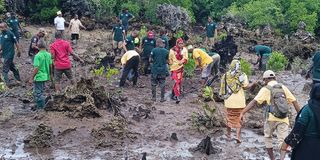
Residents and staff of the Ministry of Agriculture, Irrigation, Natural Resources, and Livestock planting mangrove trees along the coast of Muyuni Shehia in the Southern District of South Unguja Region, as part of World Tree Planting Day celebrations. Approximately 2,500 mangroves were planted in the area, which previously had mangroves but were cut down due to various human activities. PHOTO | JESSE MIKOFU
Unguja. The Revolutionary Government of Zanzibar has unveiled plans to deploy digital technology to monitor and curb illegal logging, as authorities move to address escalating deforestation across the isles.
The initiative was announced on Monday, March 23, 2026, during the commemoration of World Tree Planting Day, held nationally at Muyuni Shehia in the South District of Unguja, where 2,500 mangrove trees were planted.
This year’s theme in Zanzibar emphasises the economic value of conservation: “Upland and mangrove forests are a sustainable economy; let us continue to protect them.”
Speaking at the event, the Director of the Department of Forestry in Zanzibar, Mr Said Juma Ali, said forests continue to face significant pressure despite their ecological and economic benefits.
He noted that both upland and mangrove forests have been extensively degraded due to human activities.
“The biggest challenge is mangrove deforestation, which has now become alarming, particularly in areas such as Chwaka Bay and Chake Chake,” he said.
Mr Ali explained that some individuals exploit tidal patterns to access and cut mangroves.
“We are finalising a plan to introduce digital surveillance. Anyone entering protected forest areas will be detected in real time. With support from technical experts, this system will make enforcement easier,” he said.
For his part, the Minister for Agriculture, Irrigation, Natural Resources and Livestock, Mr Suleiman Masoud Makame, called for strengthened community participation in forest conservation.
He said the government plans to plant more than three million trees during the ongoing long rains.
Mr Makame also revealed that amendments to the 2016 Forest Act are underway to strengthen enforcement mechanisms.
“We urge communities and investors alike to protect these forests. Those investing in forest areas must ensure their preservation,” he said.
He highlighted economic opportunities linked to forest conservation, including beekeeping and crab farming, but warned against destructive practices.
“The cutting of mangrove trees is strictly prohibited. Anyone found engaging in such activities will face legal action,” he stressed.
Mr Makame said that the government is introducing tougher legal measures to safeguard forests, noting that mangroves play a crucial role in producing clean oxygen and attracting international visitors.
South District Commissioner Mr Othman Maulid said forest ecosystems also contribute to tourism by providing unique environments for visitors.
“Tourists experience a noticeable difference in air quality in these areas, making them ideal for relaxation,” he said.
He cautioned against unsustainable crab farming practices that involve clearing mangroves.
“We will not tolerate indiscriminate cutting of trees. Firm action will be taken against offenders,” he warned.
Meanwhile, the Zanzibar Community Forest Management Association, popularly known by its Kiswahili acronym as Jumijaza, said it continues to raise awareness on the importance of forest conservation.
Presenting a statement, Mr Khamis Haji said the association is working to strengthen biodiversity conservation, support communities and promote carbon trading initiatives through local forest committees.
Over the past 15 years, the organisation has partnered with committees in 56 shehias across Unguja and Pemba to manage natural resources.
He said that recent government approval of carbon trading regulations presents an opportunity for citizens to benefit economically from conservation efforts.
During the current rainy season, Zanzibar targets to plant 3.273 million trees, including fruit and spice trees, forest species, coconut palms, cloves and mangroves.
Register to begin your journey to our premium contentSubscribe for full access to premium content