Zanzibar ministry targets PPP reforms with Sh27 billion budget plan
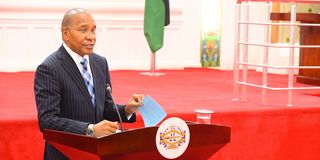
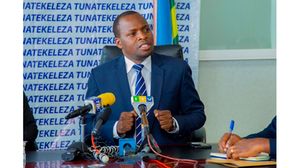
The Minister of Labour and Investment, Mr Shariff Ali Shariff, presents revenue and expenditure estimates for the 2026/27 financial year during the House of Representatives session held on Thursday, May 14, 2026, in Chukwani, Unguja. PHOTO | JESSE MIKOFU
Unguja. The Ministry of Labour and Investment is set to spend Sh27.091 billion in the 2026/27 financial year to implement 24 programmes under its two key departments responsible for investment, labour, and employment.
Through its investment programme, the ministry plans to roll out eight major initiatives, largely centred on public-private partnerships (PPP).
Presenting the ministry’s revenue and expenditure estimates to the House of Representatives on Thursday, May 14, 2026, Minister for Labour and Investment Shariff Ali Shariff said Sh6.8 billion would go to salaries, Sh5.2 billion to recurrent expenditure, and Sh15 billion to development projects.
He said the ministry would review PPP policies, laws, regulations, and guidelines to ensure alignment with current economic conditions in Zanzibar, protect the Isles’ interests, strengthen implementation of existing PPP projects, and attract more investors.
“We will coordinate public investment projects implemented under the PPP framework initiated by the private sector, taking into account capital, technology, innovation, and modern implementation approaches,” said Mr Shariff.
He said the government would establish a database for feasibility studies of projects planned or underway under the PPP framework to centralise and simplify access to information.
Another priority will be strengthening the capacity of government officials across ministries, departments, and institutions in preparing public projects under PPP arrangements to ensure transparency, efficiency, and protection of government, investor, and public interests.
The ministry will also organise and participate in PPP seminars, workshops, and stakeholder dialogues involving the private sector, public institutions, development partners, financial institutions, and the public to raise awareness and curb misinformation surrounding PPP investment projects.
Labour and Employment Department
On labour matters, Mr Shariff said the ministry plans to verify 12,000 employment contracts for local and foreign workers to ensure compliance with international labour standards.
The government also plans to continue ratifying six International Labour Organization conventions on social protection, domestic workers, occupational safety and health, and compensation for workers affected by workplace accidents.
Another priority is combating child labour to prevent exploitation of children under 18, while finalising labour laws to align them with current economic conditions and protect the interests of workers and employers.
The ministry will further oversee implementation of occupational safety and health laws, draft seven regulations on workplace safety and health, and provide education to employers, employees and the wider public on labour matters to improve understanding of laws, guidelines, rights and responsibilities at workplaces.
“We will continue improving the digital labour information management system to strengthen labour data management,” he said.
Presenting the committee’s views, Chairman of the House Committee on Economy and Investment, Mr Makame Mohamed Sufiani, said the committee observed delays in fund releases, affecting institutions under the ministry and hindering achievement of targets.
“We advise the government to ensure timely release of funds in the remaining period to enable the ministry to achieve its objectives,” he said.
The committee also urged the ministry to strengthen cooperation with the Ministry of Youth and Empowerment to develop joint strategies connecting Zanzibaris with overseas employment opportunities and establish a reliable system for collecting revenue from foreign employment.
The committee further called for improved monitoring and evaluation mechanisms across all programmes to ensure value for money, timely delivery of projects, and enhanced accountability in the use of public funds allocated to the ministry during the 2026/27 financial year and related government investment and accountability priorities across sectors.