Zanzibar plans record Sh8.217 trillion budget for 2026/27

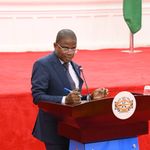
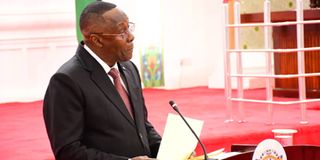
Minister for Finance and Planning, Dr Malik Akil, presents the National Development Plan and 2026/27 Budget Framework during a House of Representatives session in Chukwani, Unguja, Zanzibar. PHOTO | COURTESY
Unguja. The Revolutionary Government of Zanzibar has set its budget framework for the 2026/27 financial year at Sh8.217 trillion.

This is an increase of Sh1.235 trillion, equivalent to 17.69 percent, from the Sh6.982 trillion approved for 2025/26.

The estimates reflect policy reforms and revenue mobilisation strategies planned for 2026/27, the Minister for Finance and Planning, Juma Malik Akil, said on Tuesday, February 17, 2026.

Dr Akil presented the budget framework during the 11th session of the House of Representatives of Zanzibar in Chukwani, alongside the National Plan and budget direction.

The government’s budget dependency ratio is expected to decline from 4.9 per cent in 2025/26 to 4.5 per cent in 2026/27, driven by strengthened domestic revenue collection and internal borrowing strategies.

Domestic revenue is projected at Sh6.613 trillion, up by Sh1.076 trillion, representing a 19.4 per cent increase from the 2025/26 estimate of Sh5.537 trillion.

The projection includes tax and non-tax revenue, domestic loans, local government income and earnings from autonomous institutions.

“In this analysis, the Zanzibar Revenue Authority will collect Sh1.684 trillion; the Tanzania Revenue Authority in Zanzibar Sh1.128 trillion; and PAYE fromemployees Sh21 billion,” said Dr Akil.

He said non-tax revenue is expected to contribute Sh350.664 billion; domestic loans for development projects Sh2.9 trillion; local government revenue Sh23.915 billion; and autonomous institutions Sh505.272 billion.

To boost domestic revenue, he said the government plans to increase allocations to the debt service fund, improve collection systems and ensure that no revenue is collected outside official channels.

“Oversight of institutions collecting non-tax revenue will also be strengthened,” he said.

Dr Akil said revenue from aid and development partner loans is projected at Sh1.604 trillion, including Sh1.062 trillion in loans and Sh391.750Sh391.750 billion in grants. Of this amount, Sh560 billion will come from the Development Partners Joint Fund and Sh150 billion from general budget support.

Recurrent expenditure is estimated at Sh2.923 trillion (35.58 per cent), including Sh1.003 trillion for salaries.

“Sh698.871 billion will cater for running offices; Sh701.012 billion for the Consolidated Fund; and Sh14.700 billion for local government expenditure from domestic revenue,” said Dr Akil.

Development expenditure of Sh5.294 trillion, or 64.42 per cent, has been earmarked for implementing the development plan. This includes Sh2.705 trillion for new and ongoing strategic projects, Sh600 billion for the debt service fund and Sh542.780 billion for otherongoing projects.

He said the government would continue mobilising resources to finance strategic projects, particularly those that accelerate economic growth, while ensuring public debt sustainability.

“Measures include strengthening digital revenue systems, controlling tax evasion, simplifying procedures, educating taxpayers and enhancing revenue audits,” he said.

Dr Akil said that efforts would focus on productive sectors such as tourism, agriculture, fisheries, SMEs and the blue economy to boost domestic revenue for economic and social development.

Presenting the Budget Committee’srecommendations, chairman Ali Suleiman Ameir urged institutions to educate stakeholders and involve the private sector when introducing new taxes, while ensuring tax equity.

The committee also advised the government to finalise the development plan promptly, prioritise ongoing projects, streamline regulatory functions, remove overlapping permit responsibilities, eliminate nuisance fees and strengthen public-private partnerships.

“To achieve sustainable development, the committee stresses the need to boost domestic production, especially in sectors employing many citizens,” said Mr Ameir.

"Special strategies are needed to strengthen the industrial, agricultural and fisheries sectors to ensure sustainable development for the nation and every citizen,” he said.