Zanzibar private sector points to strengths, gaps in 2026/27 budget draft
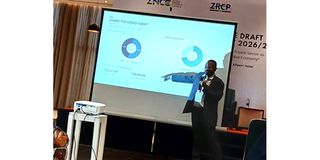
The Executive Director of the Zanzibar Research Centre for Socioeconomic and Policy Analysis (ZRCP), Dr Twahir Mohamed Khalfan, presenting an analysis of the budget direction of the Revolutionary Government of Zanzibar for the 2026/27 financial year during a session to discuss the draft budget in Unguja, Zanzibar.
Unguja. Private sector stakeholders in Zanzibar have identified both strengths and shortcomings in the 2026/27 draft budget of the Revolutionary Government of Zanzibar urging broader inclusion of businesses in the implementation of development plans.
According to the schedule of the House of Representatives, the Government of Zanzibar Budget Speech is expected to be presented on June 11, 2026 at 10pm.
The draft estimates revenue and expenditure for the 2026/27 financial year at Sh8.217 trillion, marking an increase of Sh1.2 trillion from the Sh6.9 trillion budget for 2025/26. Of the total amount, Sh5.294 trillion, equivalent to 64.42 percent of the budget, has been allocated to development projects.
Speaking during a private sector dialogue organised by the Zanzibar Research Centre for Socioeconomic and Policy Analysis (ZRCP) in collaboration with the Zanzibar National Chamber of Commerce (ZNCC) on May 23, 2026, stakeholders said the government must involve the private sector in the implementation of development programmes.
Presenting a paper during the discussion, ZRCP director Dr Twahir Mohamed Khalfan said the institution was analysing key areas of the budget and how government investment priorities and financial decisions affect communities and businesses.
“The expectations reflected in the draft are not surprising because they are a continuation of the government’s strategy over the past four years of investing in large strategic projects. This creates opportunities for the private sector to engage in business with the government and add value to those projects,” said Dr Twahir.
However, he noted that Zanzibar’s economy remains heavily dependent on tourism, while its value chain remains weak due to the limited contribution of other sectors to the tourism industry.
“For example, much of the food and products sold within the tourism sector are imported rather than produced locally. This results in capital outflows that benefit the economies of other countries,” he said.
He further said the contribution of the fisheries sector remains below 20 percent, while agriculture has continued to lose its significance as a major economic sector, despite employing many people in fishing and seaweed farming.
Nevertheless, he pointed to strong growth in the construction sector, describing it as one of the most profitable sectors in Zanzibar’s economy.
“Even within construction, many raw materials are imported. Zanzibar may not be suitable for large-scale industries, but there is a need to invest in small industries,” he said.
He added that greater attention should be directed towards industrial development, warning that the sector has continued to decline and receive less policy focus over time.
He also stressed the need to strengthen the domestic capital market to enable ordinary citizens, particularly locals, to invest their small incomes in economic opportunities.
Meanwhile, Zanlink chief executive officer Sanjay Raja criticised the proposed 17 percent excise duty on internet services, arguing that it undermines the government’s digital transformation agenda.
“The government has introduced two conflicting policies. One seeks to promote digital transformation, while the other imposes a 17 percent excise duty on internet usage. The two cannot coexist,” said Mr Raja.
He said no sector in the modern world can function effectively without internet services, whether public, private or individual.
ZRCP director of research and policy analysis Dr Muhsin Masoud said ongoing global conflicts have contributed to rising fuel prices, which in turn continue to push up the cost of other goods.
He said taxes such as Value Added Tax (VAT), excise duties and other levies linked to commodity prices should be carefully reviewed.
“I believe the advice to the government at this point is to exercise greater caution and avoid implementing these taxes strictly based on rising costs or prices, in order to provide relief,” he said.
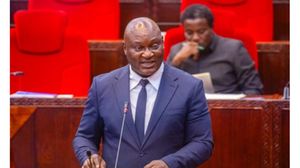
For his part, Deputy Minister for Finance and Planning Dr Hamad Omar Bakar welcomed the discussions, saying they provided an important platform for reviewing the direction of the government budget and proposing areas for improvement.
He said the government’s annual priorities are aimed at promoting public development through strategic projects that benefit society as a whole, including the business community.
Among the key objectives of the budget, he said, is the creation of an enabling environment that allows the private sector to grow and contribute more effectively to the economy.
“Every year we continue to introduce improvements aimed at advancing overall development. Our goal is to create an environment free from unnecessary barriers and restrictions,” said Dr Hamad.
ZNCC executive director Hamad Hamad said the dialogue was intended to help the public understand the government’s budget priorities, tax changes and policy direction.
“Traditionally, discussions in the House have largely involved experts and policymakers, while the private sector has not had broad participation. This dialogue will help assess how new taxes affect businesses so that interventions can be made early before negative impacts emerge,” he said.