Tanesco’s daunting task: Will power utility deliver the goods?
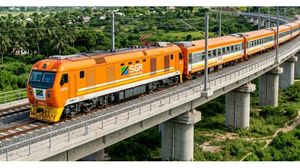
The Tanzania Electric Supply Company (Tanesco) faces the daunting task of ensuring a steady supply of power to electric trains that are set to be deployed in Phase One of the standard gauge rail that will connect Dar es Salaam with Morogoro.
With the $1.2 billion speed train project scheduled for completion in October 2019, it will be interesting to see how the national power utility will put its house in order, amid perennial challenges, to fulfill responsibilities that could produce a defining moment in the country’s quest for industrial development.
The enormous challenge was laid bare during the 2018 Korea-Tanzania Energy and Transport Cooperation Forum, which was held in Dar es Salaam on Wednesday. During his remarks at the forum, the acting director of Technical Services at the Tanzania Railway Corporation (TRC), Mr Felix Elineema Nlacio, challenged the management of Tanesco to ensure it was ready for the daunting task ahead.
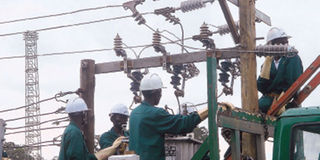
“We’ll need Tanesco to be at its best to be able to fulfill its mandate of powering the electric trains,” he said, after the power utility’s principal engineer for Investments, Eng Maksesius Kalinga, had revealed that the power utility was losing up to 16 per cent of electricity due to its aging transmission and distribution infrastructure.
Eng Kalinga also cited the high cost of power generation – associated mainly with thermal plants, climate change and high non-technical losses of power as other challenges that the power utility was grappling with.
“However, we’re meeting these challenges head-on. For instance, we have recently been increasing inspections on facilities, replacing meters, using smart-meter technology and diversifying power-generation resources. We’re also investing on cheaper sources of power and expanding our services to off-grid areas,” he said.
He also revealed that the power utility was on course to achieving energy sufficiency with the completion of the Rufiji hydropower project in 2020 (2,100MW), Kinyerezi I Extension in September 2018 (185MW), Kinyerezi II in September 2018 (240MW), Mtwara Gas-Fired Powered plant in 2021 (300MW), Somanga Fungu Gas-Fired Power plant in 2020 (330MW), Kakono Hydropower Project in 2020 (87MW), Malagarasi Hydropower Project in 2020 (45MW) and the Rusumo Hydropower Project (80MW), among others.
When stressing the importance of adopting the Republic of Korea’s model of running the railway transport sector, which he cited as a key consultant for the SGR project, TRC managing director Masanja Kadogosa advocated for heavy investment in auxiliary services along the rail network.
“The Korean model is designed in such a way that the real estate that accompanies the rail infrastructure rakes in revenues that constitute over 40 per cent of earnings by Korea Railroad Corporation (KORAIL). For instance, the real estate associated with KORAIL generates over $1 million daily,” said Mr Kadogosa.
The Energy and Transport Forum, which hosted a rich mix of key sectoral players, saw stakeholders unveil strategic plans and projects aimed at boosting the country’s marathon towards the Development Plan (Vision 2025) and other initiatives aimed at transforming the country economically.
Ministry of Energy permanent secretary, Dr Hamisi Mwinyimvua, who delivered remarks on behalf of Energy minister, Dr Medard Kalemani, said that in the face of electricity challenges in the country, Tanzania was studying the Korean energy model and borrowing its experience in utilizing its own vast energy resources.
“There is a critical need for additional megawatts that will ensure investors and individuals get access to reliable, affordable and sustainable energy. However, this calls for massive investment in the power-generation sector as currently the high tariffs are inhibiting development,” he noted.
Earlier when making his opening remarks at the forum, the ambassador of the Republic of Korea in the country, Mr Song Geum-Young, hailed Tanzania as the de facto gateway to Africa for his country, naming a raft of key projects that the two nations had collaborated on and others that were currently underway.
He singled out the National ICT Broadband Backbone (NICTBB), Muhimbili National Hospital’s Mloganzila branch, the Tanzania Technology Park (TTP) within the Bagamoyo Special Economic Zone (SEZ) and the forthcoming construction of the Selander bridge in Dar es Salaam as among a few areas where the two countries had collaborated.
“The opening of the Tanzanian embassy in Korea last January marked an important milestone in our countries’ 26 years of diplomatic relations. We’re now firmly behind Tanzania’s Vision 2025 and other development intiatives,” the envoy said.
The Energy and Transport forum follows closely on the heels of the ICT Cooperation Seminar, which was also organised by the Korean embassy over a week ago. It builds on the two countries’ budding bilateral relations that span major economic sectors crucial in determining the country’s economic direction.
Others who spoke at the forum were the East Africa Crude Oil Project (EACOP) coordinator from the ministry of Energy Salum Mnuna; the National Institute of Transport rector, Eng Zacharia Mnganilwa; Prof Jung-Wouk Woo from the Korea National University of Transportation; Dr ChiUng Song from the Science and Technology Policy Institute of Korea and representatives of Yapi Merkezi who are contracted to undertake the SGR project, among others.