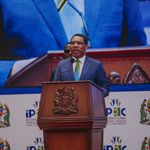
Speaking in Dodoma, the PM sought to dismiss fears and quell the heated debate that has engulfed the nation over whether the government was right in banning the export of the mineral concentrates and ordering an investigation on the composition of the exports.
Dodoma/Dar. Prime Minister Kassim Majaliwa yesterday struck a reconciliatory tone, assuring mining companies that the government would not take measures that will be unfair to their businesses in the current standoff over the export of mineral concentrates.
Speaking in Dodoma, the PM sought to dismiss fears and quell the heated debate that has engulfed the nation over whether the government was right in banning the export of the mineral concentrates and ordering an investigation on the composition of the exports.
“We are appealing to the general public and the investors to be calm. There is no need to fear or speculate as the government has not taken any steps yet on the matter. I assure the mining companies that any decisions taken will be above board,” said Mr Majaliwa during the Question and Answer session in the Parliament.
He was replying to a question by Mr Emmanuel Mwakasaka (Tabora Urban-CCM), who wanted the government to explain its stand on the current standoff with Acacia. The MP said there were fears the ban on the export of the concentrates will affect Tanzania’s economy and hurt its bilateral relations with other countries. In response, Mr Majaliwa hinted that the government was laying the foundation for dialogue with the mining investors for a win-win outcome in the standoff. He said the talks would however wait for the outcome of the second presidential committee investigating the economic and legal framework on mining.
“It is true we are in line to receive the second report on the presidential committee investing the legal, economic and political consequences on the export of the mineral concentrate. But so far no decision has been made on the way forward and I want to assure investors to continue with their work as usual except for the export of the concentrate which is banned,” said the PM.
“I beseech you MPs to help clam our people and ask them to wait for the outcome. As government, we will, however, not take steps without due process or any such process that would be unfair to the investors,” explained Mr Majaliwa.
He also suggested that the government would pursue several options including having a gold smelter established in the country. He said part of the engagement with the investors would geared at finding a solution to end the export of mineral concentrates and ensure they are processed locally.
“Regarding smelters, we are looking at the possibility of establishing one here. The problem is, there was no openness in this area but we will weigh all our options, including the possibility of inviting an investor to establish one here. We will also engage the miners here and also see whether we could participate as well,” the PM said.
He told Parliament that President Magufuli acted on the longstanding complaint by MPs and ordinary Tanzanians about the benefit that the country was gaining from the exploitation of its mineral wealth.
Mr Majaliwa’s assurance has come at a time when tension is rife on what steps, if any, that may be taken by Acacia over the export ban which it has claimed was causing it a $1 million loss everyday. A week ago shares in Acacia plunged by a record 30 per cent following the release of the report.
The miner has indicated it may be forced to close its operations in Buzwagi and Bulyankhulu if the ban on the exports was not quicky resolved.
Operations at Bulyankhulu were suspended a week ago as the government ordered replacement of audit officials over the findings of the first committee that probed the contents of the mineral concentrates. President Magufuli also ordered that security and intelligence personnel be stationed at the mines.
The ban on the exports which earnestly started in March was extended when the committee led by Prof Abdulkarim Mruma last month reported that the content and value of minerals copper concentrate destined for export was under-declared by up to 10 times.
The committee said the government was receiving inadequate royalty and no payment for some of the minerals not extracted for lack of a smelter. The committee raised concern over the manner in which Tanzania Mineral Audit Agency (TMAA) officials and those at the ministry of energy and minerals handled the whole verification process.
President Magufuli sacked energy minister Prof Sospeter Muhongo and other top officials of the ministry and TMAA and ordered a sweeping investigation against them on the day that he received the report. He also dissolved the TMAA board of directors.
However, Acacia has vehemently dismissed Prof Mruma’s findings and defended its record in handling the entire process to attain the concentrate for export. The company said it has declared fully the minerals it extracted and paid the royalty due.
In recent days, Acacia has demanded that a reputable and independent international firm carry out a second audit of the mineral concentrates, crying foul that the government of Tanzania carried out a partial probe that did not involve them or any other agencies.
There has also been unconfirmed reports that the mining giant was planning to sue the government at the international arbitration court in London over the stalemate. Acasia CEO Brad Gordon has made several trips into the country since the dispute started, but nothing concrete appear to have come out of his visits.
Yesterday, the Tanzania Chamber of Minerals & Energy (TCME) added its voice, supporting Acacis’s call for an independent sampling of gold and copper concentrates.