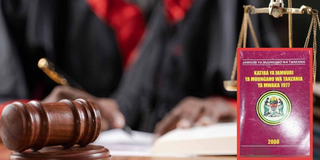
Dar es Salaam. As stakeholders are fighting for a new Constitution to address complained-about challenges, the Alliance for Democratic Change (ADC) party chairman, Mr Shaban Itutu, has raised a new point regarding the need to campaign for the establishment of a Constitutional Court.
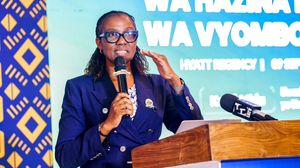
Mr Itutu clarified this while contributing to the debate at a national stakeholders' meeting aimed at reflecting on the country's political situation, the 2025 General Election, and the nation's future, organised by the Tanzania Centre for Democracy (TCD).
Mr Itutu said the establishment of that court will help lay a solid foundation to supervise and guarantee the execution of matters specified in the Constitution.
He says the major challenge he sees is not merely the existence of a Constitution, but how it is supervised and executed, stating that even the current Constitution faces this challenge.
He says the existing Constitution has minor shortcomings and that even the new Constitution proposed by stakeholders will be meaningless if there is a vacuum in its supervision and execution.
"The current Constitution does not have major shortcomings. Even this new Constitution which we are proposing and which is the outcry of stakeholders, if obtained but accompanied by a supervision vacuum like the current one, it will seem like nothing," said Mr Itutu.
The politician says that, along with the debate on the new Constitution, it is important to also look at the system of ensuring that constitutional provisions are respected and executed properly to bring equality of rights without one group appearing to be pointed at.
History of constitutional amendments
In that debate, retired Prime Minister Joseph Warioba said the debate on the new Constitution has taken a long time because the current Constitution does not differ significantly from the one left by colonialists, except that it has undergone amendments and been translated from English to Swahili.
He says some of the changes made include introducing presidential term limits, recognising human rights, and establishing the position of Prime Minister.
"For 25 years, major changes were made, but after restoring the multi-party system, the debate to change the Constitution began, especially after the Justice Nyalali Commission offered advice," he said.
Justice Warioba says that the debate continued until the time of retired President Jakaya Kikwete's government, which established a Commission to gather citizens' opinions from various areas across the country, while he (Justice Warioba) was assigned the duty to lead it.
"The process continued until we obtained the Proposed Constitution. Although I regret to say many things expressed by citizens were removed, especially the issue of leaders' ethics. That is why currently the issue of ethics for public leaders is a problem and needs improvement," he said.
He said a new Constitution is needed, first, to restore power to citizens in deciding the leader they want, saying that the right does not fully exist.
"Even election supervisors lack ethics. That is a problem and has contributed to bringing us to the situation we are in today. Even the procedure used to disqualify candidates is unfair and has contributed to bringing us problems," he said.
Justice Warioba said for Tanzania to return to its foundations, citizens must be restored the power to elect leaders they want, saying corruption is widespread and citizens are unsatisfied with this state of affairs.
He said another area needing improvement is the separation of powers, emphasising that all branches of government should execute their duties independently without interference.
"The area of powers, especially within all three branches, means each branch should work independently without interference. Parliament currently lacks significant powers because the government is inside Parliament," he said.
The current one should be amended
The Tanzania Labour Party (TLP) chairman, Mr Richard Lyimo, said there is no need for Tanzania to obtain a new Constitution, but what is needed is to make amendments to the current Constitution to include necessary matters.
He said having a good Constitution alone is not enough if there are no good supervisors to execute it.
"We can have a good Constitution, but lack good supervisors. We must ask ourselves what the problem is. We see our neighbours, despite having a new Constitution, continuing to falter," he said.
Mr Lyimo builds this argument by referencing the speech of the meeting’s chief guest, Justice Warioba, who said the current Constitution has been amended whenever a major event occurred in the country.
"I have understood, and I say no major event has occurred. I see it as ordinary as such. I see we should make amendments to the existing Constitution by putting the things we want. Let us respect history," he said.
Reconciliation before Constitution
Chaumma’s director of communications, Mr John Mrema, advised that before entering the process of obtaining a new Constitution, it is important first to talk and remove the existing misunderstanding.
"We cannot enter the process of getting a new Constitution as we are, fractured into pieces. We need to reconcile first by speaking the truth and agreeing," he said.
The Tanzania Episcopal Conference (TEC) deputy decretary-general, Father Faustine Furaha, offered three recommendations that will help Tanzania return to the foundations of peace, including leaders speaking the truth and executing what they say.
Another matter is restoring competitive elections, alongside building a discipline of respecting other people's ideas, saying that holding press conferences in every corner to respond to others' arguments does not build a peaceful nation.
Father Furaha said when a leader says something, it is important they mean it and ensure it comes from the heart, as that helps build trust among citizens.
"So that we can build foundations of mutual trust from the first day to the last, there are things that happened in between that caused problems and brought about many things happening in the country," he said.
He said the second matter is restoring competitive elections, explaining that young people like competing, and if given that opportunity, they will be happy, while continuing with the current system risks increasing challenges.
"I have read the Constitution of Tanzania. Article 18 says everyone is free to express opinions. As days go by, I see that situation disappearing. When you give ideas, you are attacked; people emerge here and there holding press conferences to respond, while the country has elders and adults. Without removing that situation, we cannot move forward," he said.
He said the current situation in the country is that a person can offer ideas, and the next day you see people from various places using platforms to oppose those ideas.
"We must accept there are adults who will offer advice; let us listen. If you have your opinion or want to raise an argument, do not attack the person; raise the argument," he said.
Women and politics
The Women Politicians Association (Ulingo) national coordinator, Dr Ave-Maria Semakafu, said the ongoing uncertainty in the country affects women's participation in politics and decision-making systems.
She said that the situation has been making it difficult for women to participate in politics, while emphasising the importance of amending systems to provide more opportunities for women.
"The ongoing situation affects and creates difficulty for women to participate in politics. We said we would like systems amended to provide opportunities for women. Even in the discussion of what occurred on October 29, 2025, some people have taken authority upon themselves to speak about what happened," she said.
She said that even on the issue of reconciliation being spoken about by the President, there are still people emerging to clarify what the President has said.
Dr Semakafu said women's participation at decision-making levels remains a challenge, noting that even the criteria for securing special seat positions through political parties are not openly known.
"Without having money, you cannot be a leader at a democratic level. That challenge becomes more than twice as hard. We need to change systems and remove the notion that to be a leader you must have money," she said.
Use of state organs
ACT-Wazalendo Mainland vice chairman, Mr Isihaka Mchinjita, said the problem present in the country is failure to follow the Constitution and existing laws, while alleging that state organs have been used in political matters.
"At polling stations, ballot papers for electing leaders are stolen. We must stop high-handedness and observe the Constitution and existing laws," he said.
Regarding the constitutional debate, Mr Mchinjita said he does not support getting a patched-up Constitution, saying the current Constitution has had many problems, including failing to prevent challenges involving civilian killings.
"It is important we obtain an implementation calendar for a new Constitution. Let us submit a Constitutional Law Amendment Bill so that we obtain a Constitution capable of solving challenges troubling citizens," he said.
Former NCCR-Mageuzi chairman, Mr James Mbatia, said since the conduct of last year's general election, anger has been high among citizens, saying that situation is a man-made disaster and has birthed various perspectives.
"Since we will seek consensus and the truth has become known, people died last year, although we differ regarding numbers. But let us know prevention is better than cure. Let us strive to use our tongues well because they can be a source of disaster," he said.
Mr Mbatia said what is needed is building tolerance and mutual trust, emphasising the importance of treating peers in the manner they deserve, considering the broader future of building the nation.
Register to begin your journey to our premium contentSubscribe for full access to premium content