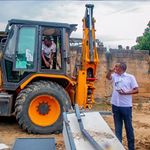
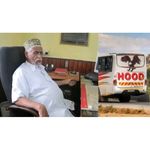
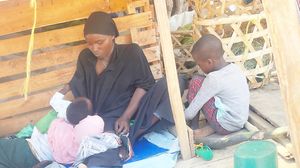
Court scene: The making of Prof Jay’s video on his latest single Kipi Sijasikia featuring Diamond. Such local scenes are becoming rare as most artistes now prefer foreign directors to local ones. PHOTO | COURTESY OF THIS IS DIAMOND
What you need to know:
In today’s world where image is everything, music videos are primarily made and used as a marketing tool intended to promote the sale of music recordings.
A music video is a short film that integrates a song and imagery, produced for promotional or artistic purposes.
In today’s world where image is everything, music videos are primarily made and used as a marketing tool intended to promote the sale of music recordings.
Many of today’s artistes owe a great deal of their success to the skill-full construction and seductive appeal of these videos and that is why they pay big amounts of money.
In a recent interview with The Beat songstress Lina Sanga admitted that she had spent close to Sh70 million on the making of her latest video ‘Ole Themba’ in South Africa.
Diamond’s video for ‘Mdogo Mdogo’ which was shot in Cape Town is said to have cost around Sh50 million.
The most common names of these sought after directors include Ogopa in Kenya, God Father, Clarence Peter, Enos Olik and Kevin Bosco Jr.
This revelation plus many others has raised eyebrows with many questioning why Tanzanian artistes are now opting for foreign directors even when the costs are as huge as that.
The reasons why Tanzanian artistes head across the borders for video shoots have been varied as social commentators put it at lack of creativity.
The results have been quite easy to see and to evaluate, most of the videos that are shot abroad gain easy access to international music televisions such as MTV, Trace and even Channel O.
“What might be seen as a good video here in most cases just can’t meet the requirements of such channels and this is where the real promotion and money is,” says one source privy to the industry.
Speaking to The Beat this week, singer Ommy Dimpoz whose Baadae was shot in South Africa says quality facilities for shooting, bureaucracy to access beautiful sceneries are a major challenge for video productions locally.
“Video directors are making a lot of effort but they are being failed by poor facilities. No one would love to spend a lot of money on shooting outside Tanzania if there was a guarantee that the same quality could be got locally,” says Ommy Dimpoz.
He adds that he spent about Sh40 million to shoot ‘Ndagushima’ in the United Kingdom a video which was directed by Moe Musa who has in recent years become a household name in video making in Africa.
According to Ommy Dimpoz music is all about branding and in order to achieve one’s objectives then one has to go the extra mile.
“This includes giving your fans something unique and with quality. However if there was an opportunity none of the musicians would use such expenses to go for something that is available in Tanzania,” he says.
But as the debate rages that artistes are missing the opportunity to showcase Tanzanian sceneries in their videos, some blame it on the readiness of the directors to handle the job with precision.
“For example Diamond’s Mdogo Mdogo which was shot in Cape Town, the artiste was operating on a very tight schedule but you can’t believe that all that work was done in one day and the next day he was off to Belgium,” says a source close to the singer.
As for Vanessa Mdee it is all about the levels that an individual artiste wants to go and what he or she wants to achieve.
“Making music videos and music in general is about levels, and those who feel intimidated by international exposure will stay home for now and as you know there is no growth without experimenting,” she says.
Flying in directors is another option that some have tried but it doesn’t seem to work in their favour either.
“I would at a certain point say let’s bring these foreign directors to Tanzania but the problem is that it becomes more expensive,” she says.
She adds that for the sake of better result it is better to allow the director to work in his environment as he will know the best location and where to get the equipment should the need arise.
For Vanessa this is just a challenge that local directors have to take if they are to grow to the level that they aspire to.
Whether it is an issue of facilities or just sheer lack of experience, it is definitely a healthy debate that is going to challenge everyone involved.