Challenges remaining include delays in work permits issuance, burdensome electronic tax stamp (ETS) and unpredictable policies
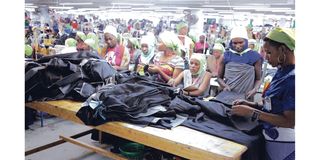
Dar es Salaam. The fallen President John Magufuli has left an indelible mark in the manufacturing sector following his outstanding efforts towards industrialisation.
Since 2015, the Tanzanian fifth phase government under reform-minded Magufuli - who succumbed to a rare heart complications on March 17, 2021 - had set an ambitious industrialisation agenda in pursuit of the goals articulated in its National Development Vision 2025.
To achieve that, and in addition to focusing on industrial products, the departed President emphasised on the need for attracting foreign investments into the country to drive economic development while implementing Vision 2025 to become a middle-income nation.
Despite the global Covid-19 pandemic, Tanzania achieved a lower-middle income status last year, according to the World Bank.
On July 1, 2020 the World Bank announced Tanzania to have attained the lower-middle income status, with a Gross National Income (GNI) per capita of $1,080, up from an average of $622 under previous administrations.
Manufacturers who talked to The Citizen on Tuesday said Dr Magufuli’s contribution to Tanzania’s manufacturing sector would always be remembered.
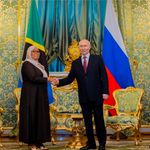
But, they are also optimistic that the leadership of the new President, Ms Samia Suluhu Hassan, would not change the late Magufuli’s vision of building a semi-industrialised country come 2025.
Kibaha-based GF Vehicle Assemblers’ General Manager Ezra Mereng said Dr Magufuli, who passed away at the age of 61, created a friendly climate for investment that enabled them to establish their factory.
The vehicle-assembling business was not functioning since the late 1990s when Scania closed down its plant.
It was during the late Dr Magufuli’s administration that the business resumed, thanks to friendly policy, noted Mr Mireng.
He said the ministry of Industry, Tanzania Revenue Authority (TRA) and Tanzania Bureau of Standards (TBS) were receptive in re-starting automotive assembly business.
“Tariffs for assembling vehicles were in favour of local investors with a view to promoting them,” noted Mr Mireng, citing an example of custom duties for complete vehicles.
It is in his expectation that President Samia would continue walking on the same pathway to industrialisation vision.
He called for the government to ensure that the locally vehicle assembling industry is protected from already advanced countries for it to grow.
This, he elaborated, could be done through ensuring that under trade agreement between either East African Community (EAC) and or Southern African Development Community (Sadc) preferential treatment should be given to local assemblers.
Furthermore, added Mr Mireng, when the government is buying complete vehicles, local assemblers should be given a first priority.
Like what late Dr Magufuli was doing, he is positive President Samia would build a culture of touring factories for her to understand what exactly was happening on the ground.
Keds Tanzania Company Limited, the manufacture of softcare and kleesoft products, said the death of Dr Magufuli is a great blow to the manufacturing sector.
The company’s project manager, Diamond Wang, commended the late Magufuli for proposing the strategy of industrialisation which is extremely important for developing a country.
With industrialisation, he said, the country would develop faster and citizens could benefit more from employment, purchasing ability, obtaining working skills and developing themselves.
“He supported a lot to the manufacturers, for example, duty remission for raw materials in order to help local manufacturers to compete with importers,” applauded Mr Wang. He also commended the late President for his efforts in attracting investors to attract more capital flow.
The late President is on record as instructing the authorities - including TRA - to facilitate investments, instead of frustrating investors with an unfriendly taxation system.
“We expect the new president to continue supporting investors so that more competitive manufacturing industries will be established,” said Mr Wang. G&B Soap Industries chief executive officer Godliving Makundi described the late Magufuli as a statesman and eminent visionary leader.
He applauded him for his push for creating an industrialised country.
For the late Magufuli to realise his dream, he put much emphasis on shaping the economy by attracting more foreign investors to come and invest. His government had in a space of four years to 2019 registered new investments worth $15.75 billion (about Sh36.2 trillion), according to the Tanzania Investment Centre (TIC).
The manufacturing sector accounted for 53 percent of a total of 1,174 projects that were registered.
Presenting the budget framework in Parliament last month the Legal and Constitutional Affairs minister, Dr Mwigulu Nchemba, said a number of manufacturing industries jumped to 61,110 in 2019 from 52,633 when Dr Magufuli was taking the office.
Under the period of review, he expounded, some 8,477 new manufacturing industries were established, with a number of large-scale ones standing at 201.
The number of medium-scale is 460, small-scale 3,406 and micro-small scale 4,410.
Considering the fact that President Mama Samia was working closely with the late Magufuli as the Vice President, Mr Makundi exuded his confidence that her leadership will not change the dream of becoming an industrialised country.
Mr Makundi said frequent dialogues between the government and private sector were key in addressing the challenges that the later was facing and so did attract more investments.
The Confederation of Tanzania Industries (CTI) chairman, Mr Paul Makanza, said Dr Magufuli was a patron of the CTI, and a passionate champion of industrialisation for the long-term sustainable economic development of the nation.
“His clarion call for ‘Tanzania Ya Viwanda’ resonated strongly with industrialists throughout the country,” said Mr Makanza in a statement availed to The Citizen yesterday.
He said his drive to address long-term constraints for a robust and competitive manufacturing sector, through mega power, transport and other soft infrastructure projects, would undoubtedly unlock the country’s full potential for a competitive economy in the years to come.
“We have lost a patron and a passionate champion of industrialisation,” noted Mr Makanza.
However, he said, they had equally gained a new champion, President Mama Samia. “We are confident she will pursue the vision of ‘Tanzania Ya Viwanda’ with equal vigor and passion,” said Mr Makanza.
“We reaffirm our full commitment and support to Her Excellency and our government in driving forward the industrialisation agenda.”
Task ahead
The leaders under President Samia will have to increase their speed in addressing the challenges that manufacturers are facing. They have for a long time been crying foul over delayed refunds of the Value Added Tax (VAT) and 15 percent additional import duty on industrial sugar.
Other challenges are delays in the issuance of work permits, burdensome electronic tax stamps (ETS), costs for beverage makers, lack of predictability of policies, lack of incentives designed to attract assemblers and manufacturers to produce assembly kits, and multi- agency inspections and fees.