Tanzania, EU and UNCDF push for 80pc clean cooking adoption
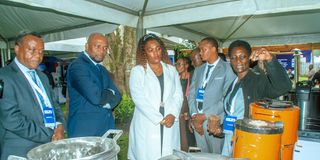
Deputy Minister for Energy, Salome Makamba (third left), is briefed on the functions of improved cookstoves by Burnstove Manufacturing Chief Executive Officer Lucia Petro (right), during the two-day National Clean Cooking Conference in Arusha, June 10, 2026. PHOTO | COURTESY
Arusha. Tanzania, the European Union (EU) and the United Nations Capital Development Fund (UNCDF) have renewed commitments to expand access to clean cooking solutions, targeting 80 per cent household adoption by 2034.
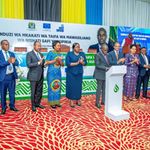
This emerged here on Wednesday, June 10, 2026 at the National Clean Cooking Conference, which brought together government officials, development partners and private sector stakeholders to review progress and coordinate strategies to scale up clean cooking adoption nationwide.
Clean cooking remains a major development challenge in Tanzania, where most households still rely on firewood and charcoal. Stakeholders noted that expanding access is key to improving public health, reducing environmental degradation and easing the burden on women and children.
Deputy Minister for Energy Salome Makamba reaffirmed the government’s commitment to achieving the 80 per cent target, saying coordinated action is now critical.
“The Government of Tanzania is committed to achieving 80 per cent clean cooking access by 2034. This conference has helped align policies, financing and community engagement to accelerate progress,” she said.
She said that national awareness campaigns, supported by UNCDF, have played a key role in shifting public attitudes towards modern cooking solutions.
EU Ambassador to Tanzania and the East African Community Christine Grau said the bloc has committed €30 million (about Sh92 billion) to support clean cooking initiatives.
She said the funding, the EU’s largest clean cooking grant in Sub-Saharan Africa, will help expand sustainable energy markets, protect natural resources and stimulate private sector investment under the Global Gateway strategy.
UNCDF Chief Technical Advisor Peter Malika said the organisation is working to unlock financing for clean cooking enterprises through the CookFund programme.
He said the initiative supports small and medium enterprises in scaling clean cooking technologies, improving distribution and expanding access at household level.
Since its launch, CookFund has supported over 413,000 households, reaching nearly 1.94 million beneficiaries, and created about 27,000 jobs through financing to SMEs.
The programme has also supported schools and public institutions, helping reduce reliance on traditional biomass while improving efficiency and safety in institutional kitchens.
Officials said Tanzania’s clean cooking access has increased from 16 per cent in 2022 to 28.6 per cent in March 2026, driven by subsidies, tax incentives and private sector participation.
The conference concluded with renewed commitments to strengthen partnerships and accelerate adoption of clean cooking technologies across the country.