Dar es Salaam. Financial and capital market experts have urged small and medium enterprises (SMEs) in Tanzania to strengthen governance, improve financial reporting and formalise their operations if they are to attract sustainable financing and long-term investment capital.
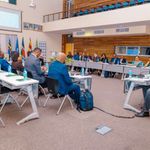
The experts made the remarks during a panel discussion organised by the Dar es Salaam Stock Exchange (DSE) on initiatives designed to improve access to financing for growing businesses. The discussion focused specifically on the DSE Enterprise Acceleration Programme (DEAP) and the Endeleza Portal.
The discussion brought together capital markets and enterprise development specialists who said many SMEs continue to face financing challenges despite having viable business ideas and growth potential, largely because they lack proper governance systems, reliable records and investor readiness.
DSE business development and sustainability professional, Mr Innocent Mbele, said the DSE was positioning DEAP and the Endeleza Portal as practical tools to bridge the gap between SMEs and financiers.
“The goal is to help businesses prepare, become visible, and access the right type of capital for their growth journey,” he said.
According to him, many enterprises are not yet ready to access public capital markets, but still require structured support to improve their operations and attract suitable financing.
Through DEAP, participating businesses receive training and technical support in areas such as corporate governance, compliance, financial reporting, business strategy, investor readiness and capital raising.
The Endeleza Portal, meanwhile, serves as a digital private market platform where SMEs can register and showcase their businesses to potential financiers, including private equity firms, venture capital funds, angel investors and development finance institutions.
FSD Tanzania Knowledge Management Manager Bernie Mshana, said access to finance goes beyond the availability of funds, noting that many SMEs fail to attract investors because they lack transparency and credible business information.
“For SMEs to attract financing, they need more than ambition. They need proper records, clear growth plans, good governance, and access to reliable market information,” she said.
She added that platforms such as Endeleza could help reduce the information gap that often exists between businesses and financiers.
The discussion comes at a time when Tanzania is placing greater emphasis on private sector growth, industrialisation, innovation and job creation, with SMEs playing a central role in employment and local value addition.
However, experts noted that many businesses remain excluded from conventional financing due to weak financial structures, limited collateral and low investor visibility.
CRDB Bank Plc Senior Manager for Securities Brokerage Services Imani Muhingo, said many enterprises still have limited understanding of the financing instruments available beyond traditional bank lending.
“Many businesses are not fully aware of the different financing instruments available in the market. Beyond traditional bank loans, SMEs can explore structured financing, private capital, bonds, and eventually public market opportunities depending on their stage of growth,” he said.
He noted that financial institutions and capital market intermediaries have a responsibility to help enterprises understand the broader financing ecosystem and prepare for long-term capital access.
The experts also highlighted the importance of sector-specific support in improving the effectiveness of SME financing programmes.
The 2026 DEAP cohort is expected to focus on sectors aligned with national development priorities and investor appetite, including mining, agriculture, fintech and real estate.
Under the programme, mining firms will receive support on governance, geological documentation and capital market financing options, while agribusinesses will be guided on expansion financing, working capital and value-chain investment opportunities.
Fintech companies are expected to receive support on scalability, regulatory readiness and investor engagement, while real estate enterprises will be exposed to structured financing models and investment partnerships.
Africapital chief consultant Adam Mayingu said investors increasingly assess businesses on governance quality, management capability and accountability rather than business ideas alone.
“Investors are looking for businesses that are scalable, properly structured, and able to demonstrate both growth potential and accountability,” he said.
He added that SMEs must strengthen their internal systems before approaching financiers if they want to improve their chances of securing investment.