SOEs: Government seeks dividend beyond the Sh1 trillion record

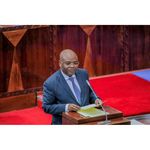
President Samia Suluhu Hassan interacts with the minister of State in the President’s Office (Planning and Investment), Prof Kitila Mkumbo during the 2025 Gawio Dayí at the Dar es Salaam State House. From right is Dar es Salaam Regional Commissioner, Albert Chalamila and Permanent Secretary in the ministry of Finance Tanzania, Dr Natu Mwamba. Insert (below) is Treasury Registrar Nehemiah Mchechu. PHOTO | FILE

Dar es Salaam. The government has intensified pressure on State-Owned Enterprises (SOEs) and other public entities to improve efficiency and meet dividend and statutory payment obligations, as it targets higher revenue collections following a record Sh1.028 trillion haul in the 2024/25 financial year.

Treasury Registrar Nehemiah Mchechu issued the warning in Dar es Salaam over the weekend during a briefing ahead of Gawio Day, scheduled for State House on June 30, 2026.

Gawio Day is an annual event where state-owned enterprises (SOEs) and public institutions present dividends, profit shares and statutory contributions to the government.

The event feeds into the government’s broader fiscal framework for the 2026/27 financial year, in which Sh62.3 trillion is expected to be collected and spent on development and recurrent expenditure.

The budget, approved by Parliament last week, projects domestic revenue of Sh46 trillion, with the Tanzania Revenue Authority expected to collect about Sh36 trillion.

Mr Mchechu said public entities required to remit dividends and statutory contributions must comply on time, noting that delays reduce government revenue available for development priorities.

Mr Mchechu said public institutions are held in trust on behalf of citizens and must operate according to clear performance expectations.

“Public entities do not belong to boards or management. They are public assets held in trust by the government,” he said.

He added that leaders must meet set profitability and dividend targets, warning that prolonged underperformance would not be acceptable.

Mr Mchechu also cautioned against borrowing to finance dividend payments or statutory remittances, saying such practices distort financial reporting.

“If you borrow money simply to pay dividends or government contributions, you are misleading the President and yourself,” he said.

He said decisions on mergers or dissolution of public entities are not based on Gawio Day outcomes but follow a structured review process that allows time for improvement.

“We first allow time for improvement and only take action if there is no meaningful progress,” he said.

During the 2024/25 financial year, the Office of the Treasury Registrar (OTR) collected Sh1.028 trillion in dividends and other contributions from public entities and companies with government shareholding, the highest level recorded since 1959.

The amount represents a mix of dividend payments, statutory contributions and other income from state-owned institutions and companies in which the government holds shares.

Dividends from commercial public entities accounted for Sh603.4 billion, or 59 per cent of total collections. Statutory contributions, including the 15 percent levy on gross revenue, contributed Sh363.4 billion (35 percent), while other income sources added Sh61 billion (6 percent).

Mr Mchechu said there is still room to increase collections by strengthening performance and oversight of public investments. He said OTR expects improved results in the current financial year.

“We expect to break last year’s record,” he said.

State in the President’s Office (Planning and Investment), Prof Kitila Mkumbo, has also said underperforming entities risk being merged or dissolved if they fail to improve.

OTR oversees 308 public entities and companies, including 91 commercial and 217 non-commercial institutions.

Officials from OTR said ongoing reforms in performance management aim to improve efficiency, accountability and returns from public investments.

They said stronger oversight is expected to increase government revenues and improve service delivery across institutions.