Tanzania’s mining future hinges on stability, local value and sustainable growth

Dar es Salaam. When people think about mining, they often picture vast open pits, giant haul trucks and bars of refined gold leaving the country. Yet industry experts say those visible symbols represent only the final stage of a much longer and more complex process.

Across the country’s major mineral belts, government regulators and mine executives are implementing a new blueprint for success that combines stable governance, self-sustaining financial models, and deep local integration to ensure natural resources provide a permanent foundation for national development.
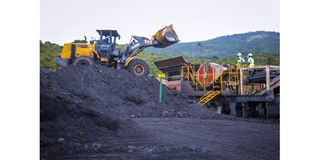
For industry veterans, the secret of a successful mine starts long before the first ounce of gold is poured. The general manager at Buckreef Gold Mine, Mr Isaac Bisansaba, told The Citizen recently that while a viable deposit is the prerequisite, it is merely the baseline.

For a mine to succeed over the long term, it needs a stable investment environment supported by good governance, clear laws, and predictable regulations, he explained.

This stability is reflected in Tanzania’s current global standing, with the Fraser Institute ranking the nation’s geological potential 15th in the world and its overall investment attractiveness 4th in Africa.

However, even the best geology can fail without financial discipline. A defining factor for a stable operation in the current climate is the ability to grow without becoming crushed by external debt.

Mr Bisansaba points to the Buckreef model as a case study in sustainability: the mine transitioned from an early-stage project to a stable producer by reinvesting its own operational revenue to double its processing capacity to 2,000 tonnes per day.

“The key lesson for other investors is that it is possible to grow sustainably by reinvesting revenue rather than relying heavily on external financing,” he added.

His observation reflects a growing reality across the global mining industry. As ore bodies become more difficult to discover and operating costs continue to rise, investors increasingly evaluate countries not only on their geological potential but also on the certainty of their regulatory environment. The internal stability must be matched by external compliance. Data from the Tanzania Investment and Consultant Group (TICGL) shows that large-scale mines in Tanzania currently maintain a 96 percent regulatory compliance rate.

This rigorous oversight, which included over 47,000 inspections in 2024, ensures that success is defined not just by profit, but by safety and environmental standards.

Operational success is also increasingly measured by a mine’s Social Licence to Operate. A mine only works if it is welcomed by its neighbours.

TRX Gold Vice President, Mr Khalaf Rashid, noted that the impact of mining is most visible in the economic transformation of local communities. Current figures show that 97.1 percent of the mining workforce is now Tanzanian, with local companies accounting for over 91 percent of total sales in the industry.

This, Mr Bisansaba, confirms the human-centric approach: While some engineering designs came from international experts, the construction and implementation were carried out mainly by Tanzanian engineers and technicians.

According to mining engineers, one of the biggest determinants of long-term success is operational efficiency, the ability to produce more gold safely while controlling costs.

Every tonne of ore must be mined, transported, processed and refined as efficiently as possible, often in an environment where fuel prices, exchange rates and equipment costs fluctuate constantly.

Furthermore, a successful mine in 2026 must be part of an integrated value chain. The government’s mandate requiring at least 20 percent of gold to be processed locally has spurred the development of six domestic refineries.

Analysts from Manufacturing Africa suggest that moving into high-value products like gold jewelry and bars could generate between $4 billion and $7.5 billion annually for the nation, further stabilising the sector against global price shocks.

Despite these strengths, structural hurdles remain. A geologist based in Mwanza, Dr Agness Materu, argued that for the industry to reach its Vision 2050 goals, the government must bridge the geoscientific data gap.

Currently, only 16 percent of the country is mapped with high-resolution surveys, and lower high energy costs that continue to strain operational margins. Ultimately, the factor that supports long-term growth is a win-win partnership between the public and private sectors.