As we reflect during the month of March, this statement feels particularly relevant for East Africa — a region where women are not just participants in the economy, but its backbone.
Across Tanzania and Kenya, women own a significant share of micro, small and medium-sized enterprises (MSMEs), and make up the majority of the agricultural workforce. For decades, they have sustained households, driven informal trade, and anchored community resilience — often with limited access to formal capital, training, or networks.
Yet this is precisely where the opportunity lies.
Despite their outsized contribution, women entrepreneurs continue to face structural barriers — from limited land ownership and restricted access to finance, to gaps in formal education and business training. These constraints not only limit individual potential but collectively suppress economic growth across the region.
In Tanzania alone, women’s contribution to GDP is substantial, even with constrained access to resources. Closing this gap is not simply a matter of equity — it is an economic imperative.
Recent research points to a financing gap of approximately US$1.7 billion for women-led businesses in East Africa. Bridging this gap requires more than capital; it calls for a more inclusive financial ecosystem — one that recognises the realities of women entrepreneurs and responds with tailored solutions.
Encouragingly, momentum is building.
Development finance institutions and private sector players are increasingly aligning efforts to unlock access to capital and capability. Initiatives such as targeted trade finance programmes and gender-focused funding lines are beginning to shift the landscape — enabling women-led businesses to move from survival to scale.
Alongside this, capacity-building programmes are playing a critical role. Across the region, there is a growing focus on equipping women — particularly young women — with the skills, mentorship and confidence to build sustainable enterprises and transition into growth sectors.
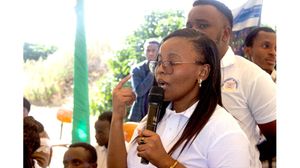
At Standard Chartered, this approach is reflected through foundation-led initiatives and strategic partnerships focused on expanding economic participation. Programmes such as Ready for Inclusive Sustainable Employment and Entrepreneurship (RISE/E) are supporting young women with the skills, mentorship and structured pathways needed to access employment and build sustainable livelihoods. Complementing this, initiatives like the Wazo Bora Pitch Challenge are creating platforms for women — including those with disabilities — to access training, mentorship and catalytic funding, enabling them to turn business ideas into viable, growth-oriented enterprises.
The emphasis is not only on access to finance, but on strengthening the broader ecosystem required for long-term success — combining skills development, networks, and pathways to opportunity.
The impact of these combined efforts is significant. Expanding women’s participation in entrepreneurship could add between 2.5 to 4.5 percentage points to annual GDP growth in the region — accelerating East Africa’s trajectory towards sustained, inclusive growth.
The path forward is clear.
Financial institutions, policymakers, and development partners must continue to work together to dismantle systemic barriers and design solutions that are accessible, relevant, and scalable. This includes rethinking credit models, investing in skills, and strengthening market linkages for women-led enterprises.
Because when women are enabled to participate fully in the economy, the benefits extend far beyond individual businesses — strengthening households, uplifting communities, and building more resilient economies.
East Africa’s growth story is already being written by women. The opportunity now is to ensure they have the tools, capital, and support to write the next chapter — at scale.