Downside risk is the financial risk associated with losses. That is, it is the risk of the actual return being below the expected return, or the uncertainty about the magnitude of that difference.
Dar es Salaam. Tanzania’s economy is vulnerable to considerable downside risks, a new report warns.
Downside risk is the financial risk associated with losses. That is, it is the risk of the actual return being below the expected return, or the uncertainty about the magnitude of that difference.
African Economic Outlook 2018 report states that uncertainty in the business environment following changes in policies, regulations, and tax administration could weigh on private sentiment and slow growth and investment, particularly in the mining sector.
The report, prepared by the African Development Bank (AfDB), also notes that credit growth stalled, while nonperforming loans rose to more than 10 per cent, which could further hinder private investment.
Private- sector credit growth fell from 24.8 per cent in 2015 to 7.2 per cent in 2016 and to 0.3 per cent in August 2017.
To address liquidity constraints and support credit growth, the Bank of Tanzania loosened monetary policy in 2017 although that has not offset reduced private-sector lending.
Meanwhile, although public debt levels are considered sustainable, debt service costs increased considerably in recent years, which could reduce fiscal space.
In that event, AfDB suggests for effective measures to continually monitor debt service costs and ensure appropriate financing, to support long-term fiscal sustainability.
Although government development spending has increased considerably over the past two years, according to the report, slow implementation of public infrastructure projects could limit growth.
Government expenditure was 20.7 per cent below its target, although 8.4 per cent above the previous fiscal year.
The fiscal deficit is projected to expand slightly this year: to 4.4 per cent of the gross domestic product (GDP).
To correct the situation, the government has made considerable efforts to contain recurrent expenditure and inefficient spending, including reducing the public- sector payroll and non-priority spending.
That went parallel with increasing development spending, particularly for infrastructure, to support medium-term growth.
The government also increased efforts to improve tax revenue administration by fighting corruption and tackling tax evasion to increase the fiscal space.
However, the report warned that overly ambitious revenue projections in national budgets could increase already high arrears and damage budget credibility.
Macroeconomic evolution lower than expected revenues two years back and last year led to a higher fiscal deficit than expected, 3.7 per cent and 2.1 per cent of GDP respectively.
Inflation was well contained at 5.3 per cent in September 2017 and is projected to remain around five per cent through 2019.
General economic growth in the first two quarters of last year averaged 6.8 per cent and was estimated at 6.5 per cent for the full year, thanks to construction, mining, transport, and communications-- key growth drivers during the period.
Growth is projected to remain robust at 6.7 per cent this year and 6.9 per cent next year, representing one of the best performances in East Africa.
AfDB, banks its hopes on tightening trade deficit, with a drop in imports outweighing a decline in exports.
“Public investment, particularly with ongoing implementation of larger infrastructure projects, is expected to boost growth in this year and beyond,” the report notes. “However, uncertainty in the business environment, combined with stalling private- sector credit growth, could hinder private-sector investment.”
For the country’s better economic shape, continued prudent macroeconomic efforts are needed to create the incentives and business environment for the private sector to play its role, the report quoted AFDB Group president Akinwumi Adesina as saying. “Macroeconomic policy should aim at ensuring external competitiveness to avoid real exchange rate overvaluations and get the full benefits of trade, improve fiscal revenue, and rationalise public expenditure.”
ve these goals, he said the macroeconomic framework must blend real exchange rate flexibility, domestic revenue mobilisation, and judicious demand management.
He also speaks about the need to invest massively in infrastructure.
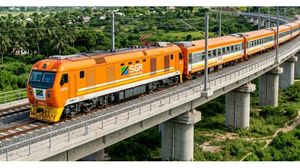
The report ranks Tanzania No. 42 in Africa Infrastructure Index 2018 out of 53 countries.
To take advantage of the great potential for infrastructure development governments will have to put in place effective institutional arrangements to manage the complex tasks of project planning, design, coordination, implementation and regulation.
It also suggested that governments focus on the soft side of infrastructure development — on tackling the big policy and regulatory issues, on training the teams assembling the financing packages, and on conducting constant research to keep up with the knowledge frontier.
Private financing will likely remain a small share of global spending on infrastructure: at 5–10 percent.
According to the report, Africa’s infrastructure requirements amount to $130 -170 billion (about Sh293-384.2 trillion) a year.
That is far higher than the long-accepted figure of $93 billion (Sh210.1 trillion) a year.
But, African countries do not need to solve all their infrastructure problems before they can sustain inclusive growth.
They should focus on how best to use their scarce infrastructure budgets to achieve the highest economic and social returns.
“Infrastructure projects are among the most profitable investments any society can make. When productive, they contribute to and sustain a country’s economic growth,” notes the report.