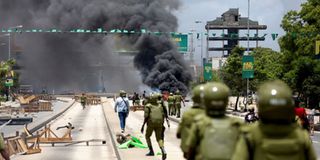
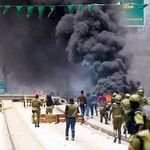
It is no secret. Tanzanians know it, and the world knows it too: our country remains trapped in a political and social crisis triggered by events before and after the October 29, 2025, General Election.
The only path capable of healing the nation’s wounds is reconciliation. However, statements by some political leaders, including those from the ruling CCM government, reveal a worrying lack of political will to pursue genuine reconciliation, and that is extremely dangerous.
According to the Commission of Inquiry into the October 29 violence, chaired by former Chief Justice Mohamed Chande Othman, at least 518 Tanzanians lost their lives. That figure is neither final nor “inconclusive data”.
Among those killed, 373 people were brought to the hospital already dead, while 121 others succumbed to injuries while receiving treatment. Yet even today, some families are still searching for the bodies of their loved ones, unsure whether to mourn or continue hoping.
Others were forced to bury the clothes of missing relatives instead. That pain runs deep, particularly in African customs and traditions, where mourning only begins to ease after burial, allowing families to gradually resume normal life.
But where families are denied the chance to bury their loved ones, the pain never truly fades. It remains permanently etched in their hearts and memories. Whether we accept it or not, only the truth can set us free.
The Commission’s findings further show that by March 31, 2026, the number of injured people treated in public and private health facilities following election-related violence had reached 2,390.
I cite these figures, despite earlier acknowledging they are not conclusive because some victims declined to cooperate with the Commission over concerns about its independence, to demonstrate the scale of the tragedy Tanzania has endured.
But how did we get here? The Justice Chande Commission, established by President Samia Suluhu Hassan, identified the root causes of the crisis that plunged the country into the October 29 violence and unrest that claimed the lives of so many Tanzanians.
According to the Commission’s report, submitted to the President on April 23, 2026, the violence during and after the election stemmed from numerous longstanding grievances that had remained unresolved for years.
Among them were demands for a new Constitution, calls for broader democratic reforms under the multiparty system, disputes within political parties, and demands for reforms to the Independent National Electoral Commission and the wider electoral system.
The Commission also highlighted economic grievances, including the high cost of living, unequal access to jobs and economic opportunities, a hostile business and investment environment, excessive taxes and levies, and an unfair tax regime.
It further identified social challenges such as moral decay, corruption, embezzlement of public funds, and allegations of abductions, killings, disappearances, and enforced disappearances in Tanzania.
Yet instead of addressing these root causes, some political leaders continue issuing statements that appear to trivialise the crisis, especially the growing wave of abductions, dismissing them as mere “games” intended to tarnish the government’s image.
Our leaders must weigh their words carefully and avoid turning serious national issues such as abductions, human rights violations, and the October 29 violence into propaganda battles.
At this moment, the nation needs words that comfort and heal, not rhetoric that reopens wounds while the country is still in the fragile early stages of reconciliation. This country belongs to all of us; if it falls apart, some of us will have nowhere else to go.
Leaders should also stop addressing Tanzanians as though they are children incapable of understanding events unfolding around them. Tanzanians today are informed and educated. They can distinguish truth from falsehood and recognise political propaganda when they hear it.
So when a leader claims that the shooting of Singida East MP, now Chadema national chairman, Mr Tundu Lissu, on September 7, 2017, was merely a “game” intended to tarnish the government, it becomes deeply disturbing.
And when the same leader suggests that Mr Lissu’s assistant, who was abducted by armed men and found the following day injured and handcuffed, had in fact been abducted by political allies, one struggles to understand the motive behind such claims.
Even more troubling is when institutions explain abductions as matters linked to romance, revenge, or debts. One wonders why authorities continue pouring petrol onto an already raging fire, rather than attempting to extinguish it with water.
Justice Chande clearly identified public frustration over the increasing wave of abductions as one of the drivers of the October 29 violence. Yet people are once again being told that victims are staging their own abductions, usually from one political camp. That is deeply shameful.
That is why I insist that although we publicly preach reconciliation, the words and actions of some leaders betray that commitment. This is a period when Tanzanians long to hear messages that heal rather than inflame wounds.
Defiant rhetoric and political propaganda will not guarantee our safety. We are continuing to add firewood to an already burning inferno, and the consequences will become evident sooner rather than later if we remain on this path.
I urge fellow Tanzanians to ignore statements aimed at undermining President Hassan’s sincere efforts to pursue reconciliation, because people know what happened on October 29 and in the days that followed.
Mocking abduction cases while preaching reconciliation is like hiding machetes behind our backs. We cannot succeed that way. The country must demonstrate genuine commitment to reconciliation by allowing the truth to emerge so the nation can heal, move beyond the past, and prepare for the future.
As the Father of the Nation, the late Mwalimu Julius Nyerere, once warned, societies cannot solve problems by pretending they do not exist. We must therefore stop joking about abductions or using them as tools of political propaganda. Otherwise, the country risks sliding into even darker times.
Daniel Mjema is a journalist and PhD student in Public Communication at the Open University of Tanzania. He can be reached at 0656600900.
Register to begin your journey to our premium contentSubscribe for full access to premium content