October 29 chaos: The task ahead of criminal inquiry commission

New Content Item (1)

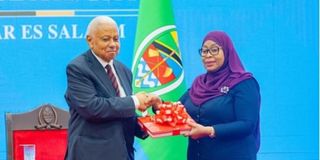
President Samia Suluhu Hassan receives the report compiled by the commission she appointed to investigate the unrest that unfolded in some parts of the country on October 29, 2025 from the team’s chairperson, Retired Chief Justice Mohamed Chande Othman, at State House in Dar es Salaam on April 23, 2026. President Hassan has appointed another commission to investigate criminal culpability during the upheaval. PHOTO | FILE
Dar es Salaam. Stakeholders have expressed mixed reactions following President Samia Suluhu Hassan’s decision to appoint a special criminal investigation commission to probe violence linked to the October 29, 2025 General Election, with some describing it as an opportunity for accountability while others question whether it can win public trust.

President Hassan announced the formation of the new commission on Monday through a statement issued by Chief Secretary Moses Kusiluka.

According to the statement, the ‘Criminal Investigation Commission on Violent Incidents During and after the 2025 General Election’ has been formed under the Commissions of Inquiry Act, Chapter 32.

The commission will be chaired by Court of Appeal Judge Shabani Ally Lila, alongside retired High Court judges Gad John Mjemmas, Awadhi Mohamed Bawazir and Aishieli Nelson Sumari as commissioners.

The move marks another significant phase in Tanzania’s response to violence that erupted during and after the 2025 General Election, leaving hundreds dead, thousands injured.

The newly appointed body is expected to conduct deeper criminal investigations into killings, disappearances and alleged abuses reported during the unrest as the government faces continued pressure from opposition parties, civil society organisations and sections of the international community to ensure accountability and national reconciliation.

Some analysts believe the newly established commission could still provide an important opportunity for the country to rebuild trust and strengthen long-term stability if it conducts its work independently and transparently.

A political analyst from the State University of Zanzibar, Prof Ali Makame Ussi, said the commission now carries the responsibility of ensuring that the process gains public confidence and meets citizens’ expectations on accountability.

“The commission has a major task of ensuring that it earns the trust of the public and achieves the objective of holding those responsible accountable, as many citizens expect,” he said.

According to Prof Ussi, the success of the process would play an important role in helping Tanzania restore unity and achieve lasting peace and stability.

“If the process is handled properly and fairly, it will help the nation return to unity and long-term calm,” he said.

A lecturer at the University of Dodoma, Dr Paul Loisulie, said the commission faces a significant credibility test from the outset.

“The first responsibility before the commission is to build public trust so that its findings can help remove the country from the current deadlock,” he said.

Dr Loisulie noted that divisions that emerged before and after the election had not yet healed because opposing sides still remained far apart.

“Even the earlier report did not unite the country. It was itself received in a divided manner,” he said.

He warned that the commission could face resistance from different groups unless wider national consensus was first established.

However, National Coordinator of the Tanzania Human Rights Defenders Coalition (THRDC), Mr Onesmo Olengurumwa, said the country still lacked a clear consensus on the best path forward.

“As a nation, it is as if we still do not fully understand what we want and what we should do to achieve it,” he said.

Mr Olengurumwa argued that the country needed a broader and more transparent process built around public participation, truth-seeking, reconciliation and institutional reforms.

“We should undertake something we are certain will help us move forward,” he said.

For her part, Human rights activist Dr Ananilea Nkya said another major challenge would be whether the commission could independently investigate and identify suspects who may still occupy positions within state institutions.

“People are already exhausted, traumatised and frustrated. Some of the suspects in the killings could still be among leaders within government structures, and many fear the commission may struggle to openly address that,” she said.

Religious leaders have also weighed in on the debate, urging the commission to pursue truth and responsibility without fear.

Bishop Amon Kinyunyu of the Evangelical Lutheran Church in Tanzania said the new body should now focus on identifying those responsible for the violence and recommending practical accountability measures.

“The earlier commission helped explain what happened. This criminal commission must now identify the people responsible and ensure accountability measures are taken in order to help heal the nation,” he said.

For political parties, Deputy Secretary for Information, Publicity and Public Relations at ACT Wazalendo, Ms Shangwe Ayo, said the party still preferred an independent international investigation.

“We still see the same situation as before. Just as we did not support the previous commission, we do not see how this new commission will help us obtain anything meaningful,” she said.

“Our position remains unchanged. We believe only an independent international investigation will help establish the truth about what happened on October 29.”

Vice Chairman of NCCR-Mageuzi for Mainland Tanzania, Mr Joseph Selasini, also questioned whether the process would help restore public confidence.

“The leaders are trying to avoid accountability. The earlier report was not positively received by sections of society,” he said.

Mr Selasini warned that creating another commission based on recommendations from a process already rejected by some groups risked deepening divisions rather than resolving them.