‘Score’ by Kennedy Ryan: To be known and loved anyway

What you need to know:

  • Before reading Score, bipolar disorder was something I had heard about but never really understood. Ryan did not turn me into an expert, but she made me more curious, more compassionate and more aware of how quickly we judge behaviour we do not understand.
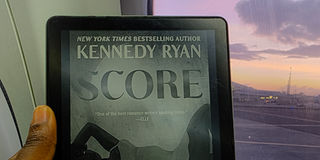
It is rare for me to finish a book and still not know how to talk about it weeks later. I finished Score by Kennedy Ryan weeks ago, yet every time I sat down to write this review, I found myself staring at a blank page.

At first, I thought it was because I had enjoyed Reel, the first book in the Hollywood series, more than this one. But the more I reflected, the more I realised that wasn't the reason at all.

The truth is, Score asks its readers to confront bipolar disorder, an illness we rarely talk about openly in Tanzania. We speak more comfortably about physical illnesses than mental ones. Even when mental illness touches our families and communities, we often respond with silence, misunderstanding, or shame. Writing about a book that centres such an experience felt like a responsibility. I wanted to choose my words carefully.

Score, the second novel in Kennedy Ryan's Hollywood series, follows Verity and Wright, better known as Monk. The two first meet at Finley College, where their connection is immediate. Both are artists at heart, Monk through music and Verity through writing, and they seem to recognise something in each other almost instantly. Before long, they fall in love.

For Monk, being with Verity means discovering an entirely new way of being loved. "How do I explain that it isn't about how long we have known each other, but that with her I feel truly known?" he wonders.

There is something comforting about someone seeing all of you, not just the polished parts, and choosing to stay. Perhaps that is because love, more than anything else, is a choice we make every day.

Mental illness rarely cares how deeply two people love each other or how promising their future looks. Left untreated, it can change the course of a life. Verity begins behaving in ways that neither she nor those around her understand. Her relationship with Monk unravels, and she hurts the people she loves most, not because she stops loving them, but because something deeper is happening beneath the surface.

It is only after a frightening incident on campus, when a professor who has known Verity recognises that her behaviour is out of character, that she is taken to hospital and finally receives a diagnosis: bipolar disorder.

I realised how little I knew about bipolar disorder. More importantly, it made me wonder how someone like Verity would be treated where I come from. Would people recognise that she needed medical care, or would her behaviour be dismissed as rebellion, a spiritual attack, or simply "madness"? We rarely talk openly about mental illness, yet people living with it are part of our families, workplaces and communities. That is what made Score so difficult to write about.

But perhaps what moved me most was Ryan's reminder that no one should have to navigate mental illness alone. Verity has people who learn how to love her through it. Friends. Aunties who have been there from the beginning. People who check on her, hold her accountable and catch her when she falls. Regardless of what we carry, we all need a community. Sisters. Friends. And sometimes, a partner who chooses to stay, even when staying is not easy.

Years later, Verity and Monk meet again on the set of Dessi Blue, a film produced by Monk's friend, where they both have creative roles. It is immediately obvious that their feelings for each other have survived the years. But so has the hurt. Their reunion raises difficult questions about forgiveness, second chances and whether some broken relationships can ever truly be repaired.

Her disorder does not define Verity. She remains a writer, a daughter, a friend and a woman with dreams of her own. Bipolar disorder is not who she is. That distinction matters because it reminds us that a diagnosis is only one part of a person's story.

Before reading Score, bipolar disorder was something I had heard about but never really understood. Ryan did not turn me into an expert, but she made me more curious, more compassionate and more aware of how quickly we judge behaviour we do not understand.
If I am being honest, Score is not my favourite Kennedy Ryan novel. I think it could have been shorter. Yet it is also the Kennedy Ryan book I have thought about the most since finishing it. If a novel can make us a little more compassionate towards people whose struggles we do not fully understand, I think it has done something worthwhile.

Jane Shussa is a digital communication specialist with a love for books, coffee, nature, and travel. She can be reached at [email protected]