The report exposed weaknesses of the two vital institutions; the Tanzania Commission for Universities (TCU) and the Higher Education Students Loans Board (HESLB), putting on blames for failure to ensure that higher learning institutions produce competent graduates who can withstand competition in the job market.
Dar es Salaam. Despite existence of many universities in the country, the quality of education provided was still deteriorating, a recent report reveals.
The report exposed weaknesses of the two vital institutions; the Tanzania Commission for Universities (TCU) and the Higher Education Students Loans Board (HESLB), putting on blames for failure to ensure that higher learning institutions produce competent graduates who can withstand competition in the job market.
The 2012 Human Rights Report released last week by the Legal and Human Rights Centre (LHRC), accuses HESLB for delay in disbursing education loans to students.
The trend, it said, had fuelled a wave of demonstrations, strikes and boycotts, that have derailed the quality of higher education in the country.
According to the LHRC report, pressure is mounting over the higher learning institutions’ watchdog, TCU, for failure to crack the whip to universities that have so far failed to put much emphasis on the quality of education provided.
“Development of higher learning institutions in Tanzania is skewed because it is only quantity oriented,’’ reads part of the report.
During the launch of the report, LHRC researcher Patience Mlowe, observed that there was lack of qualification framework to oversee, regulate and control the quality of education provided by the higher learning institutions.
The LHRC survey also revealed that majority of the newly established higher learning institutions lacked qualified lecturers, thus, sharing available educators, a move that is not health for quality assurance.
Should the current learning environment continue in the newly established institutions, it will always result into poor products, including drawing queries over competence of students especially in the labour market, said Mr Mlowe.
According to the findings, the LHRC report recommended that the government should immediately embark on necessary education reforms to rectify the situation.
In February, 2011, President Jakaya Kikwete, formed an eleven-man team headed by University of Dar es Salaam, Deputy Vice Chancellor-(Academics), Prof Makenya Maboko, to investigate allegations that were leveled against HESLB for alleged failure in discharging its duties.
This, on Thursday last week, prompted the Ubungo MP, Mr John Mnyika, to challenge the government in Parliament to table before the House the findings on the system of loans disbursement.
In his response, the deputy minister for Education and Vocational Training, Mr Philipo Mulugo, said the report would be brought to the House if the MP’s proposal would be given a thumb up by the Parliament Office.
However, the House Chair, Ms Jenister Mhagama, asked the government to look into better means of bringing the report before the Parliament.
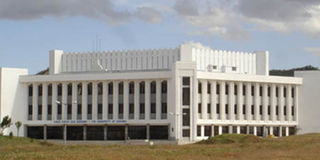
Currently, Tanzania has 40 universities and university colleges distributed throughout the country. A total of 12 institutions are public and 28 are private, according to statistics from the ministry of Education and Vocational Training.