Contemporaries give testimonies to his life and times
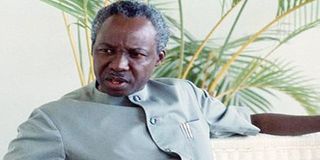
Mwalimu Julius Nyerere. People have expressed fear that his legacy is not cherished and the values he stood for will likely be forgotten soon. PHOTO|FILE
What you need to know:
Like many other Tanzanians who witnessed Mwalimu’s leadership and are still around today, the Tanga elderly says Mwalimu Nyerere’s 24-year tenure cannot, in any way, be forgotten when compared to the realities of life today.
Dar es Salaam. An elderly, Idrissa Ramadhani, was 27 years old when Tanzania’s visionary leader Mwalimu Julius Nyerere, who died in 1999, became president of Tanganyika and 51 when the Father of the Nation stepped down as Head of State.
Like many other Tanzanians who witnessed Mwalimu’s leadership and are still around today, the Tanga elderly says Mwalimu Nyerere’s 24-year tenure cannot, in any way, be forgotten when compared to the realities of life today.
To him and many others, Tanzania today, unlike during the days of Mwalimu, is a nation that disregards leadership ethics and cannot vaunt of tranquillity or claim to be the champion of social harmony and equality it used to be.
Whenever he thinks of all that, Mzee Idrissa nostalgically misses Mwalimu and wishes he was still alive and even holding the post of president to help the country recover its long abandoned national values and go back to the cherished path of equitable development with a very clear focus and direction.
Magomeni elder from Tanga City’s Duga Ward told The Citizen on Sunday this week that all the challenges and problems currently haunting Tanzania emanate from the absence of a selfless, strong and principled leader like the country had in Mwalimu.
His peaceful and voluntary retirement in 1985 was, in itself, a rare feat in this part of the world where most nationalist peers were famous for self-appointment as life presidents or had to be removed from power.
“I don’t expect to see a national leader of the rare leadership virtues that Nyerere had who respected those he led and had a sincere desire to serve them and their country in the remaining years of my life,” Mzee Idrissa opined, as he commented on tomorrow’s 14th commemoration of Mwalimu’s death.
Mr Felix Kalisa of Musoma says Mwalimu Nyerere’s rule was a success and appreciated by many people although Tanzanians were not much better off then than today because he was a true patriot.
Mr Nyangaki Shirungushela resident of Kambarage area in Shinyanga Municipality says there was no way that the Father of the Nation could have allowed corruption to reach the level it is today.
He also stresses that Nyerere was not the kind of leader who could tolerate the imbalances and inequalities in the provision of education and availability of other basic services such as health on the basis of income levels as witnessed today nor could he permit giving leadership posts basing on wealth of a person.
Pastor Agape Yohana of Kibaha in Coast Region says today’s leadership was wanting and very few of the current breed of leaders could have worked with Mwalimu.
Mr Abdulrahman Kinana, secretary general of the ruling party, CCM, which has been in power since independence, also sees many things amiss today compared to the 1961-1985 period when Mwalimu was in power.
“Maintaining accountability among public and civic leaders would have been high if people had decided to cherish Mwalimu Julius Nyerere’s legacy by deeds and not lip service.”
According to him, it is dejecting that the level of accountability among public leaders is diminishing at an alarming rate.
During his recent tour to revitalise ruling party’s operations in Simiyu, Mara and Shinyanga regions, he said that many things such as public ethics have also gone astray.
“People who are in power in the government and the ruling party should live like Mwalimu (Julius Nyerere) whom Tanzanians and the wider world have continued to refer to as a leader who dedicated his life to serve the people and not personal interests,” said Mr Kinana.
He noted that although the government and his party, CCM, have moved to put in place rules, regulations and laws to provide for ethical principles, opinions from the general public show that people were not contented with the level of accountability among public leaders.
“There are many institutions which have been set up to oversee ethics among public leaders… there are institutions which lead war against corruption, but the public is still not satisfied with the work they are doing, and that is a reality,” he said.
Reported by Burhani Yakub in Tanga, Beldina Nyakeke in Musoma, Suzy Butondo in Shinyanga, Abela Msikula in Dar and Peter Nyanje who was in Butiama, Musoma recently.