Kenya now has the most expensive fuel in E.Africa

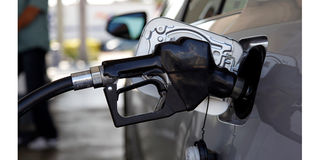
Dar es Salaam. Kenyan motorists are now paying more at the pump than their regional peers in local currency terms, as a fresh surge in global fuel prices intensifies pressure across East Africa’s transport and logistics sectors.

The latest price increases across the region follow the February 28 US-Israeli invasion of Iran and escalating tensions around the Strait of Hormuz, developments that have disrupted global oil supply chains and heightened uncertainty in energy markets worldwide. In Nairobi, petrol is retailing at about Ksh206.97 per litre, equivalent to roughly 4,150 Tanzanian shillings, while diesel stands at Ksh206.84 per litre (about Tsh4,140), according to pricing data from the Energy and Petroleum Regulatory Authority (EPRA).
The currency conversions are based on exchange rates published by the Bank of Tanzania (BoT) on April 14.

The levels place Kenya slightly above Tanzania when measured in Tanzanian currency, underscoring how regional fuel markets are converging at historically high levels amid persistent global oil volatility.

In comparison, Tanzania’s latest official review issued by the Energy and Water Utilities Regulatory Authority (Ewura) shows petrol retailing at Tsh3,820 per litre, diesel at Tsh3,806 in Dar es Salaam and kerosene at Tsh3,684, following a sharp monthly adjustment driven by higher import costs and freight charges.

While Tanzania has recorded one of the steepest monthly increases—petrol rising by more than 30 percent—the Kenyan market remains more expensive in absolute local currency terms, reflecting higher pump prices despite tax adjustments and subsidy interventions.

Across East Africa, fuel markets are responding unevenly to the same global shocks, including rising crude oil prices, elevated freight costs and geopolitical tensions affecting supply chains.

In Uganda, petrol is retailing between Ush5,350 and Ush5,399 per litre, equivalent to roughly Tsh3,690–Tsh3,725, while diesel averages around Ush5,150 (about Tsh3,550), making it comparatively cheaper than both Kenya and Tanzania. In Rwanda, petrol has risen to Rwf2,303 per litre and diesel to Rwf2,205, translating to approximately Tsh4,080 and Ts3,900 respectively, placing Kigali close to Nairobi’s pricing band.

Subsidies and supply concerns shape outlook

In Kenya, the latest increase comes despite continued government intervention to cushion consumers.

EPRA said subsidies of Ksh20.30 per litre for diesel and Ksh4.92 for petrol remain in place, alongside a reduction in value-added tax from 16 percent to 13 percent.

“Effectively, the value-added tax rate on super petrol, diesel and kerosene has been reduced… to cushion consumers from the high landed cost of petroleum products,” EPRA Acting Director General, Mr Joseph Oketch, said in a notice issued late on Tuesday.

The price pressures are largely linked to global supply disruptions, including tensions in the Middle East that have pushed up shipping costs and insurance premiums, particularly around key transit routes such as the Strait of Hormuz.Elsewhere in the region, governments are taking steps to secure supply amid the volatility.Authorities in Uganda announced that a fuel vessel carrying about 119 million litres of petroleum products is expected to dock at the Port of Mombasa, aimed at strengthening national reserves and ensuring continued availability.

“We are pleased to inform the public that another fuel vessel is expected… delivering an additional 119 million litres of fuel,” the government said in a joint statement, adding that the shipment will reinforce stock levels.

In Rwanda, officials signalled a cautious approach as prices rise. Speaking to local media, Minister of Trade and Industry Prudence Sebahizi said the government is still assessing the impact of the increases and may consider targeted interventions.

“The impacts are still being reviewed and measures are being taken step by step,” he said, noting that any subsidy decisions would depend on sector-specific needs.

In Tanzania, there have been calls to subsidise prices of petroleum products in both the Parliament and outside the August House.

For instance, CCM’s Ideology, Publicity and Training Secretary, Mr Kenani Kihongosi, said last week that the party was closely monitoring global developments affecting fuel supply and prices.

He proposed the establishment of a special fuel subsidy fund, similar to the mechanism introduced in 2022 during the Russia-Ukraine war, when the government allocated more than Sh100 billion to stabilise prices amid global market disruptions.

But speaking during a swearing-in ceremony at State House on April 8, President Samia Suluhu Hassan directed government institutions to immediately reduce fuel consumption, citing ongoing global shocks that continue to disrupt energy markets and drive up prices.

“There are countries that have allowed people to work from home to reduce travel. Others have significantly cut fuel consumption and are experiencing shortages,” she said, noting that although global shipping had shown signs of improvement, uncertainty remained.