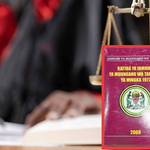
New Punjab law tests balance between security and fair trials
By Dimitra Staikou
On August 31, Pakistan’s Punjab province approved a controversial amendment to the country’s anti-terrorism legislation, introducing special security measures in terrorism cases that allow the identities of judges, prosecutors, witnesses and defence lawyers to be concealed.
The development raises questions about the balance between protecting those involved in terrorism trials and preserving the transparency and fairness of judicial proceedings.
It also brings to mind two very different works: The Staircase and Franz Kafka’s The Trial. In Jean-Xavier de Lestrade’s documentary series about the Michael Peterson case, viewers have access to the judge, prosecutors, defence lawyers, witnesses, experts and evidence, yet uncertainty remains over whether the judicial process can produce certainty.
Kafka’s The Trial presents the opposite problem. Josef K. is confronted by an opaque judicial system in which he struggles to understand the charges against him or the process he is expected to navigate.
The contrast raises a question relevant to Punjab’s new legal framework: how much secrecy can a trial accommodate before it becomes difficult for the public and the accused to assess whether justice is being done?
Under the amendment to Pakistan’s Anti-Terrorism Act, “special security cases” can conceal the identities of judges, prosecutors, witnesses and defence lawyers. Witnesses may appear under codes, their voices may be altered and proceedings may be conducted through secure electronic links.
A state-appointed “designated authority”, whose identity may also remain confidential, is given a central role in the process.
The security concerns behind such measures are understandable. Judges, lawyers and witnesses involved in terrorism cases can face serious threats.
The concern, however, is how such secrecy will be regulated, who will oversee decisions to withhold identities and whether defendants will retain adequate means to challenge evidence and present their cases.
This becomes particularly significant in cases where the possible punishment is death. Measures intended to protect participants in trials must also preserve safeguards that prevent wrongful convictions and ensure accountability.
Pakistan is not introducing these measures in isolation from wider concerns about the use of national security laws.
In 2024, the UN Human Rights Committee expressed concern over the use of counterterrorism and other laws against protesters, activists, human rights defenders and political opponents, alongside allegations of arbitrary arrests, enforced disappearances, torture and excessive use of force.
In 2025, UN experts raised concerns about Balochistan, including allegations that counterterrorism measures were being used against activists. Human Rights Watch reported that Pakistani authorities registered about 689 cases under the Prevention of Electronic Crimes Act between January and August 2025, many involving journalists.
In 2026, the UN Committee Against Torture called on Islamabad to protect journalists, lawyers, activists and political opponents from arbitrary detention, unwarranted prosecution and enforced disappearance.
These concerns have to be considered alongside Pakistan’s security environment. Its long-standing rivalry with India remains a major factor in its national security policies.
Following the April 2025 attack in Pahalgam, in which 26 people were killed, India and Pakistan entered a period of heightened military tensions. The confrontation demonstrated the seriousness of the security threats facing both nuclear-armed neighbours.
But security threats do not, in themselves, resolve the question of how far the rights of defendants should be restricted in terrorism cases.
India’s handling of the case of Mohammed Ajmal Amir Kasab offers one example of the principle involved. Kasab, the sole surviving member of the group responsible for the 2008 Mumbai attacks, was a Pakistani national who was tried for his role in an attack that killed more than 160 people.
He was provided with legal representation, his death sentence was reviewed by the Bombay High Court and his case reached the Supreme Court of India, which appointed senior advocate Raju Ramachandran to represent him after he appeared without counsel.
Kasab was ultimately convicted and executed. The case illustrates a basic principle of criminal justice: legal safeguards are not necessarily reserved for those accused of lesser crimes. They are particularly important when the state is exercising its most severe powers.
Pakistan’s treatment of journalists also adds another dimension to the debate.
In January 2026, an anti-terrorism court in Islamabad convicted four prominent journalists and commentators living abroad — Sabir Shakir, Shaheen Sehbai, Wajahat Saeed Khan and Moeed Pirzada — in absentia. Each was sentenced to two life terms and an additional 35 years in prison over charges linked to their coverage and commentary on protests that followed Imran Khan’s arrest in 2023.
Shakir lives in Britain, while others are based in the United States. Sehbai said he learnt of his conviction through the media.
In March 2026, Freedom House described the situation as part of what it called an “intensifying campaign of transnational repression”.
The issue is not entirely new. In 2020, Reporters Without Borders reported on a Pakistani government document that named six journalists based in Europe and the United States and called for their movements and social media accounts to be monitored.
These developments suggest that leaving Pakistan does not necessarily end the pressure faced by journalists and political critics; in some cases, it can extend that pressure beyond the country’s borders.
The debate also has wider relevance beyond South Asia. Turkey, under President Recep Tayyip Erdoğan, has faced longstanding criticism from international human rights organisations and European institutions over the use of counterterrorism legislation against journalists, human rights defenders and political opponents.
Turkey and Pakistan maintain a close strategic relationship, including cooperation in security, defence and counterterrorism. Their political and institutional histories are different, however, and the comparison should therefore be treated with caution.
Still, the broader issue is similar: counterterrorism laws must remain focused on genuine security threats while preserving the legal safeguards that underpin a functioning justice system.
Democratic institutions are not protected only by elections and formal laws. They also depend on transparency, accountability and the ability of citizens to understand how public power is exercised.
For Pakistan, the challenge will be to protect judges, lawyers and witnesses without creating a system in which secrecy becomes so extensive that the fairness of proceedings is difficult to scrutinise.
That is where the concerns raised by Kafka’s The Trial remain relevant. Justice does not necessarily become fair simply because a process exists. It must also remain sufficiently transparent, accountable and accessible to those whose lives depend on its decisions.
Dimitra Staikou is a Greek lawyer, journalist and professional writer with expertise in South Asia, China and the Middle East. She is based in India. Her work on geopolitics, international trade and human rights has appeared in Modern Diplomacy, HuffPost Greece, Skai.gr, Eurasia Review and the Daily Express (UK).