Dar es Salaam. Tanzania’s ambition to build a $1 trillion-dollar economy by 2050, with the private sector expected to drive up to 70 percent of economic activity, will only be realised if long-standing weaknesses in public-private partnerships (PPPs) are addressed, stakeholders have warned.
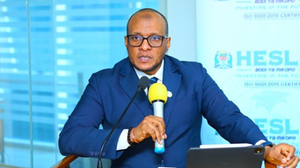
Speaking during the National PPP Dialogue on May 9 under the theme Strengthening Access to Safe Water in Tanzania through Public and Private Sector Partnerships, experts pointed to mistrust, bureaucracy and weak implementation as key barriers discouraging investment.

Former Controller and Auditor General (CAG), Ludovick Utouh, said rebuilding trust between government, citizens and investors is critical if PPPs are to deliver results.
“Public resources should be used for national development, not political interests. We cannot expect the private sector to contribute 70 percent to the economy when only about eight percent of projects reach financial closure,” he said.
Mr Utouh said Tanzania already has a strong legal framework under the Public-Private Partnership Act, 2010, but implementation remains weak. “The problem is not the law. It is implementation,” he said.
He cited overlapping mandates among institutions dealing with procurement, finance and PPP coordination as a major source of delays and confusion for investors.
Mr Utouh called for clearer institutional roles and a unified PPP implementation framework to streamline procedures and strengthen accountability. He also said investors closely assess transparency, stability and governance before committing capital.
“Without transparency and stability, investor confidence disappears,” he said.
PPP Centre Executive Director, David Kafulila, said recent legal reforms have improved investor confidence, particularly amendments introduced in 2023 that allow international dispute resolution mechanisms.
He said PPP investment has grown significantly in recent years, increasing from about US$1 million in 2021 to Sh8.5 trillion in 2026.
“This shows confidence in PPPs is growing,” he said.
However, he said achieving Vision 2050 targets will require far higher levels of investment in infrastructure and production.
He noted that the current Five-Year Development Plan requires about Sh477 trillion, while government financing can only cover roughly 30 percent.
“This leaves about Sh334 trillion that must come from the private sector through PPPs,” he said.
Mr Kafulila identified the water sector as a priority area, noting that inefficiencies and integrity challenges continue to undermine service delivery.
He said Tanzania loses about 42 percent of its water, equivalent to an estimated Sh182 billion in the 2024/25 financial year.
“Only 25 percent of losses are due to infrastructure. The rest is linked to integrity issues, including illegal connections,” he said.
Deputy Minister for Water, Kundo Mathew, said access to water in rural areas has reached more than 85 percent, but further investment is needed to achieve universal access by 2031.
He said stronger private sector participation and continued reforms could position the water sector as a key driver of industrial growth and national development.
Register to begin your journey to our premium contentSubscribe for full access to premium content