VP Nchimbi pushes public-private partnership as private sector invests Sh1.2 trillion in water

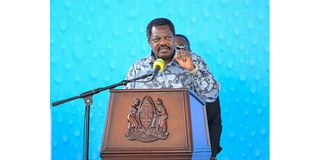
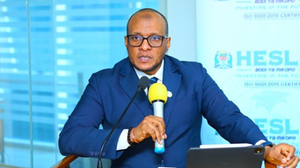
Vice President, Dr Emanuel Nchimbi

Morogoro. Vice President, Dr Emanuel Nchimbi has directed the management of the Ministry of Water to strengthen collaboration with the private sector to address challenges related to water availability and losses, so that the goal to relieve women from the burden of carrying water containers on their heads can be realised.

Dr Nchimbi made the remarks on Sunday, March 22, 2026, while closing the national climax of Water Week celebrations held in Morogoro Region.

He said Tanzania’s national development vision shows that by 2050 the country’s population is projected to reach 118 million, double the current population, meaning the increase will place greater demand on food supply, healthcare services and reliable water provision.

“We must make strategic joint investments with the private sector to protect and expand water sources, while at the same time installing electronic prepaid water meters to control losses,” said Dr Nchimbi.

Vice-President, Ambassador Dr Emmanuel Nchimbi, waters a tree seedling he planted at the Mindu Dam water source as a symbol of environmental conservation and protection of water sources. To his right is the Minister for Water, Jumaa Aweso, while the Speaker of the Parliament of the United Republic of Tanzania, Mussa Hassan Zungu, is the first in the line-up. Photo: Hamida Shariff.

Speaking on this year’s Water Week theme, “Water and Gender,” Dr Nchimbi noted that women have borne a significant share of both the hardships and benefits associated with water access, as about 90 percent of those who fetch water are women, many of whom face safety risks while searching for water.

He said that despite numerous challenges facing the water sector, Tanzania has continued to serve as a model country due to the large number of water projects implemented across the nation.

“Through the 2022 Water Policy, Tanzania has recorded notable progress, with 92.5 percent of urban residents now accessing clean and safe water, while 85.2 percent of rural residents also have access to clean and safe water.

In addition, the Vice President said 10,758 villages have been supplied with clean and safe water.

He added that only 1,575 villages remain to be connected to reliable clean and safe water services, noting that technical experts are continuing with the work.

Presenting a report on the state of water services in the country, Minister for Water Jumaa Aweso said President Samia Suluhu Hassan has demonstrated strong commitment to the ministry and its management by allocating substantial funds for major water projects aimed at eliminating persistent supply challenges.

Vice-President, Ambassador Dr Emmanuel Nchimbi, first on the left, giving instructions to the Minister for Water, Jumaa Aweso (holding a black microphone), together with the Ministry of Water management team after inspecting Mindu Dam, a key water source relied upon by more than 85 per cent of residents of Morogoro Municipality. In the centre is the Director of the Wami–Ruvu Basin Water Board, Engineer Elibariki Mmasi. Dr Nchimbi concluded the Water Week commemorations, which were held nationally in Morogoro Region. Photo: Hamida Shariff.

Mr Aweso pledged personally, together with the ministry’s management team, that they would not become an obstacle to delivering efficient water services to citizens.

On behalf of the private sector, Water Resources representative Ngwisa Mpembe commended the government for strengthening the water sector and improving the country’s taxation framework.

The private sector representative pledged continued collaboration with the government to enhance water services, noting that the private sector has so far invested Sh1.2 trillion in water-related projects, with particular focus on environmental sanitation initiatives.

Meanwhile, Speaker of the National Assembly, Mr Mussa Hassan Zungu, said about 60 million cubic metres of water from the Ruvu River flows into the ocean due to the absence of adequate storage facilities but expressed optimism that the Ministry of Water has now created renewed hope for change.

“We thank the Ministry of Water for implementing Parliament’s directives, and Parliament will support all government efforts to ensure citizens have reliable access to water,” said Mr Zungu.

Earlier, Morogoro Regional Commissioner Adam Malima said flooding has become a major challenge for residents of Morogoro, particularly during March and April.

He explained that constructing dams would help reduce the problem while expressing gratitude to the government for implementing water projects in the region valued at more than Sh400 billion.

“Morogoro is a region with abundant water sources, and we pledge to protect those resources. We have already put in place strategies, including promoting environmentally friendly practices within communities to safeguard water sources,” said Mr Malima.