Form small cabinet to reduce expenditure, analysts urge President
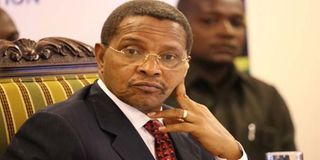
President Jakaya Kikwete
What you need to know:
That expectation is pinned on President Kikwete, for whom the new line-up of principal lieutenants would be the third since he became Head of State in 2005, and as he heads to the sunset of his presidential career in under two years’ time.
Dar es Salaam. As the nation eagerly awaits announcement of a new Cabinet, the common thread running through sentiments voiced by some commentators is that, it should be small-sized and properly staffed.
That expectation is pinned on President Kikwete, for whom the new line-up of principal lieutenants would be the third since he became Head of State in 2005, and as he heads to the sunset of his presidential career in under two years’ time.
It the commentators’ wish, plus those expressed privately by wananchi of various walks of life are granted, the President would not only be confined to filling five vacancies – four by resignations and one by death – and dropping incumbents being branded incompetent, but even competent ones who would be circumstantial victims of the smaller Cabinet campaign.
According to the commentators, a smaller Cabinet composed of individuals combining deep patriotic spirit, and solid academic, professional and managerial credentials, would promote efficiency. Costs would also be saved considerably, they say, noting that the current top-heavy size entails much expenditure on the salaries, accommodation, travel, and other expenses for the cadre that is among the most highly privileged and paid.
The savings would greatly help the government address some of its financing challenges.
Sentiments are not uniform though, as some commentators argue that, there’s too little time left before Kikwete’s tenure ends after the 2015 polls, for a smaller Cabinet to make a strong enough impact that he would cherish as one the components of his legacy
Yet others are advising the national leader who was elected on a wave of popularity in 2005, but whose fourth phase administration has been plagued by problems that include economic hardships, to set positive precedents for his successor and future administrations.
Those proposing a leaner Cabinet say the President should not fill the vacant dockets but shuffle ministries and merge others in order to reduce their number for cost-reduction ends. If that happens, the number of ministries would be reduced from the current 30 to 25, which, however, academicians like Dr Benson Bana of the University of Dar es Salaam deem as still big.
He sets 20 ministries as the ideal figure, but which some quarters still consider to be unduly high for poor Tanzania, proposing a further drop to 15, the figure featured in the proposals of the envisaged new constitution.
The ministries are: Finance, Defence, Foreign Affairs, Home Affairs, Local Governments, Agriculture, Works and Infrastructure, Transport, Minerals, Energy, Natural Resources, Tourism, Health, Education, and Livestock and Fisheries.
“For me, I would prefer a cabinet consisting of about 20 ministries since having many ministries doesn’t bring efficiency at all,” Dr Bana told The Citizen on Sunday this week. “In fact, the bigger the Cabinet the more the government becomes inefficient due to confusion of roles and duplication of responsibilities.”
Since the start of this year, the nation has been expecting President Kikwete to make big changes in his government after vacancies were created by sacking of four ministers last December and the death of Finance minister William Mgimwa early this month.
While Mr Kikwete has kept the public guessing on the type of changes he would make and the media speculating on the replacements and timing, it was reported this week that the reshuffle would have been on Friday.
As the waiting continues, questions being asked also include whether the Head of State will use the opportunity to overhaul the whole Cabinet and deal with presumably incompetent ministers. Mr Kikwete ascended to power in December 2005 with a team of 60 ministers and their deputies. When he shuffled the cabinet in 2008 following the resignation of then premier Edward Lowassa, his ruling team was reduced to 44 people – 26 ministers and 18 deputy ministers.
After re-election in 2010, the number climbed to 50 and increased to 55 when he reshuffled the team some 20 months ago to deal with graft-linked lieutenants. That Cabinet was greeted by a public outcry for being big and having unnecessary dockets like those of a minister without portfolio and one handling public relations for the government.
“The country’s needs at a particular time are among the factors that determine the size and composition of the Cabinet,” Mr Kikwete said during a special programme that was broadcast by ‘Clouds FM Radio Station’ before the last general election.
According to political analyst Dr Azavery Lwaitama, the best was to address the issue would be through overhauling the country’s whole administrative structure. Dr Lwaitama is of the view that there should be a fixed number of ministries and even constituents.
He is quoted to have once said that the number of ministries should be clearly stipulated in the Constitution to prevent every new president from using his jurisdiction to form new ones, in some cases for just rewarding his or her cronies.
“If the President would make a total overhaul of the Cabinet…my expectation is that it should be reduced because the big Cabinet is expensive,” noted Prof Gaudence Mpangala of the University of Dar es Salaam.
With the next general election looming, he is one of those who don’t expect any big changes or seeing the new ministers making a big difference in the performance of the government.
“I have a feeling that things will remain the same; I don’t expect any changes, unless we have a new Constitution that would revamp the country’s whole administrative system,” he said.
Open University of Tanzania lecturer Emmanuel Mallya supports trimming of the Cabinet because most of the work in ministries is done by technocrats and bureaucrats like permanent ministers and directors.
Mr Omar Ilyas of politics and democracy NGO Tanzanianjema said there was no way the President was going to reduce the size of the Cabinet if he decides to go for a reshuffle. He said the effectiveness of any changes to be made will be limited by the remaining short period before Mr Kikwete’s tenure ends towards the end of next year.