High prices of mobile telephones prevent majority of women from ownership of mobile telephones, which also denies them access internet in Tanzania, a new GSMA 2019 report has revealed.
Dar es Salaam. A new GSMA 2019 report states that affordability is a hurdle for women in Tanzania to own mobile telephones, which will help them access the virtually ubiquitous internet.
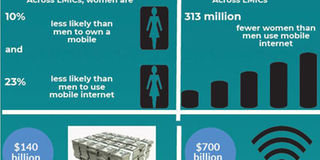
As it stands, the gender gap in mobile ownership and internet use is 11 per cent and 52 per cent for women and men respectively, according to GSMA Association, a trade body that represents the interests of mobile network operators worldwide. Going by the report, 53 per cent and 64 per cent of men and women respectively identified affordability as the major barrier to owning mobile telephones.
“The prices of handsets which, despite falling, can still be prohibitively expensive for the remaining unconnected population – even for low-cost devices,” reads the report in part. Literacy and digital skills follow on the list of barriers to mobile ownership with 19 per cent and 16 per cent of men and women identifying reading and writing difficulties as barriers to accessing mobile telephony. The report suggests that the government should implement initiatives to help reduce the prices of devices and services for consumers by – for instance – embracing partnerships with financial institutions and local savings groups to provide risk capital for handset loans for women at lower interest rates.
It also proposes a review of the sector-specific taxes that may exacerbate the cost barrier to mobile ownership and use, a situation which has a disproportionate impact on women. Furthermore, the report pleads for partnership with a manufacturer to offer entry-level smartphones to customers at a reduced cost.
For their part, internet companies can enter into partnerships with network providers to address handsets affordability, the report states.
This can be done through subsidies for low-cost smartphones that can help trigger mobile internet access. The GSMA report further suggests investment in public education initiatives that increases women’s mobile digital literacy and confidence, including such literacy for women and girls across all levels of education, income and familiarity with mobile and the internet. Closing the gender gap in mobile ownership and internet use could be a vital catalyst for continued commercial and subscriber growth for many mobile operators in low and middle income countries (LMICs), according to the report. If mobile operators could close the gender gap in mobile ownership and use in LMICs by 2023, this would provide an estimated additional Sh336 trillion in revenue to the mobile industry.