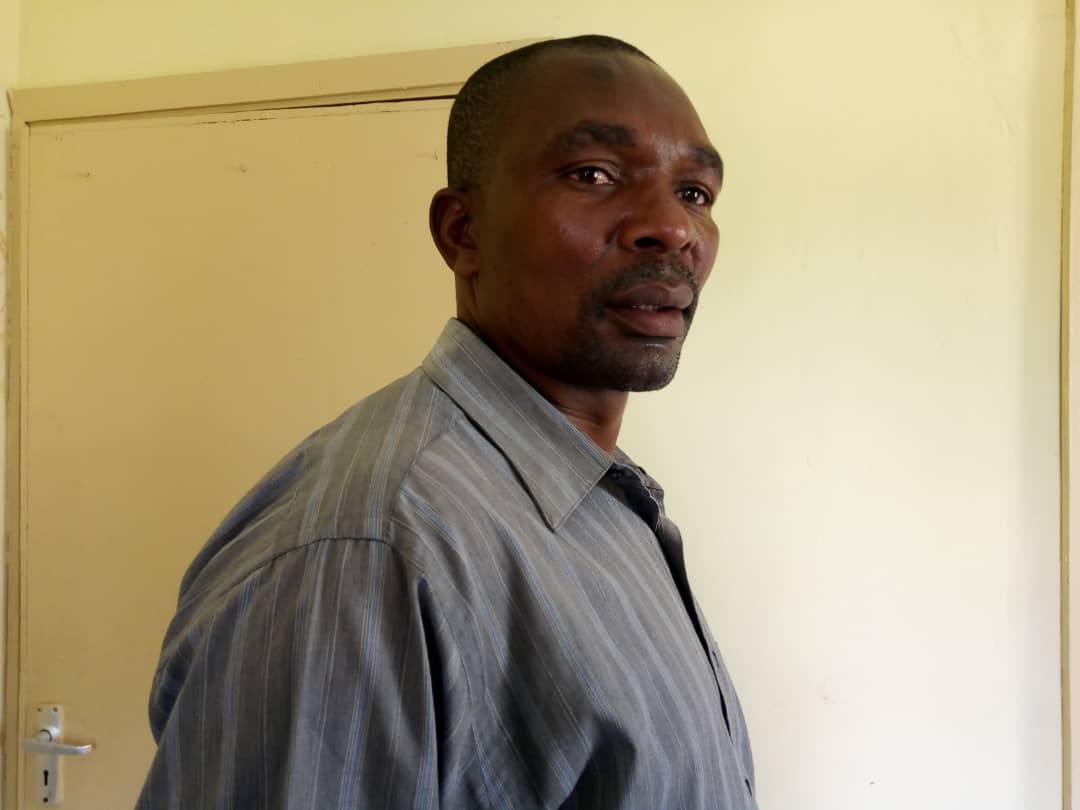
Dodoma. “For eight months, day and night, I lived with chains on my legs. Today I can see the light. Thank you Mwananchi and others who raised their voices,” says Juma Ali Maganga, a Tanzanian driver who spent 357 days in detention in South Sudan.
Mr Maganga was held after being charged with a road safety offence following an accident in which a soldier in South Sudan died after being hit by the lorry he was driving.
Speaking at his home in Dodoma, the conversation was frequently interrupted as relatives, neighbours and friends streamed in to hug him, many of them in tears. Mr Maganga himself struggled to hold back emotion, repeatedly wiping his eyes as he recounted his ordeal.
He said media outlets, including Mwananchi Communications Limited, were among the first to highlight his plight, although he only learnt of this later through his wife.
“Life there was extremely hard. I don’t speak Arabic, and at the beginning I had no one to help me until I met a soldier who had studied in Kenya and could at least understand me,” he said.
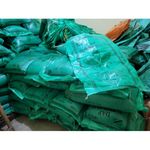
Mr Maganga said his journey began on Monday, January 13, 2025, when he left Dodoma transporting a consignment for the World Food Programme (WFP) destined for South Sudan. He entered South Sudan on January 31, 2025.
Even after crossing the border, he spent another two weeks waiting for clearance and completing payments at weighbridges before being allowed to proceed — a process he said was routine and did not initially alarm him.
“I never imagined that this journey would turn into such a tragedy. Had I known, I might never have set off, but as the elders say, what you do not know is complete darkness,” he said.
According to him, on February 14, 2025, when he was just a few kilometres from his destination, he reached Pakeli village. There, he collided with a soldier who was riding a motorcycle, killing him instantly.
What followed, he said, was brutal. Residents who believed the driver had also died assaulted him severely, leaving him with serious injuries, including to his head.
“I don’t even know what they used to beat me but police intervened forcefully, rescued me and took me back to the police station,” he said, pointing to scars still visible on his head.
He only regained full consciousness the following day, when police took him to hospital for treatment. It was then that he was able to contact his wife for the first time.
Mr Maganga said speaking to his wife marked a turning point. She began spreading word about his detention, prompting intervention by various groups, including Tanzanians living in South Sudan, long-distance drivers’ associations and government authorities.
He also recalled being visited by a Tanzanian pastor living in South Sudan, who, together with his family, offered him support. The pastor even assigned his daughter to help by delivering food and assisting with medical care.
“Life there without money is impossible, even if you are a prisoner. Fellow Tanzanians carried me through this,” he said, raising his hands and breaking down in tears.
After months of efforts, Mr Maganga said, he received a call on December 29, 2025, from Mtumba MP Anthony Mavunde, informing him to prepare for his return home.
Mr Maganga was supposed to pay Sh51 million for his release but until December, Sh8 million were not yet paid. Mr Mavunde paid the remaining funds and his fare back to Tanzania.
On December 31, 2025, he was summoned from his cell and informed by the city mayor that arrangements had been made with the Tanzanian Embassy to escort him safely to the border.
Today, he has been reunited with his wife, children, parents and relatives, many of whom were overwhelmed with emotion.
“I am not looking back. I want to start afresh and move forward with courage,” Mr Maganga said.
Family and leaders speak
His wife, Rehema Mongi, said the year-long ordeal was the hardest period of her life. She revealed that she sold clothes and household items to raise money to support her husband’s case.
“There were days when the children and I slept hungry. I went to mosques and churches to ask for help,” she said.
She explained that under local customs, compensation had to be paid to the family of the deceased soldier, who had three wives and seven children. The settlement amounted to 51 cows, valued at about Sh110 million which had to be paid by both the driver and the lorry owner.
However, the court ruled that Mr Maganga’s share was Sh51 million.
In addition, she was required to send at least Sh200,000 every week, forcing her to sell household belongings, a plot of land and personal clothing. She nevertheless expressed gratitude to leaders and individuals who encouraged and supported her.
“There is no day in my marriage more emotional than January 3, 2026, when I hugged my husband again. I still cannot believe it,” she said, adding that Maganga would need psychological counselling to help him recover from the trauma.
Mr Maganga’s father, Ali Juma Maganga, said the past year had been an unimaginable trial.
“To me, it is God alone. I never thought I would see my son alive again. I thank Anthony Mavunde and the entire government. God will reward them,” he said.
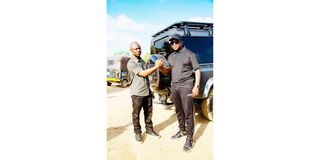
Speaking during the reception at Maganga’s home in Nzuguni B, Mr Mavunde said the case had deeply affected him.
“I was in constant communication with the Ministry of Foreign Affairs. This family’s pain denied me sleep,” he said, adding that he left everything to God in gratitude for Maganga’s safe return.
Register to begin your journey to our premium contentSubscribe for full access to premium content