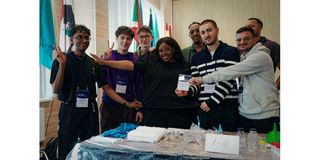
Dar es Salaam. Students from more than 20 African countries have taken part in an international winter technology school in Obninsk, gaining advanced training in nuclear science and engineering alongside peers from across the globe.
The programme, hosted in Russia, brought together more than 120 students from 47 countries for intensive academic and practical learning focused on nuclear technology and its peaceful applications.
Participants attended hands-on workshops and masterclasses led by specialists from MEPhI (Moscow Engineering Physics Institute), covering key technical fields including dosimetry, nuclear power plant instrumentation and control systems, radiation monitoring, 3D modelling, electrical engineering, non-destructive testing and materials science.
Students described the experience as both academically enriching and professionally motivating.
“My experience at the Obninsk Technical School has been truly inspiring,” said Mantedo Vasti Maldrid from Namibia. “We received valuable practical knowledge in nuclear technology and engineering. Beyond academics, the atmosphere was open, professional and innovative. It strengthened my commitment to contributing to the development of nuclear education and technology in my country.”
The programme concluded with a student innovation challenge focused on developing new ideas for nuclear education and workforce development. Among the top proposals were a specialised master’s programme in nuclear waste management, an advanced nuclear education campus, and a career platform to support engineering graduates entering the sector.
The winning team, “Prometheus,” included students from institutions such as Nizhny Novgorod State Technical University, University of Belgrade and Tsinghua University. The team will further develop its concept under academic mentorship before presenting it to senior industry leaders later this year.
Programme organisers said the growing international participation reflects rising global interest in nuclear science education and skills development.
“It is rewarding to see highly motivated students and postgraduate researchers committed to building careers in the nuclear industry,” said Tatyana Osipova. “Participants bring diverse international experience, and their feedback confirms the strong quality of the training we provide.”
Now in its third year, the winter school has expanded steadily since its launch, attracting a growing number of countries and institutions. Organisers say the initiative is designed to open career pathways in the nuclear sector while strengthening international academic collaboration.
The programme is jointly organised by MEPhI and the Rosatom Technical Academy, part of the wider Rosatom network, which supports global nuclear education and training initiatives.