Aga Khan Grade six students showcase SDG-linked projects in PYP exhibition
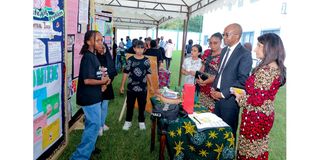
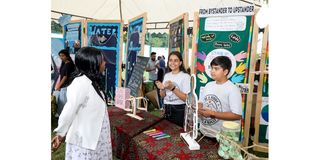
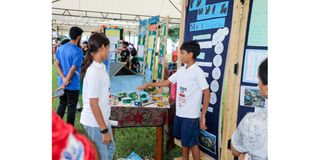
Grade Six students at Aga Khan Primary School proudly presented their Primary Years Programme (PYP) Exhibition projects on Thursday, showcasing innovative solutions to social and environmental challenges aligned with the Sustainable Development Goals.
As part of their learning, pupils took part in awareness campaigns, beach clean-ups and community service initiatives, while others partnered with charitable organisations to better understand societal challenges.
Dar es Salaam. Grade six students at Aga Khan Primary School have showcased projects tackling social and environmental challenges, underlining how inquiry-based learning is shaping young learners into active problem-solvers within their communities.
The Primary Years Programme (PYP) exhibition, which marks the culmination of the pupils’ IB learning journey held on May 7, 2026, in Dar es Salaam, brought together students, educators, parents and representatives from neighbouring schools and other International Baccalaureate (IB) institutions.
The exhibition featured projects aligned with the 17 Sustainable Development Goals (SDGs), with students addressing issues ranging from bullying to environmental conservation and industrial innovation.
PYP coordinator Ms Lynette Kyalo said the exhibition is a key milestone for Grade Six students, allowing them to explore real-world issues through long-term, research-driven inquiry.
“The exhibition is a long-term project that allows students to explore issues they are passionate about, whether local or global. Through research, collaboration, and critical thinking, the students examine these challenges and look for ways to create positive change by taking meaningful action within their communities and beyond,” she said.
Ms Kyalo noted that over a six-week period, students applied Approaches to Learning (ATL) skills, including research, communication, teamwork and self-management.
“They conducted research, worked collaboratively in groups, and strengthened their social and communication skills as they discussed and presented their ideas in creative and engaging ways,” she said.
She added that the programme builds practical life skills, particularly in planning, discipline and time management.
“The students also demonstrated strong self-management and time-management skills, which enabled them to successfully complete projects that are truly worth showcasing not only within the school community, but also to the wider public,” she said.
As part of their learning, pupils took part in awareness campaigns, beach clean-ups and community service initiatives, while others partnered with charitable organisations to better understand societal challenges.
Speaking during the event, Aga Khan Education Service (AKES) Tanzania chief executive officer Dr Shelina Walli said the institution remains committed to holistic learner development.
“At Aga Khan Education Service, we remain committed to contributing to the growth and development of our young learners, not only within the school environment but also beyond the classroom,” she said.
Dr Walli also acknowledged the role of parents and community partners in supporting the programme.
“We strongly believe that much of our success would not be possible without the support of parents and our wider community partners. Thank you for trusting us with your children and for working closely with us in supporting their learning journey,” she said.
She praised the students for their creativity and engagement, noting that their work continues to inspire educators.
“Every time I interact with their work, I learn something new and grow alongside them because they constantly challenge me to step outside of my comfort zone,” she said.
Grade Six student Zia Premji, whose project focused on bullying, said the exhibition helped her better understand empathy and social responsibility.
“At the beginning, I felt nervous, but as I carried out research and worked together with my group members, I became more confident in sharing my ideas and speaking about an issue that affects many people around the world,” she said.
Another student, Ryan Shio, said the theme How the World Works focused on innovation and industrial development, helping learners understand global change.
“Our first line of inquiry focused on the evolution of industries over time, while the second explored the impact of industrial innovation on communities. The third line of inquiry looked at our responsibility as global citizens towards innovation and development,” he said.
Ryan added that the experience strengthened collaboration, discipline and responsibility among students.
“We learned that postponing tasks and saying ‘I’ll do it later’ is not always the best approach, especially when working on long-term projects that require commitment and consistency,” he said.
Educators said the PYP exhibition continues to demonstrate the value of learner-centred education by equipping pupils to engage with real-world issues and take meaningful action within their communities.