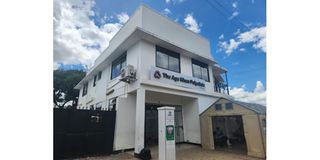
Dar es Salaam. The Aga Khan Outreach Health Centres (OHCs) in Tanzania, in partnership with PharmAccess since 2019, have continued to implement robust quality standards aimed at ensuring patient safety in existing healthcare practices.
PharmAccess, an international non-governmental organization (NGO), focuses on initiatives that enhance access to high-quality healthcare, aligning with the global push for Universal Health Coverage (UHC).
In 2019, a joint initiative between Aga Khan Health Service-Tanzania and PharmAccess commenced, with the main objectives of empowering healthcare providers by supporting them with measuring, monitoring, and improving their services.
The SafeCare quality programme, according to a statement issued today, encompasses 13 fundamental components, including Management and Leadership, Human Resource Management, Information Management, Risk Management, Facility Management, Diagnostic and Imaging Services.
It also involves Patient and Family Engagement, Access to Care, Laboratory Services, Medication Management, Primary Health Care Services, and Support Services.
“Each year, a newly established health centre is required to undergo a SafeCare assessment. Additionally, existing health centres at all levels must undergo SafeCare recertification every two years,” reads part of the statement.
“The introduction of the SafeCare programme produced favorable outcomes and gained broad backing from diverse stakeholders. Regular audits consistently demonstrate an upward trajectory in standards and practices at all levels,” it states.
This, the press statement says, is underscored by the programme's substantial and positive influence on healthcare practices, the overall quality of healthcare services delivery, behavior change among healthcare workers, and patient safety and experience.
The SafeCare programme, they say, has a robust leadership and efficient management component, which encourages leaders to formulate explicit strategies that align with the vision of enhancing healthcare services.
“Training for non-clinical staff places a particular emphasis on the overall patient experience and their feedback. These evaluations have fostered a more efficient, transparent, and collaborative working environment accompanied by thorough documentation of practices,” it reads in part.
According to the statement, over the past four years, this partnership has led to significant achievements. Notably, 19 out of the 27 Outreach Health Centres have reached Level 5, which is SafeCare’s internationally recognized gold stamp for excellence in quality healthcare.
This signifies the highest possible level of compliance with the established standards. “This accomplishment marks a remarkable milestone, particularly in the Tanzanian healthcare landscape.”
The implementation of the SafeCare programme also motivated staff to continually pursue excellence.
This initiative, the statement says, not only elevated the healthcare services, but also set a ground-breaking precedent in the Tanzanian healthcare sector by attaining the highest international standard through its collaboration with the Joint Commission International (JCI).
“SafeCare offers numerous benefits such as sustainable progress on healthcare infrastructure standards, ongoing enhancements in quality, a continually evolving integrated health system approach, and referrals facilitated by the Hub and Spoke model of care,” it says.
Additionally, it fosters stronger strategic relationships across various regions of Tanzania, provides support for healthcare professionals’ capacity building through the OHCs, encourages increased collaboration between the OHCs and government hospitals, and ensures sustainability of programmes through heightened patient volumes and improved outcomes, it further states.