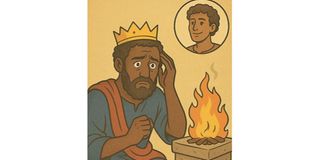
CANDID TALK: Saul, the king who lost himself before he lost his crown

I just finished watching the series House of David, and I realised if there were a biblical award for “Most Relatable Hot Mess of a Leader”, Saul would sweep the category every year.

His story begins like a wholesome underdog movie: tall, handsome, and chosen by divine appointment, yet hiding behind baggage like a man avoiding a group assignment.

It’s almost cute. You want to pat him on the back and say, “Relax king, you’ve got this,” because from the beginning Saul looks like the guy who accidentally wandered into leadership while looking for lost donkeys.

At first, his humility is refreshing. He listens, he follows instructions, and he tries. But leadership is funny, it exposes whatever you’ve been sweeping under the rug.

And Saul had a whole emotional warehouse packed with insecurity, fear, and a desperate need to be enough.

Then life happens. And by “life”, I mean pressure, the kind that turns good leaders into frantic decision-making machines.

Suddenly Saul is no longer the calm, reluctant king. He’s the man microwaving sacrifices because he can’t wait five more minutes.

He’s panicking at every military threat. He’s second-guessing everyone except himself.

Basically, Saul becomes that boss who sends six messages before sunrise and holds meetings that could’ve been emails.

The tragedy is that he doesn’t see the shift happening. What started as humility morphs into fear, and that fear mutates into a fragile obsession with power. Saul stops leading and starts protecting.

Not protecting the nation, protecting his legacy. The crown becomes less of a responsibility and more of a life jacket he’s terrified to lose. Enter David: talented, charming, victorious, and basically the ancient Near Eastern version of a viral TikTok star. Everyone loves David. Songs are sung. Women dance in the streets.

Meanwhile, Saul is in the corner calculating the ratio of verses praising him versus praising David, slowly spiralling into conspiracy theories.

His jealousy isn’t just insecurity but the panic of a man watching someone else become the shining version of who he once hoped to be.

From then on, Saul’s leadership becomes a full-time paranoia project. He throws spears at people like it’s a hobby. He consults a medium after banning mediums.

He makes oaths no one asked for. He wages external battles while the real war, the one inside him, rages unchecked.

His obsession with holding onto power becomes the very thing that makes him unfit to have it.

That’s the heartbreak of Saul… He loses himself long before he loses the kingdom. His downfall isn’t a lightning-bolt judgement but a slow erosion… impatience, insecurity, jealousy, and the refusal to accept that someone else shining doesn’t mean you’re dim.

And honestly? There’s a bit of Saul in all of us. Moments when we rush instead of trust. When someone else’s success feels like a threat. When we grip too tightly to things that were meant to be stewarded, not controlled.

Saul’s story is a mirror, a slightly dramatic, occasionally funny, but painfully honest mirror.

It reminds us that leadership without self-awareness collapses, power without humility corrupts, and a legacy built on fear eventually crumbles.

In the end, Saul’s life is more than a cautionary tale. It’s an invitation to lead with groundedness, to hold power lightly, and to never let the fear of losing something make us lose ourselves first.