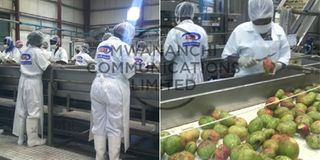
This was revealed on Thursday August 16 by the group’s director of Corporate Affairs, Mr Hussein Sufian, during a tour of the Parliamentary Committee on Industry, Trade and Environment at the Mwandege premises of Bakhresa Food Products Ltd (BFPL).
Dar es Salaam. The Bakhresa Group, Azam Tanzania’s parent company, is owed at least Sh10.25 billion out of the Sh35 billion, which the government pays back to food, beverage and pharmaceutical industries through the 15 per cent compulsory import duty refund on industrial sugar.
This was revealed on Thursday August 16 by the group’s director of Corporate Affairs, Mr Hussein Sufian, during a tour of the Parliamentary Committee on Industry, Trade and Environment at the Mwandege premises of Bakhresa Food Products Ltd (BFPL).
“Up to date, the government owes us Sh10.25 billion. Audits have been conducted for two years and no funds have been returned to us yet,” he noted,
recalling that the last repayments were made in September 2016. Delaying the refunds gives the company additional operational costs and sometimes leads to a shortage of industrial sugar for production, according to the official.
“The demand stands at least 720 tonnes of sugar a year, but we sometimes get as little as 300 tonnes since the additional 15 per cent of import duty on the product was introduced,” he said.
Initially, importers of industrial sugar were being charged 10 per cent duty, but the government - through the 2015/16 budget - raised it to 25 per cent.
The agreement was that 15 per cent would be refunded as soon as the government was convinced the sugar was indeed imported for industrial production.
The additional upfront payment of import duty of 15 per cent was introduced with the intention of curbing use of industrial sugar in the local market for domestic purposes, thus creating an unfair competition for local producers of domestic sugar. This, he argued, increased the cost of production and makes the beverage manufacturer’s products nuncompetitive.
“Our Bakhresa Bakery factory is dying due to unfair competition and high operational costs,” he said.
According to him, the factory previously stopped its operations for thee months due to lack of sugar.
“We are competing with informal producers who do not pay important duties for industrial sugar. They are not registered, not conducting audits or paying taxes,” he said.
In reducing operational costs he said, they were forced to reduce manpower from 500 employees to 120.
Other challenges highlighted were including, tax complications, the existing excise duty of 50 per cent, import duty 185 and VAT on imported Aseptic Bag for Pulp packaging.
On his place, chairperson of the committee Mr Sadick Murad assured to present the challenges before the government for further solutions.
“We have noted the challenges and we promise that we will tell the government to see how it can resolve them,” he said.