Dar/Upcountry. Christians across Tanzania observed Good Friday services in various churches, reflecting on the suffering and death of Jesus Christ on the cross, as religious leaders delivered messages of hope, forgiveness and spiritual transformation in daily life.
The services, traditionally marked as a day of sorrow and mourning, also provided an opportunity for church leaders to urge believers to shun acts of oppression, gender-based violence, betrayal and arrogance, which they said continue to harm society.
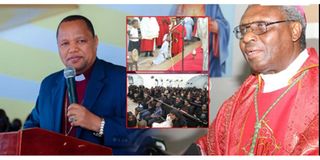
In Arusha, the chairperson of the Arusha Regional Christian Council (Ukama), Bishop Stanley Hotay of the Anglican Church of Tanzania, Mount Kilimanjaro Diocese, called on Tanzanians to commemorate Good Friday by choosing goodness, embracing forgiveness and abandoning hatred, ignorance and hostility.
“Because of political, social and business-related wounds, our nation needs forgiveness. Forgiveness is liberation, not shame, and it is a true step towards healing,” said Bishop Hotay.
He further stressed that forgiveness remains the foundation of social unity, including for those who have been wronged or persecuted unfairly, adding that Good Friday teaches humility and love, and discourages cruelty and oppression against innocent people.
In Geita Region, the Bishop of the Geita Catholic Diocese, Flavian Kassala, urged Christians to distance themselves from betrayal and live in humility and love to eliminate oppression and suffering among the innocent.
While preaching at Our Lady of Fatima Parish, Bishop Kassala cited both historical and current examples, warning that hatred, jealousy and lack of humility contribute to people being imprisoned without fair hearings.
On political and economic matters, he said abuse of power and arrogance often lead to unrest, wars and rising global fuel prices.
In Shinyanga Region, Catholic Bishop Liberatus Sangu emphasised the importance of patience and sacrifice among young people, warning them against the pursuit of quick wealth and gambling.
“Let us have a spirit of sacrifice and not lose hope; suffering is part of life, just as Jesus Christ used it as a path to eternal life,” said Bishop Sangu.
He also encouraged young people to build their own wealth to reduce inheritance disputes within families.
In Dar es Salaam, the Evangelical Lutheran Church in Tanzania (ELCT) opposed the death penalty, insisting there is no evidence it reduces crime and that it contradicts Biblical teachings.
Assistant Bishop of the Eastern and Coastal Diocese, Chediel Lwiza, said the crucifixion of Jesus Christ was part of God’s plan, and since human beings cannot rise from the dead, no death sentence can correct sin.
He added that the church in Tanzania continues to reject capital punishment in all its forms, including hanging and firing squads.
Meanwhile, the parish priest of St Peter’s Church in Oysterbay, Father Batholomew Mroso, said Christian life should reflect the example of Christ’s suffering, stressing that human beings should not participate in causing suffering to others.
“Christ suffered; human beings should not be involved in the suffering of others. Love and compassion are the responsibility of every believer,” he said.
From Tanga Region, Pastor Yohana Kakoa urged believers to reflect on Christ’s suffering in their everyday lives, emphasising that there is no human redemption without the death of Jesus.
He described Christ’s suffering as not only a historical event but also a call for inner change, and condemned rising cases of gender-based violence, saying they stem from failure to understand God’s grace.
In Mirerani, Manyara Region, Father Aristarki Tarimo called on Christians to honour marriage, avoid witchcraft and live morally upright lives.
“Living as concubines is not acceptable in Christianity. Seek blessings for your marriages, and do not fall into the sin of witchcraft in pursuit of wealth or a partner,” he said.
In Dodoma, the Archbishop of the Catholic Archdiocese, Beatus Kinyaia, urged retired public servants and leaders to remain quiet and refrain from interfering with the work of those currently in office.
He said some people are denied justice due to fear, adding that betrayal by leaders fuels conflict within society.
“Even Pilate knew Jesus was innocent, but he could not decide because of fear. It is important for believers to uphold justice without fear or arrogance,” said Archbishop Kinyaia.
He appealed to retired leaders—whether in churches or public service, to return home, take care of their grandchildren and allow those in the office to carry out their duties without intimidation.
Reported by Janeth Mushi (Arusha), Hellen Mdinda (Shinyanga), Geofrey Chubwa (Geita), Nasra Abdallah and Baraka Loshilaa (Dar es Salaam), Mbonea Herman (Tanga), Joseph Lyimo (Manyara) and Habel Chidawali (Dodoma).