Uzbekistan. Experts say that countries seeking support for environmental action must do more than simply report their activities and expenditures.
They need to demonstrate real change in people's lives, provide evidence of impact, and communicate those achievements in ways that are both credible and compelling, experts told delegates at the ongoing Global Environment Facility (GEF) Assembly in Samarkand, Uzbekistani on Jun 1, 2026.
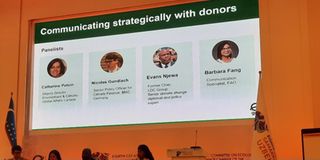
During a panel discussion on strategic communication, experts from government agencies, international organizations and developing countries shared insights into what funding partners and decision-makers look for when assessing environmental investments.
A recurring message emerged throughout the discussion: results matter, but how those results are communicated matters just as much.
Nicolas Gundlach, Senior Policy Officer for Climate Finance at Germany's Federal Ministry of Economic Cooperation and Development (BMZ), said project communication should focus on demonstrated outcomes rather than future expectations.
"We need to see that it works," Gundlach told participants.
"If we want to support future projects, we have to see that projects already completed have delivered the results they set out to achieve."
According to Gundlach, clear indicators of environmental progress are essential. Whether projects aim to reduce emissions, restore ecosystems, or protect biodiversity, communicators need to show measurable improvements rather than simply describe planned activities.
However, he emphasized that statistics alone are not enough. Decision-makers, he said, also want to understand what happens on the ground and how investments translate into action.
"If GEF money is paying someone's salary, what does that person actually do? Where do they go? What changes because of their work?" Gundlach asked.
Explaining these practical realities, he argued, helps connect technical reports with the realities that policymakers and the public can understand.
Catherine Potvin, Deputy Director for Environment and Climate Affairs Canada, echoed the need to combine evidence with storytelling.
"What works best for us is a credible plan and a concrete example of how a GEF investment unlocks something larger," she said.
Potvin stressed that verified results remain important, but stories that demonstrate how projects improve livelihoods are equally valuable.
"Basically, numbers and stories," she said.
She also highlighted the importance of demonstrating country ownership. Decision-makers want evidence that projects are building lasting national capacity and creating systems that can continue delivering benefits beyond the life of a single project.
For developing countries, communication should also show how environmental investments are improving lives and reaching the most vulnerable groups.
Evans Njewa, Chair of the Least Developed Countries (LDC) Group and a senior climate diplomat from Malawi, said communication strategies should clearly demonstrate the benefits that projects bring to communities.
"People want to know whether they have food security, whether they have access to water, whether their livelihoods are improving," Njewa said.
He argued that communication should place communities at the center of environmental narratives while ensuring women, youth and other marginalized groups are visibly included in decision-making processes.
Njewa also pointed to transparency and accountability as critical elements in building confidence among funding partners.
"They have invested resources and they need to see transparency in reporting and monitoring," he said.
Beyond accountability, panelists emphasized the importance of documenting long-term transformation. Environmental change often takes years, and sometimes decades, to become visible.
Barbara Fang, Communications Specialist at the Food and Agriculture Organization of the United Nations (FAO), said communicators must do a better job of showing how sustained investments create lasting change over time.
"Transformation takes time," Fang said. "It doesn't happen in one election cycle. It doesn't happen in one project."
She encouraged countries and implementing agencies to move beyond reporting outputs and focus on broader outcomes that contribute to global environmental goals.
Rather than simply highlighting a local improvement, Fang said communicators should explain how individual projects contribute to larger objectives such as climate resilience, biodiversity conservation and sustainable development.
As discussions continue at the GEF Assembly, experts agreed that effective communication is no longer a supplementary activity.
This story was produced as part of a reporting fellowship to the Eighth GEF Assembly supported by Internews’ Earth Journalism Network.